
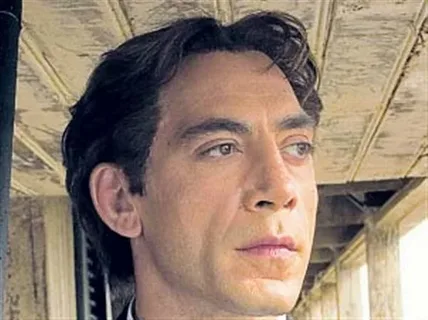
Put the two names side by side and most people pause for a second. Johann Rupert and Javier Bardem. One name belongs in the business pages, next to words like luxury, watches and billions. The other belongs on a cinema screen, usually with a strange haircut, a quiet voice and a character you cannot forget even if you try. They have never run a company together. They have never acted in a film together. And yet, comparing them turns out to be one of the more interesting exercises you can do, because both men reached the very top of brutally competitive worlds — and they did it in almost opposite ways.
Johann Rupert, born in South Africa in 1950, is the chairman of Richemont, the Swiss luxury group behind Cartier, Van Cleef & Arpels and Montblanc. He took a family business built by his father and turned its international assets into one of the most powerful luxury empires on earth. Javier Bardem, born in Spain in 1969, is one of the most respected actors alive. He grew up in an acting family, worked his way through Spanish cinema, and became the first Spanish actor ever to win an Academy Award, for his chilling performance as Anton Chigurh in No Country for Old Men.
This article walks through both lives properly. Where each man came from. How they climbed. What they are worth, with the honest caveat that net worth figures are always estimates. How their working styles differ, and what a young person — whether they dream of a boardroom or a film set — can actually learn from the two of them. No hype, no invented stories. Just two remarkable careers, laid out side by side.
Why People Search for These Two Names Together
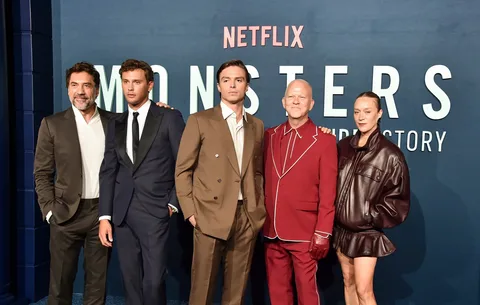
It is a fair question. Why would anyone type Johann Rupert and Javier Bardem into the same search? Part of the answer is simple curiosity. Both men are famous, wealthy and slightly mysterious. Rupert is famously private — the Financial Times has described him as reclusive, and he rarely gives interviews. Bardem, despite being a global star, guards his family life fiercely and dislikes the celebrity circus. People sense there is more to both men than the public image, and they go looking.
The other part is the contrast itself. Comparison articles work because contrast teaches. A billionaire who sells timeless luxury and an actor who disappears into other people’s lives are two opposite answers to the same question: how do you build a career that lasts forty years? Rupert’s answer involves patience, ownership and control. Bardem’s answer involves craft, risk and choosing the right roles over the easy money. By the end of this article, you will see that the two answers share more than you might expect.
Johann Rupert: The Quiet Man Behind Cartier
Early Life in Stellenbosch
Johann Peter Rupert was born on 1 June 1950 in Stellenbosch, the wine-country town in South Africa’s Western Cape. He was the eldest son of Anton Rupert, one of the most successful businessmen in South African history. Anton had started with almost nothing in the 1940s, founding a small tobacco company called Voorbrand that grew into the Rembrandt Group, a giant spanning tobacco, wine, spirits, mining and finance. To grow up as Anton Rupert’s son meant growing up inside a business — but it did not mean everything was handed over on a plate.
Johann attended Paul Roos Gymnasium in Stellenbosch and went on to study economics and company law at the University of Stellenbosch. Then he did something that shocks people who assume billionaires all have polished CVs: he dropped out. He left university without finishing his degree, deciding that real business would teach him more than the lecture hall. Interestingly, the same university later gave him an honorary doctorate in economics in 2004, and Nelson Mandela Metropolitan University followed with another honorary doctorate in 2008. Life has a sense of humour.
The New York Apprenticeship and Rand Merchant Bank
Rupert’s real education happened in New York. He spent about two years working at Chase Manhattan Bank and roughly three years at Lazard Frères, the famous investment house. Those five years mattered enormously. He learned how international finance worked, how deals were structured, and how the world’s money actually moved — lessons no South African classroom could have given him at the time.
In 1979, still only in his late twenties, he returned home and founded Rand Merchant Bank. Founding a bank at 29 sounds like the behaviour of a man in a hurry, and in his own way he was. He ran the bank as chief executive until 1984, when it merged with Rand Consolidated Investments to form RMB Holdings. With his own venture established, he finally joined his father’s Rembrandt Group — not as a trainee, but as a man who had already built something of his own. That detail matters. Rupert’s authority inside the family empire was earned outside it first.
Building Richemont, the Luxury Empire
The defining move of Rupert’s life came in 1988. The Rembrandt Group’s international assets — its stakes in luxury and tobacco interests outside South Africa — were spun off into a new Swiss-based company: Compagnie Financière Richemont. Johann Rupert became its first chief executive, and over the following decades he reshaped it into a pure luxury powerhouse. Through the 1990s and 2000s, Richemont gathered some of the most prestigious names in the world into one stable: Cartier, often called the jeweller of kings; Van Cleef & Arpels; Montblanc; and a watchmaking portfolio that reads like a museum catalogue — Vacheron Constantin, A. Lange & Söhne, Jaeger-LeCoultre, IWC Schaffhausen, Panerai and Baume & Mercier, among others.
The strategy was unusual for its patience. Rupert did not buy brands to strip them, flip them or plaster logos everywhere. Luxury, in his view, is built on heritage, craftsmanship and restraint, and it dies the moment it chases quick volume. Each house kept its own identity and creative leadership, while Richemont supplied capital, distribution and long-term protection from short-term market panic. It is a strategy that treats a 200-year-old watch brand the way a careful gardener treats an old tree: you do not yank it upward to make it grow faster. You protect the roots and let time work. In the financial year to March 2026, Richemont reported sales of roughly €22.4 billion — proof that patience, at this scale, pays very well.
Control, Remgro and Reinet
Rupert’s power inside Richemont does not rest on owning most of the company. The Rupert family holds only a modest slice of Richemont’s equity — around a tenth or less — but controls roughly half of the voting rights through a dual-class share structure. Critics, including some shareholders and proxy advisers, have challenged this arrangement over the years. Supporters answer that it is exactly what allowed Rupert to think in decades while other executives were bullied by quarterly results. Both things can be true at once, and the debate says a lot about modern capitalism.
Beyond Richemont, Rupert chairs Remgro, the South African investment holding company that grew out of his father’s Rembrandt Group, in which he holds a significant stake, and he controls a major interest in Reinet Investments, a Luxembourg-based investment vehicle originally spun out of Richemont. He has also been outspoken outside business — he is a well-known opponent of fracking in South Africa’s Karoo region, where he owns land, and he has expressed support for the idea of a universal basic income, a position that surprises people who expect billionaires to think in only one way.
Johann Rupert’s Net Worth
So what is Johann Rupert worth? Forbes has placed the Rupert family fortune in the region of 15 to 17 billion US dollars in recent years — about $16.1 billion on the Forbes 2025 list, with real-time trackers moving the figure up and down with the Richemont share price. That makes him the richest person living in South Africa and roughly the second-richest person in Africa, behind Nigeria’s Aliko Dangote on most rankings (South African-born Elon Musk is richer, but he is counted as American). Treat every one of these numbers as an estimate. They are calculated from share prices and known holdings, they swing with markets and exchange rates, and no billionaire’s fortune sits in a bank account as cash. What is not in doubt is the scale: this is one of the largest luxury fortunes on the planet.
Javier Bardem: The Actor Who Became the Character

Born Into an Acting Family
Javier Ángel Encinas Bardem was born on 1 March 1969 in Las Palmas de Gran Canaria, in Spain’s Canary Islands, and raised largely in Madrid. If Rupert was born into business, Bardem was born into acting — literally surrounded by it. His mother, Pilar Bardem, was a respected actress, as were his older siblings, Mónica and Carlos. His uncle, Juan Antonio Bardem, was a famous film director, and his grandparents had been actors too. The Bardem name carried weight in Spanish cinema long before Javier said a line on camera — he actually appeared briefly on screen as a small child.
But a famous surname in Spanish film did not come with money or comfort. Pilar raised her three children largely on her own, working constantly, and the family knew hard times. Young Javier was not even set on acting at first. He studied painting for several years and seriously considered art as a career, worked odd jobs, and acted partly because it was the family trade and the work was there. That slightly reluctant start is part of what makes his later total commitment so striking. He did not drift into stardom. He grew into mastery.
The Spanish Years: Jamón Jamón to The Sea Inside
Bardem’s breakthrough came in 1992 with Jamón Jamón, Bigas Luna’s earthy, provocative drama that became a landmark of modern Spanish cinema — and, not incidentally, also featured a young Penélope Cruz, whom he would marry almost two decades later. Through the 1990s he built a reputation in Spanish films such as Running Out of Time, Boca a boca and Live Flesh, winning Goya Awards — Spain’s equivalent of the Oscars — and two Volpi Cups for Best Actor at the Venice Film Festival along the way.
Two performances turned him from a Spanish star into an international one. In Mondays in the Sun (2002) he played a proud, unemployed shipyard worker with a weight and sadness that critics adored. Then, in The Sea Inside (2004), directed by Alejandro Amenábar, he played Ramón Sampedro, a quadriplegic man fighting for the right to end his life. Bardem was only in his mid-thirties, yet he convincingly played a man decades older, almost entirely from a bed, using little more than his face and voice. It remains one of the great acting performances of its decade, and it announced to the world that this was not a leading man. This was an actor of rare depth.
Before Night Falls and the Oscar Breakthrough
Hollywood came calling through an unlikely door. In Before Night Falls (2000), Julian Schnabel’s film about the persecuted Cuban poet Reinaldo Arenas, Bardem gave his first major English-language performance — in an accent not his own, in a language he was still mastering. The gamble paid off beyond anyone’s expectations. He won the Volpi Cup at Venice and was nominated for the Academy Award for Best Actor, becoming the first Spanish actor ever nominated for an Oscar.
Then came 2007, and the role that defines him for much of the world. In the Coen brothers’ No Country for Old Men, Bardem played Anton Chigurh, a near-silent hitman with a pageboy haircut, a captive bolt pistol and a coin he flips to decide whether people live or die. It is widely ranked among the greatest screen villains of all time — psychiatrists have even cited the character as a clinically realistic portrait of a psychopath. Bardem won everything there was to win for it: the Academy Award for Best Supporting Actor at the 2008 ceremony, making him the first — and still the only — Spanish actor to win an Oscar, plus a BAFTA, a Golden Globe and a Screen Actors Guild Award.
Blockbusters, Biutiful and a Second Career Peak
What Bardem did next shows his judgement. He did not cash in with a decade of lazy villain roles. He mixed everything: the charming painter in Woody Allen’s Vicky Cristina Barcelona (2008), a devastating lead performance in Biutiful (2010), for which he won Best Actor at the Cannes Film Festival and another Oscar nomination, and then — when he did take the blockbuster money — he took roles with meat on them. His bleach-blond Bond villain Silva in Skyfall (2012) is remembered as one of the best villains in the entire 007 series. He played Captain Salazar in Pirates of the Caribbean: Dead Men Tell No Tales (2017), Stilgar in Dune (2021) and Dune: Part Two (2024), King Triton in The Little Mermaid (2023), and a team owner in the racing film F1 (2025). In 2021 he earned his fourth Oscar nomination playing Desi Arnaz in Being the Ricardos. In 2024, his turn as José Menendez in the Netflix series Monsters brought him Emmy nominations both as an actor and as an executive producer. Three decades in, his range is still widening.
Personal Life and Activism
Bardem married Penélope Cruz in July 2010 in a small private ceremony in the Bahamas. They have two children, a son born in 2011 and a daughter born in 2013, and the couple are famously protective of their family’s privacy — no magazine tours of the nursery, no children on red carpets. Off screen, Bardem has long been an environmental campaigner; in 2018 he became a Greenpeace ambassador for the protection of Antarctica, and he has produced documentaries on humanitarian crises. Like Rupert with his conservation and anti-fracking stands, Bardem uses his position to argue for things that have nothing to do with his income.
Javier Bardem’s Net Worth
Estimates of Javier Bardem’s net worth usually land somewhere in the 30 to 50 million US dollar range, and you should treat those numbers the same way as any celebrity fortune estimate: as educated guesses, not audited facts. What is certain is the shape of the career. He has never been a 20-million-dollar-a-picture franchise actor chasing the biggest cheque every year. He alternates modestly paid European art films with major studio productions, which keeps his income strong but his fortune deliberately modest next to Hollywood’s top earners. Compared with Johann Rupert, the gap is enormous — roughly three hundred times smaller, on most estimates. But that comparison misses the point, as we will see below: Bardem sells his craft, not assets, and craft stops earning the day you stop working, while Rupert’s empire earns while he sleeps.
Johann Rupert and Javier Bardem Side by Side
Here is the comparison in one place. Figures marked as estimates are exactly that — public estimates, not confirmed personal disclosures.
| Full Name | Johann Peter Rupert | Javier Ángel Encinas Bardem |
| Born | 1 June 1950, Stellenbosch, South Africa | 1 March 1969, Las Palmas, Spain |
| Nationality | South African | Spanish |
| Known For | Chairman of Richemont (Cartier, Montblanc, Van Cleef & Arpels) | Oscar-winning actor; Anton Chigurh in No Country for Old Men |
| Family Background | Son of Anton Rupert, founder of the Rembrandt Group | Son of actress Pilar Bardem; acting dynasty family |
| Education | Studied economics and company law at Stellenbosch; left without a degree (later honorary doctorates) | Studied painting; trained through the family trade of acting |
| Career Start | Chase Manhattan and Lazard Frères, New York; founded Rand Merchant Bank in 1979 | Child appearances, then Spanish cinema breakthrough with Jamón Jamón (1992) |
| Defining Achievement | Founded Richemont in 1988 and built it into a luxury empire with about €22.4bn in annual sales | First Spanish actor to win an Oscar (Best Supporting Actor, 2008) |
| Other Major Roles | Chairman of Remgro; major shareholder of Reinet | Skyfall, Biutiful, Dune, Vicky Cristina Barcelona, Being the Ricardos |
| Estimated Net Worth | Roughly $15–17 billion (Forbes estimates, family fortune) | Roughly $30–50 million (celebrity wealth estimates) |
| Awards and Honours | Honorary doctorates; long-standing Forbes billionaire ranking | Academy Award, BAFTA, Golden Globe, Cannes Best Actor, 7 Goya Awards |
| Public Style | Extremely private; rarely gives interviews | Private about family; outspoken on environmental causes |
Two Opposite Roads to the Top
Family Legacy: Burden or Launchpad?
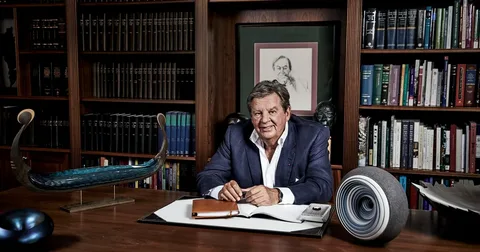
Both men inherited a name before they earned one, and both had to escape its shadow in their own way. Rupert grew up as the heir to a business empire, which sounds like pure advantage — until you consider that every decision he made was measured against a legendary father. His answer was to leave, learn finance in New York, and found his own bank before returning. Only then did he take the reins, and the business he built, Richemont, was a new creation carved out of the old empire rather than a simple inheritance left on autopilot.
Bardem’s inheritance was cultural, not financial. The Bardem name opened doors in Spanish cinema, but it also came with expectations and a family history bound up with Spain’s difficult twentieth century — his uncle the director had been jailed under Franco. Javier’s early career suggests a young man ambivalent about the family trade, drifting in through painting and part-time work before committing fully. Both stories carry the same lesson: a famous surname gets you a hearing. It does not get you forty years at the top. That part is earned separately, by each generation, in full.
The Power of Patience vs the Power of the Role
Rupert’s genius is patience at industrial scale. Luxury brands are fragile. A watch maison that took 250 years to build can be cheapened in five. His whole career is a refusal to hurry — holding brands through downturns, letting craftsmen work at the speed craftsmanship requires, and structuring Richemont’s voting control so that no impatient investor could force him to sell the soul of a brand for a good quarter. Time is his raw material.
Bardem’s genius is the opposite kind of patience: patience between roles. Actors at his level are offered enormous money constantly, and his filmography shows long stretches where he clearly waited for the right part instead of grabbing the available one. When the right part came — Chigurh, Ramón Sampedro, the dying fixer Uxbal in Biutiful — he gave it total preparation, learning languages, transforming physically, disappearing. Rupert waits years for a strategy to ripen. Bardem waits months for a character to arrive, then gives it everything in weeks. Different clocks, same discipline.
Control vs Surrender
Here is perhaps the deepest difference. Rupert’s career is about control: control of votes, of brand image, of succession, of his own privacy. Even his famous reclusiveness is a form of control — he decides what the world gets to see. Bardem’s craft, by contrast, is about surrender. Great acting requires handing yourself over to a character and a director, letting a fictional killer’s stillness or a dying man’s desperation take over your own body. The actor who cannot surrender cannot transform.
And yet each man borrows from the other side. Rupert surrendered his father’s business model — he did not cling to tobacco-era Rembrandt; he let it go and built something new from its pieces. Bardem, meanwhile, controls his career with a businessman’s discipline: choosing projects strategically, producing documentaries, protecting his family brand, and stepping into an executive producer role on Monsters. Control where it protects the work. Surrender where the work requires it. That balance, in both lives, looks less like accident and more like the secret itself.
Money: Owning Assets vs Selling Craft
The wealth gap between the two men — billions against tens of millions — is not really a gap in talent or fame. Bardem is far more famous. It is a gap in economic structure. Rupert owns appreciating assets: shares in companies whose brands, boutiques and craftspeople generate revenue every day, in every timezone, whether he is in the office or on his farm in the Karoo. Ownership compounds. Bardem, like almost every actor, sells his time and talent one production at a time. Fees can be large, but they do not compound, and they depend on his continued health, energy and desirability to casting directors.
This is the single most useful financial lesson in this entire comparison, and it applies far beyond celebrities. The surgeon, the footballer and the film star all face Bardem’s equation: high income, no compounding. The quiet shareholder faces Rupert’s: modest visibility, wealth that grows on its own. The happiest outcomes usually blend the two — earning well from a craft, then steadily converting that income into owned assets. Neither man would put it quite this bluntly, perhaps, but their balance sheets say it for them.
Privacy and Public Image
For two men who could command any spotlight, both are strikingly reluctant stars. Rupert rarely gives interviews and has been called reclusive by the Financial Times and Barron’s; when he does speak publicly, it tends to be about conservation, South Africa’s future, or that famous 2025 trip as part of the South African delegation to the White House — matters of substance, not self-promotion. Bardem walks red carpets because his job requires it, then goes home to Madrid and a family life he keeps almost entirely out of the press.
In an era when fame is usually farmed daily on social media, both men treat privacy as an asset. Rupert’s silence makes his rare statements carry weight. Bardem’s absence between films makes each performance feel like an event. Scarcity, it turns out, is a strategy both the luxury business and the acting business understand perfectly. Cartier does not discount. Bardem does not overexpose. The brand logic is identical.
Five Lessons From Rupert and Bardem
First, learn somewhere else before you lead at home. Rupert’s New York years and Bardem’s long Spanish apprenticeship both happened before the world stage. The foundation was poured in obscurity, and it held for decades because of it.
Second, inheritance is a starting line, not a finish line. Both men came from famous families in their fields, and both spent their early careers proving they were more than a surname. If you are building on a family’s work — a shop, a practice, a name — expect to have to earn it twice.
Third, protect the long term from the short term. Rupert did it with voting structures and patient brand stewardship. Bardem did it by refusing roles that paid well and meant little. Every career faces the same trade; these two almost always chose the long term, and their forty-year runs are the receipt.
Fourth, if you earn from a craft, buy assets. The difference between a fortune of fifty million and one of sixteen billion is mostly the difference between fees and ownership. Whatever your field, converting income into things that earn without you is how comfort becomes security.
Fifth, guard your privacy like it is part of the business — because it is. Neither man shouts. Both are listened to when they speak. In a noisy world, restraint is a form of power, and both careers prove it works in a boardroom and on a film set alike.
Who Is More Successful? The Honest Answer
It depends entirely on the scoreboard, and honest comparisons should say so. On money, there is no contest: Rupert’s family fortune, estimated by Forbes in the mid-teens of billions, dwarfs Bardem’s estimated tens of millions. On cultural impact, the contest reverses. Anton Chigurh lives in the imagination of millions of people who could not name a single Richemont brand executive. Rupert changed what luxury means and how it is owned; Bardem changed what acting can look like and opened Hollywood’s door to Spanish performers behind him.
Perhaps the fairest verdict is this. Rupert built an institution designed to outlive him by centuries — Cartier will sell jewellery long after everyone reading this is gone. Bardem built a body of work that will be watched for as long as films are watched, but it is inseparable from the man himself. An empire that survives its founder, and a craft that dies with its master yet lives forever on screen. Two kinds of immortality. Picking one says more about the person picking than about either man.
Frequently Asked Questions
1. Who is Johann Rupert?
Johann Rupert is a South African billionaire businessman, born in Stellenbosch in 1950. He is the chairman of Richemont, the Swiss luxury group behind Cartier, Van Cleef & Arpels and Montblanc, and he also chairs the investment company Remgro. He founded Richemont in 1988 from the international assets of his father’s Rembrandt Group.
2. Who is Javier Bardem?
Javier Bardem is a Spanish actor, born in Las Palmas in 1969 into a famous acting family. He is best known for playing Anton Chigurh in No Country for Old Men, for which he won the Academy Award for Best Supporting Actor in 2008 — the first Oscar ever won by a Spanish actor.
3. What is Johann Rupert’s net worth?
Forbes has estimated the Rupert family fortune at roughly 15 to 17 billion US dollars in recent years — about $16.1 billion on the 2025 Forbes list. The figure moves with the Richemont share price and exchange rates, so it should always be read as an estimate, not an exact amount.
4. What is Javier Bardem’s net worth?
Public estimates generally place Javier Bardem’s net worth in the 30 to 50 million US dollar range. These are unofficial celebrity-wealth estimates rather than audited figures. His income comes from film and television fees, including major roles in Skyfall, Dune and the series Monsters.
5. How did Johann Rupert make his money?
Mainly through luxury goods. After working in New York banking and founding Rand Merchant Bank, he created Richemont in 1988 and spent decades acquiring and patiently building heritage brands such as Cartier, Vacheron Constantin and Jaeger-LeCoultre. He also holds major stakes in Remgro and Reinet Investments.
6. What is Javier Bardem’s most famous role?
Anton Chigurh in the Coen brothers’ No Country for Old Men (2007) is his most famous role and the one that won him his Oscar. Other celebrated performances include Ramón Sampedro in The Sea Inside, Reinaldo Arenas in Before Night Falls, Uxbal in Biutiful and the Bond villain Silva in Skyfall.
7. Are Johann Rupert and Javier Bardem connected in any way?
There is no known business or personal connection between them. They come from different countries, generations and industries. They are compared because both reached the top of their fields, both came from well-known families in those fields, and both are unusually private for men of their fame and wealth.
8. Who is richer, Johann Rupert or Javier Bardem?
Johann Rupert, by an enormous margin. His family fortune is estimated in the billions, while Bardem’s is estimated in the tens of millions — a difference of roughly three hundred times. The reason is structural: Rupert owns shares in companies that earn continuously, while Bardem earns fees for his work as an actor.
9. How many Oscars has Javier Bardem won?
He has won one Academy Award — Best Supporting Actor for No Country for Old Men, presented at the 2008 ceremony. He has been nominated four times in total, for Before Night Falls, No Country for Old Men, Biutiful and Being the Ricardos, and he was the first Spanish actor ever nominated for an Oscar.
10. What companies does Richemont own?
Richemont’s best-known brands include Cartier, Van Cleef & Arpels, Montblanc, Vacheron Constantin, A. Lange & Söhne, Jaeger-LeCoultre, IWC Schaffhausen, Panerai and Baume & Mercier, covering high jewellery, luxury watches and writing instruments. The group reported sales of about €22.4 billion in its financial year to March 2026.
Final Thoughts
Johann Rupert and Javier Bardem will probably never meet for longer than a handshake, and their worlds — Geneva boardrooms and Madrid film sets — could hardly sit further apart. Yet place their lives side by side and a pattern appears that neither man’s industry can claim as its own. Both were handed a name and chose to earn it again. Both refused the quick reward in favour of the lasting one. Both understood that privacy and patience are not weaknesses in a fame economy; they are leverage.
Whether your ambitions run toward building a business or mastering a craft, the combined lesson of these two careers is hard to argue with: learn deeply, wait for the right moment, own what you can, protect what matters, and let the work — a maison, a performance — speak in rooms you never enter. Rupert’s empire will keep time on other people’s wrists for generations. Bardem’s coin-flipping killer will keep terrifying new audiences for just as long. Different worlds, same standard: excellence, sustained.














Leave a Reply