
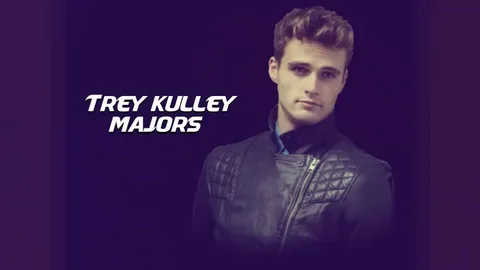
Most twin stories run side by side. This one split early, and never really came back together in public. Trey Kulley Majors and Dane Luke Majors were born on the same day, October 22, 1992, in Los Angeles, to the same famous parents. One kept walking toward film sets. The other walked toward a shaping bay in San Diego, and mostly stayed out of view.
That split is the honest way to tell the story of trey kulley majors. Not as a failed acting career, and not as a mystery either. Just two brothers who were handed the same surname, the same birthday and the same unusual childhood, and then used them in opposite ways.
A Childhood That Started Long Before the Twins Arrived
To see why the boys had a real choice at all, go back well before 1992. Their father, Lee Majors, was born Harvey Lee Yeary on April 23, 1939, in Wyandotte, Michigan. His father died in a work accident before he was born, and his mother died in a car accident when he was a baby. At two, he was adopted by an uncle and aunt and raised in Middlesboro, Kentucky.
Kentucky, not Hollywood, formed him. He played football at Middlesboro High School, won a scholarship to Indiana University, then transferred to Eastern Kentucky University. A severe back injury in his first game there left him paralysed for two weeks and ended his football career. He had planned to coach. Instead, after graduating in 1962, he turned to acting, taking his screen surname from his childhood hero, Tennessee coach Johnny Majors.
The break came in 1965, when he beat more than 400 other actors, Burt Reynolds among them, to play Heath Barkley in The Big Valley. The Six Million Dollar Man and The Fall Guy made him a household face later, but the pattern was set: a working life rebuilt after the first plan collapsed. A son who walks away from an obvious career to learn a trade is, in this family, following a pattern, not breaking one.
The Brother Who Stayed in Front of the Camera
Dane took the familiar road, but he took it the slow way. After the film the twins shared as teenagers, he did not chase big studio parts or trade heavily on the family name. He built a small, independent record instead: the short film Honor Council in 2017, where he played Wren, the thriller Alone in 2020, the slasher Severed Road, and the short To the Moon, playing a younger version of the lead character, Charlie.
Family coverage has also noted a second life for Dane away from sets, in the hi-fi listening-bar world through In Sheep’s Clothing, which he helped expand from Los Angeles to New York in 2023. It is not the record of a man coasting on a famous father. It is project-by-project work, kept small where small is where the interesting parts are.
That removes the lazy contrast. This is not one talented twin and one who could not make it. Dane’s path shows the door was genuinely open, and that staying in the business still meant years of shorts and indies. Trey tried that road once, alongside his brother, and decided his hands were better used elsewhere.
One Film Together, Then the Fork in the Road
The single credit that ties the twins together on screen is Corruption.Gov, released in 2010, when they were about eighteen. Their father played Jim Lawrence in the thriller, alongside Michael Madsen as a powerful senator, Francesco Quinn and Joe Estevez. The plot follows an African exchange student who, while working for that senator, uncovers corruption reaching back to his home country. It was a proper production with established names, not a home movie with a fancy title.
For a teenager from an acting family, a set like that is normally an audition for the rest of your life. Dane treated it that way. Trey, as far as any reliable record shows, did not appear in another film: no follow-up roles, no agent announcements, no festival shorts. The absence is the fact. He sampled his father’s world at the age when sampling turns into commitment, and he left it there.
San Diego Is Not a Backdrop. It Is the Explanation

People who have never spent time on the San Diego coast sometimes read ‘surfboard shaper in San Diego’ as a relaxed way of saying someone has no real job. Locals know better. This coast, from La Jolla Shores to Black’s Beach and Sunset Cliffs, is one of the serious testing grounds of American surfing. Boards get found out at Black’s quickly.
The city also carries the history. In the 1970s, when the shortboard revolution tore up the old long, heavy designs, some of California’s most inventive builders were working in San Diego: Carl Ekstrom, Mike Hynson and Skip Frye among them. Shaping here was never just beach culture. It was workshops and glass shops arguing about foam and fins while waves a short drive away settled the argument.
So Trey did not drift to the beach to escape work. He moved toward one of the few places in America where making surfboards by hand is still a recognised trade, with masters, reputations and waiting lists of its own.
Inside the Shaping Bay: Foam, Rocker, Rails and Glass
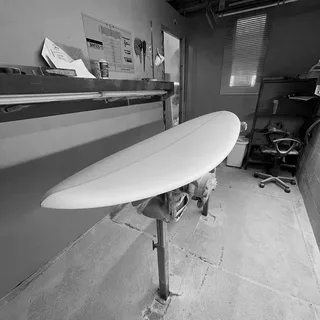
A shaping bay is a small, plain room with side lights set low, for a reason. The low light throws shadows across the blank so the shaper can see bumps and hollows that bright light would hide. The work starts with a foam blank, a rough block that only hints at a board. From there, almost everything is judgement.
Rocker is the curve from nose to tail, and a few millimetres either way changes how a board paddles and turns. Rails, the edges, decide how it holds in the face of a wave. Bottom contours, thickness and fin placement are not decoration either. Change one and the surfer feels it on the first wave.
Then comes glassing, where fibreglass cloth and resin turn fragile foam into something that can survive salt water, sun and being stood on at speed. A good shaper has been described, fairly, as equal parts scientist, engineer and artist, and all three are needed before lunch. Machines now cut blanks close to a finished shape and repeat a proven design a thousand times. What they cannot do is listen to how the last board felt at Black’s on a heavy day and adjust the next one by feel. That conversation is the hand-shaper’s whole living.
Rusty Surfboards: The Name on the Door
Trey’s reported workplace, Rusty Surfboards, is not a souvenir shop with a famous logo. Its founder, Rusty Preisendorfer, was born on June 13, 1953, and grew up in La Jolla after moving there as a boy. He shaped his first board in the winter of 1969/70, learned the trade the slow way, and worked for Gordon & Smith and then Canyon Surfboards, where his boards for riders like Shaun Tomson, Peter Townend and Ian Cairns turned a modest Pacific Beach glass shop into a world-class name.
On July 4, 1985, he left Canyon and started his own label. The mark was the R-dot, a bold R with a full stop beside it, grown out of the way he had signed his Canyon boards, shortened to R. Preisendorfer at Townend’s suggestion. Within two years, more than half of the world’s Top 16 surfers were riding Rusty boards, many unsponsored, simply because the boards worked. In 2001, CJ Hobgood won the world championship on a Rusty. Preisendorfer has hand-shaped around 50,000 surfboards in his lifetime, which explains his nickname in the trade, the Stradivarius of shapers.
The brand marked 40 years in April 2025 and is still headquartered in San Diego, in the Miramar area, where Preisendorfer still shapes alongside his son Clint. In a room with that history, nobody is impressed by a surname from television. The only reputation that counts is whether your last board rode well.
| Year | Milestone | Why It Matters |
| 1953 | Rusty Preisendorfer born, June 13 | The founder grew up in La Jolla, close to the breaks he would shape for |
| 1969/70 | Shapes his first board | Start of a trade learned by hand, ding repair first, design later |
| 1970s | Shapes for Gordon & Smith, then Canyon | Boards for Tomson, Townend and Cairns built his name |
| 1985 | Leaves Canyon on July 4; launches Rusty and the R-dot | Within two years, over half the world’s Top 16 rode his boards |
| 2001 | CJ Hobgood wins the world title on a Rusty | The label’s first world championship |
| 2025 | Brand marks 40 years, April | Still in San Diego (Miramar); Rusty shapes with his son Clint |
Two Brothers, Side by Side
| Dane Luke Majors | Trey Kulley Majors | |
| Born | October 22, 1992, Los Angeles | October 22, 1992, Los Angeles |
| Shared start | Appeared in Corruption.Gov (2010) | Appeared in Corruption.Gov (2010) |
| Path after 2010 | Kept acting in independent film and shorts | Left acting; no further screen career reported |
| Known work | Honor Council (2017), Alone (2020), Severed Road, To the Moon | Surfboard shaper in San Diego, reported at Rusty Surfboards |
| Other work | Hi-fi listening-bar work with In Sheep’s Clothing | Shaped a board for Dane in 2021 |
| Public profile | Works publicly, project by project | Almost entirely off camera, per Hello Magazine |
The Wider Family, in One Honest Pass

The twins are the youngest branch of a family tree that takes a minute to follow. Lee Majors has been married four times: to Kathy Robinson from 1961 to 1964, to Farrah Fawcett from 1973 to 1982, to Karen Velez from 1988 to 1994, and to Faith Majors since 2002. His eldest son, Lee Majors II, born in 1962 during the first marriage, became an actor too, with a guest appearance in The Fall Guy and roles in the Six Million Dollar Man reunion films. His son Cody, Trey’s nephew, drives in US Auto Club racing. Acting was never the only trade on this tree.
The twins’ older sister shows the same pattern. Nikki Majors, born in 1988 and the eldest child of Lee and Karen, was credited as additional crew on Keaton’s Cop at two and appeared in P.S.I. Luv U in 1991. Then, like Trey, she stepped away. She is now Nikki McFarlane, married to real estate agent Adam McFarlane, a mother of four in Pacific Palisades, living privately. Two of Karen Velez’s three children tried the family business young and chose ordinary life. Dane is the exception, not the rule.
Their mother deserves more than one line. Karen Velez, born January 27, 1961, in Rockville Centre, New York, and of Puerto Rican descent, was Playboy’s Miss December 1984 and then Playmate of the Year in 1985, the first Puerto Rican woman to hold that title. She later worked as a hypnotherapist, and the family spent part of the children’s early years in Florida. She died on July 2, 2023, at 62. The privacy this family keeps was learned from parents who both knew what a public life costs.
What a Business Degree Does in a Shaping Bay
Trey is reported to have studied business administration at the University of Southern California. In a workshop, that does plenty. A custom shaping business lives or dies on unglamorous things: ordering blanks and resin before prices move, pricing a board so the hours in the bay are actually paid for, and keeping a queue of orders honest.
Put the degree next to the trade and the choice looks less like drifting, more like a plan. Act, and your income depends on casting decisions made by strangers. Shape well and run the numbers properly, and it depends on repeat customers who return because the last board suited them. For a man who grew up watching fame from the inside, that difference may have been the entire point.
The Internet Version, and Why to Discount It

Search this name for ten minutes and a different Trey appears: rising star, actor, producer, model, sometimes all four in one paragraph, with campaigns and agencies that appear on no other site. None of it survives a simple test. No interviews support it, no credits back it up, and the sites printing it disagree about basic facts. Reliable family reporting, Hello Magazine’s included, says the opposite: he has opted for a life spent almost entirely off camera, as a shaper in San Diego.
The money claims fail the same test. Around $1 million is attached to his name on various blogs, and it is an unverified blog estimate only. No financial reporting confirms it. The same caution covers his personal life: no partner is confirmed in credible reporting, and no verified public social media profile is pointed to by reliable coverage, so this article invents neither.
Why This Twin Story Sticks With People
Part of the interest is nostalgia, and there is no use pretending otherwise. In 2024, Lee Majors returned to The Fall Guy for a mid-credits cameo in the Ryan Gosling film, appearing with his original co-star Heather Thomas as police officers arresting the villains. Audiences who had watched him in the 1980s went looking for the family again, and the searches led, as they always do, to the children.
But nostalgia alone does not explain why readers stay. Plenty of famous actors have children nobody looks up. The hook here is the fork in the road, summed up in a single handmade object. In 2021, Trey shaped a surfboard for Dane: a board made by the one person who shares his birthday, his childhood and his parents, and who chose the opposite life. That board says more about this family than any reunion interview could.
Frequently Asked Questions

Are Trey Kulley Majors and Dane Luke Majors really twins?
Yes. Both were born on October 22, 1992, in Los Angeles, to Lee Majors and Karen Velez, and they are the youngest of Lee Majors’ four children. Whether they are identical or fraternal has not been confirmed in reliable reporting, so that detail is best left unstated.
What films has Dane Majors made since the twins appeared together?
After Corruption.Gov in 2010, Dane played Wren in the short Honor Council (2017), took a leading part in the thriller Alone (2020), and appeared in Severed Road and the short To the Moon, as the younger version of the lead character. His work has stayed in independent film and shorts.
Did Trey Majors act in anything after Corruption.Gov?
No further acting career is documented in reliable reporting. The 2010 film, in which his father also appeared, is the only screen credit that ties him to acting, and everything reported about him afterwards concerns surfboard shaping in San Diego.
What is the R-dot, and who created it?
The R-dot is the logo of Rusty Surfboards: a bold letter R with a full stop beside it. Founder Rusty Preisendorfer developed it from the way he signed his boards at Canyon Surfboards, shortened to R. Preisendorfer on Peter Townend’s suggestion, before launching his own label in 1985.
How good is Rusty Surfboards, really?
By results, very good. Within two years of the 1985 launch, over half the world’s Top 16 surfers rode Rusty boards, and CJ Hobgood won the 2001 world title on one. The brand marked 40 years in April 2025.
What does a surfboard shaper actually do all day?
A shaper turns a foam blank into a finished board by setting its rocker, rails and thickness by hand and eye under low side lights, before it is glassed, sanded and finished. Changes of a few millimetres alter how a board rides, which is why surfers stay loyal to one shaper.
How is Lee Majors II related to Trey?
He is Trey’s older half-brother, born in 1962 to Lee Majors and his first wife, Kathy Robinson, thirty years before the twins arrived. He acted, including a guest spot in The Fall Guy, and his son Cody, Trey’s nephew, is a US Auto Club car driver.
Why did Lee Majors turn up in the 2024 Fall Guy film?
As a nod to the original. Majors, who played Colt Seavers in the 1981 to 1986 television series, appeared with original co-star Heather Thomas in a mid-credits scene as police officers in the 2024 Ryan Gosling film, which is loosely based on the series.
When did Trey’s parents marry, and what happened later?
Lee Majors and Karen Velez married in September 1988 and divorced in 1994, when the twins were small. Lee married Faith Majors in 2002. Karen Velez later worked as a hypnotherapist and died on July 2, 2023, at 62.
Is Trey Kulley Majors a millionaire?
Nobody reliable has established that. Blogs put his net worth at around $1 million, but that is an unverified blog estimate only, with no financial reporting behind it. His known income is his craft work, and his father’s wealth is a separate matter from his own.









Leave a Reply