
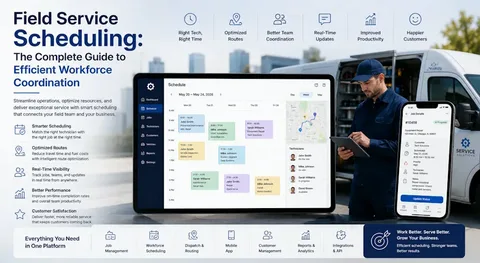
A schedule may look perfectly organized until the first assignment takes longer than expected.
One delayed appointment can affect travel arrangements, customer commitments, and the responsibilities of several employees.
Inaccurate time estimates are among the most common causes of scheduling difficulties.
Effective field service scheduling requires businesses to understand how long assignments realistically take and use that information to create dependable plans.
Why Accurate Time Estimates Matter
Appointment duration influences nearly every scheduling decision.
When estimates are unrealistic, even well-organized calendars become difficult to follow.
Underestimating Work Creates Delays
A technician may need additional time to investigate an unexpected issue or complete required documentation.
If the schedule provides insufficient time, later appointments may be affected.
Overestimating Work Can Create Gaps
Excessively generous time allowances may leave unnecessary waiting periods.
Field service scheduling should balance realistic expectations with efficient resource use.
Understanding What Influences Assignment Duration
Different tasks require different levels of effort.
Technical Complexity
Some assignments involve straightforward activities, while others require detailed investigation.
Managers should account for these differences when estimating duration.
Preparation Requirements
Technicians may need time to review instructions or organize necessary resources.
Preparation should be considered part of the working process.
Documentation Responsibilities
Recording observations and completion details also requires time.
Field service scheduling becomes more realistic when administrative responsibilities are included.
Using Previous Experience to Improve Estimates
Historical assignment information can provide useful planning insights.
Review Completed Work
Managers should compare estimated durations with actual completion times.
Repeated differences may indicate that scheduling assumptions need adjustment.
Identify Assignment Categories
Similar tasks may share common time requirements.
Grouping assignments by complexity can support more accurate planning.
Consider Unusual Circumstances
Not every extended appointment represents a normal workload.
Field service scheduling reviews should distinguish recurring patterns from isolated events.
Including Travel in Appointment Planning

Task duration is only one part of the schedule.
Estimate Journey Requirements
Technicians need sufficient time to move between locations.
Unrealistic travel allowances can create delays even when work durations are accurate.
Consider Geographic Distribution
Nearby appointments may be easier to coordinate consecutively.
However, technician suitability and customer commitments should remain important.
Allow Reasonable Flexibility
Travel conditions and assignment requirements can change.
Field service scheduling should avoid unnecessarily rigid plans.
Improving Estimates Through Technician Feedback
Field employees understand practical task requirements.
Ask About Recurring Delays
Technicians may identify activities that consistently require more time than expected.
Review Preparation Difficulties
Missing information or unclear instructions can extend assignments.
Addressing these issues may improve scheduling accuracy.
Update Planning Standards
Managers should use operational experience to refine duration estimates.
Regular adjustments help schedules remain realistic.
Monitoring Scheduling Performance
Businesses should evaluate whether improved estimates reduce appointment disruptions.
Useful indicators include punctuality, repeated rescheduling, and differences between planned and actual completion times.
Field service scheduling should be treated as an ongoing learning process.
Conclusion

Accurate time estimates are essential for reliable field operations.
Field service scheduling helps businesses create practical appointment plans when managers understand task complexity, preparation requirements, and travel conditions.
However, estimates should not remain unchanged as operational circumstances evolve.
By reviewing completed assignments and gathering technician feedback, organizations can improve scheduling accuracy over time.
More realistic planning reduces unnecessary delays, supports balanced workloads, and helps employees maintain dependable appointment commitments throughout the working day.













Leave a Reply