
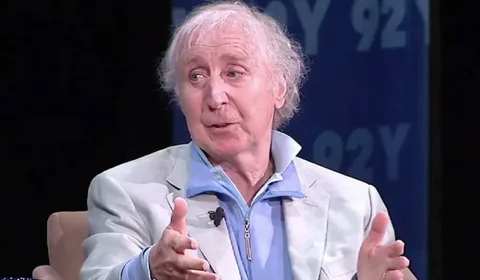
Most articles about Mary Joan Schutz read like the same short paragraph copied from one website to the next. She was Gene Wilder’s second wife. They married in 1967. He adopted her daughter. They divorced in 1974. Full stop.
That version is not wrong, exactly. It is just thin — and it misses the part of the story that actually makes people stop and think. Those seven years, 1967 to 1974, were not a quiet footnote in Wilder’s life. They were the years everything happened. He went into that marriage as a little-known stage actor with one small film part, and he came out of it as Willy Wonka. And running alongside the fame, the whole time, was a small family that formed quickly, mattered enormously to him, and then broke apart in a way he was still talking about, with real pain, nearly thirty years later.
So this article takes a different road through the same name. Instead of another standard biography, it follows the marriage year by year through the films he made while he was her husband, through what his own memoir does and does not say, and through the complete privacy she kept while all of it was happening around her. Where the record is solid, this article says so. Where it is rumour, recycled copying or flat contradiction, it says that too.
Before the cameras: a stage actor from Milwaukee
To understand what those seven years meant, you have to start before them, when Gene Wilder was not Gene Wilder at all. He was born Jerome Silberman on June 11, 1933, in Milwaukee, and he built his craft the slow way, on stage in New York rather than in front of a camera. One of the productions from that period still gets mentioned by theatre people: the 1963 Broadway staging of One Flew Over the Cuckoo’s Nest, where the young Silberman, by then performing as Wilder, was learning his trade in serious drama, not comedy.
The turn toward comedy came through a personal connection, the kind no agent can arrange. Wilder met Mel Brooks through Brooks’ then-girlfriend, Anne Bancroft, one of the most respected actresses of her generation. Bancroft believed in Wilder’s talent, Brooks saw something in him too, and that meeting quietly set up everything that followed. Without it, there is no Leo Bloom, no first Brooks collaboration, and the late 1960s look very different.
It is worth holding that picture in mind — a working stage actor, respected but unknown to film audiences — because that is who Mary Joan Schutz married. She did not marry a star. She married a man whose biggest screen moment was still in front of him, and the speed at which that changed is the real story of their years together.
1967: the year everything started at once
Some years in a life are quiet. For Gene Wilder, 1967 was not one of them. In a single year he appeared in Bonnie and Clyde in a small but memorable role as Eugene Grizzard, a frightened undertaker caught up in the gang’s flight, filmed The Producers with Mel Brooks, married Mary Joan Schutz, and legally adopted her daughter.
The Producers changed his professional life. As Leo Bloom, the nervous, hysterical accountant dragged into a Broadway scam, Wilder gave the performance that announced him to Hollywood, and it brought him an Academy Award nomination for Best Supporting Actor. It was his first collaboration with Brooks, and the nervous energy of that character — panicky, sweet, slightly unhinged — became a signature audiences would follow for decades.
The private change happened in the middle of the professional one. Mary Joan Schutz was a friend of Wilder’s sister, Corinne Silberman Pearlman, which is how the two met. She had a daughter, Katharine, from a previous marriage. In his 2005 memoir, Kiss Me Like a Stranger, Wilder explained that when Katharine started calling him Dad, he felt he should do what he called the right thing. He married Schutz on October 27, 1967, and adopted Katharine the same year. There were no cameras for that decision, and by every account it was not made for publicity. It was a family being formed, quickly and deliberately, in the same months his career caught fire.
The film timeline: seven years at the centre of comedy
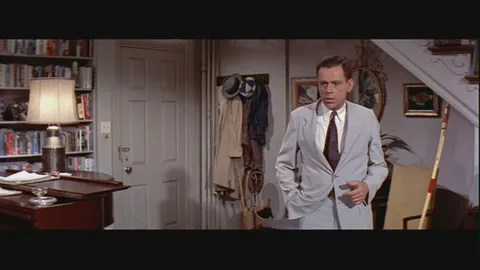
Lay the films of the marriage years side by side and the shape of the story becomes obvious. This was not a wife standing at the edge of someone else’s career. These were the years that built the career itself, and the family home sat in the middle of all of it.
Gene Wilder’s films during the marriage, 1967 to 1974
| Year | Film | Role / Note |
| 1967 | Bonnie and Clyde | Eugene Grizzard, a frightened undertaker; a small early film role |
| 1967 | The Producers | Leo Bloom; Academy Award nomination, Best Supporting Actor; first Mel Brooks film |
| 1970 | Start the Revolution Without Me | A dual role in a French Revolution comedy |
| 1971 | Willy Wonka & the Chocolate Factory | Willy Wonka; Golden Globe nomination; the role that defined him for generations |
| 1972 | Everything You Always Wanted to Know About Sex | A comic segment in Woody Allen’s ensemble film |
| 1974 | Rhinoceros | Reunited on screen with Zero Mostel, his Producers co-star |
| 1974 | Blazing Saddles | Jim, the Waco Kid; stepped in at the last minute, replacing the ailing Gig Young |
| 1974 | Young Frankenstein | Dr. Frederick Frankenstein; co-wrote the screenplay with Brooks; Academy Award nomination, Best Adapted Screenplay |
Wonka in the middle of a marriage
If one film sits at the centre of these years, it is the one from 1971. Willy Wonka & the Chocolate Factory was not an instant giant on release, but over time Wilder’s Wonka — gentle one moment, unsettling the next, always impossible to read — became one of the most loved performances in family cinema. It also earned him a Golden Globe nomination, proof that the industry, not just audiences, was paying attention.
Think about what that means at home. In four years Mary Joan Schutz had gone from a private life, known mainly to friends like Corinne, to being married to a man children would recognise on the street for the rest of his life. She gave no interviews about that change. She wrote nothing about it. Whatever it felt like from the inside — exciting, strange, tiring, all three — she kept it to herself, and that silence is a large part of why so little reliable information about her exists today.
The work kept coming. Woody Allen cast him in Everything You Always Wanted to Know About Sex in 1972, another sign that the leading comic directors of the day all wanted the same actor. By then Wilder was no longer promising. He was established, and the demands that come with that — long shoots, travel, attention — were now the normal weather of the marriage.
1974: three films, and the end of the marriage
The last year of the marriage was, professionally, the biggest of Wilder’s life up to that point. In 1974 he reunited with Zero Mostel in Rhinoceros, played Jim, the Waco Kid, in Blazing Saddles — a part he took at the last minute, replacing Gig Young, who was too unwell to continue — and starred in Young Frankenstein as Dr. Frederick Frankenstein, a character he had dreamed up himself. He co-wrote that screenplay with Mel Brooks, and the writing brought him a second Academy Award nomination, this time for Best Adapted Screenplay.
Three significant films, two of them all-time comedy classics, in one year. And in that same year, the marriage to Mary Joan Schutz ended in divorce. The overlap is hard to ignore and impossible to explain neatly. Biographical accounts note that Katharine suspected Wilder was having an affair with his Young Frankenstein co-star Madeline Kahn. That point needs handling carefully: it is reported as Katharine’s suspicion at the time, not as an established fact, and no affair has ever been proven. What is documented is the outcome. The marriage ended, and in time Wilder and Katharine became estranged — a loss he spoke about with unusual openness years later.
He had gone into 1967 with a new wife, a new daughter and one small film credit. He came out of 1974 divorced, separated from the daughter he had adopted, and famous beyond anything the stage actor from Milwaukee could have expected. Both halves of that sentence are true at once, and any honest account of Mary Joan Schutz has to hold them together.
Second wife, not first: a small correction that matters

Search her name and you will quickly find websites calling Mary Joan Schutz Gene Wilder’s first wife. She was not. His first marriage was to Mary Mercier, a playwright he had met while studying acting in New York; they married in 1960 and divorced in 1965. Mary Joan Schutz, whom he began dating a few months after that divorce ended, was his second wife.
The mistake matters for a simple reason. Once one website prints it, dozens copy it, and the copied error starts to look like a confirmed fact. It is a neat example of how almost everything written about Schutz online should be read: as material that may have been recycled many times without anyone checking it against a reliable source.
Gene Wilder’s four marriages at a glance
| Wife | Married | How it ended |
| Mary Mercier | 1960 | Divorced 1965 |
| Mary Joan Schutz | 1967 | Divorced 1974 |
| Gilda Radner | 1984 | Radner died in 1989 |
| Karen Boyer | 1991 | Married until Wilder’s death in 2016 |
Life after 1974: his public, hers private
Wilder’s story after the divorce is well documented. He went on to a famous partnership with Richard Pryor, beginning with Silver Streak in 1976 and running to four films together, a pairing that produced some of the most popular comedies of its era. He married Gilda Radner in 1984; her death in 1989 was a public grief he wrote and spoke about for years. In 1991 he married Karen Boyer, and they stayed together until his death on August 29, 2016.
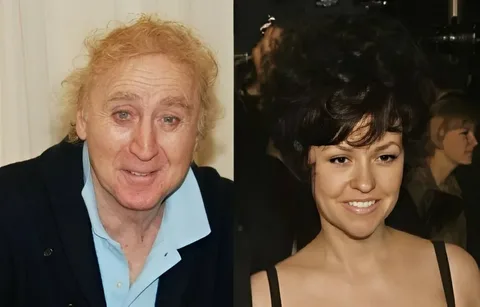
Mary Joan Schutz’s story after 1974 is, by contrast, almost entirely undocumented — and that contrast is itself the point. There is no verified public record of her birth date, birthplace, parents, education or profession. There are no known interviews, no memoir, no public account of where she lived, what she did, or whether she is still living. Some blogs fill that silence with confident detail, including a birth date of January 12, 1930, in Iowa and parents named Matthew Lynn Schutz and Katherine Marie Hickey. Those details should be treated exactly as what they are: unverified blog claims, repeated from site to site, with no reliable source behind them. Other sites give different dates and different parents entirely, which tells you how much weight any of them can carry.
It is tempting to read her silence as an absence, as if there is no story there. A fairer reading is that it was a choice, or at least a boundary she kept for more than forty years while her former husband became one of the most recognisable faces in film. Plenty of people connected to fame decide the public gets no more of them. She appears to have decided that early, and kept to it completely.
Why these seven years still draw readers
Part of the interest is nostalgia. The films of 1967 to 1974 never really left the culture; new generations keep finding Wonka, keep quoting Blazing Saddles, keep discovering Young Frankenstein. When people fall for that work, they naturally ask about the life around it, and her name is woven through exactly those years.
Part of it is the human thread. A child calling a man Dad, an adoption made out of a sense of doing right, a family ending in the same year as his greatest triumphs, and a father-daughter estrangement he never stopped regretting — that is a story people recognise from ordinary life, played out inside an extraordinary career. Mary Joan Schutz stands at the centre of it, mostly silent in the record, which is precisely why readers keep looking for her.
Final word
Mary Joan Schutz was Gene Wilder’s second wife, married to him from October 27, 1967, until their divorce in 1974, and the mother of Katharine, the only child he ever had. Read one way, that is a short biography. Read through the films, though, those dates describe the exact span in which a New York stage actor became the defining comic performer of his generation — and a family rose and fell inside that same span. Her own voice is missing from the record, and honest writing should leave that space empty rather than fill it with invented birthdays and borrowed details. What can be said is enough: for seven years, she was at the centre of comedy’s most creative run, and she walked away from it into a privacy she never gave up.
Frequently Asked Questions

1. Which Gene Wilder films were made while he was married to Mary Joan Schutz?
The main ones are Bonnie and Clyde and The Producers in 1967, Start the Revolution Without Me in 1970, Willy Wonka & the Chocolate Factory in 1971, Woody Allen’s Everything You Always Wanted to Know About Sex in 1972, and Rhinoceros, Blazing Saddles and Young Frankenstein, all in 1974.
2. What was Gene Wilder doing before he became a film star?
He was a stage actor in New York, born Jerome Silberman in Milwaukee in 1933. His early work included the 1963 Broadway production of One Flew Over the Cuckoo’s Nest, years before film audiences knew his name.
3. How did Gene Wilder meet Mel Brooks?
He met Brooks through Brooks’ then-girlfriend, Anne Bancroft. That connection led to The Producers in 1967, Wilder’s first film collaboration with Brooks and the performance that launched his screen career.
4. Why did Gene Wilder take the Waco Kid role in Blazing Saddles so suddenly?
He stepped in at the last minute as Jim, the Waco Kid, replacing Gig Young, who was too unwell to continue in the part. The film became one of the defining comedies of 1974, the final year of Wilder’s marriage to Schutz.
5. Did Gene Wilder write any of the films from this period himself?
Yes. He co-wrote Young Frankenstein with Mel Brooks and played Dr. Frederick Frankenstein. The screenplay earned him an Academy Award nomination for Best Adapted Screenplay, adding a writing honour to his acting nominations.
6. Was Mary Joan Schutz really Gene Wilder’s first wife?
No, although some websites say so. His first wife was playwright Mary Mercier, whom he married in 1960 and divorced in 1965. Mary Joan Schutz was his second wife, from 1967 to 1974.
7. What happened to Gene Wilder’s career after the divorce in 1974?
It kept growing. He began a famous run of four films with Richard Pryor, starting with Silver Streak in 1976, married Gilda Radner in 1984, and after her death in 1989, married Karen Boyer in 1991, remaining with her until his death in 2016.
8. Why did Wilder and his adopted daughter Katharine become estranged?
Biographical accounts say Katharine suspected Wilder was having an affair with his Young Frankenstein co-star Madeline Kahn. That was her suspicion as reported in those accounts, not a proven fact. After the 1974 divorce, father and daughter became estranged.
9. Is the Iowa birth story about Mary Joan Schutz true?
It is not verified. Blogs claim she was born on January 12, 1930, in Iowa to parents named Matthew Lynn Schutz and Katherine Marie Hickey, but no reliable source confirms her birth date, birthplace or parents, and other sites publish conflicting versions.
10. Why is there so little information about Mary Joan Schutz after 1974?
Because she lived completely privately. She gave no known interviews, wrote no book, and no verified public record covers her work, home or later life. What circulates online beyond the basic marriage facts is mostly recycled or unverified blog material.






Leave a Reply