
Driving around a corner seems simple until speed, road conditions, steering input, and vehicle weight all begin working together. A car has to maintain contact with the road while changing direction, and this becomes more challenging when the road is wet, uneven, or sharply curved. This is where technologies such as active cornering enhancement can make a noticeable difference.
Active cornering enhancement refers to vehicle systems designed to improve stability, handling, and driver confidence while a car is turning. Instead of relying only on conventional suspension components, these systems can use sensors, electronic controls, braking inputs, torque management, or adaptive suspension technology to influence how the vehicle behaves through a corner.
The exact design varies between manufacturers and models, so active cornering enhancement is not necessarily one single technology. It is better understood as a group of systems and strategies aimed at helping a vehicle remain controlled while cornering.
Why Cornering Is More Complicated Than It Looks
When a vehicle travels in a straight line, its weight is distributed relatively predictably. Turning changes that situation.
As the vehicle enters a corner, forces act on the body and tires. The vehicle naturally tends to lean outward, while the tires must generate enough grip to change direction.
Several factors affect the result, including vehicle speed, steering angle, tire condition, suspension setup, road surface, weather, and weight distribution.
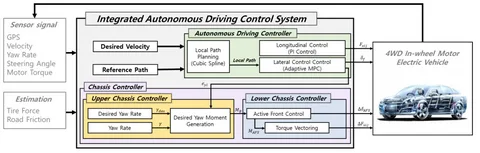
A modern vehicle can monitor many of these factors through electronic sensors. Active cornering technology uses this information to make adjustments that would not be possible with a completely passive system.
What Does Active Cornering Enhancement Actually Do?
The main purpose is to help the vehicle maintain stability and predictable behavior during turns.
Depending on the system, active cornering enhancement may influence suspension stiffness, braking force at individual wheels, engine torque, or other vehicle dynamics.
For example, if sensors detect that the vehicle is beginning to behave differently from the driver’s intended direction, electronic controls can respond within a very short period.
This does not mean the technology can defeat the laws of physics. Tires still have limited grip, and excessive speed can overwhelm any electronic assistance system.
Instead, these systems are designed to help the vehicle make better use of the grip that is available.
The Role of Vehicle Sensors
Modern cornering systems depend heavily on sensors.
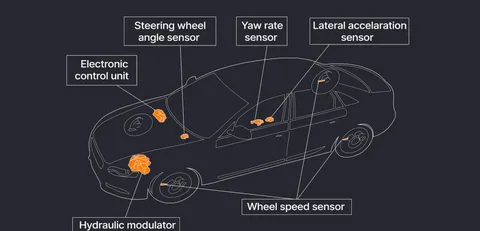
A vehicle may monitor steering angle, wheel speed, yaw rate, acceleration, suspension movement, and other information.
The electronic control system combines these signals to estimate what the vehicle is doing.
Imagine a driver turning the steering wheel into a curve. The system can compare steering input with the vehicle’s actual movement. If the two do not match as expected, the vehicle may respond through one or more control systems.
The process happens extremely quickly, often before the driver notices that the vehicle’s behavior has begun to change.
Active Versus Passive Suspension
Traditional suspension systems are largely passive. Springs, dampers, anti-roll bars, and other components respond mechanically to forces acting on the vehicle.
They can be carefully tuned to provide a balance between comfort and handling, but their characteristics are generally fixed.
Active or electronically controlled suspension systems offer more flexibility.
A vehicle can adjust damping characteristics depending on driving conditions. Some advanced systems can also influence body roll more directly.
This allows engineers to create a vehicle that feels comfortable during ordinary driving while becoming more controlled when cornering demands increase.
Reducing Body Roll
One of the most visible effects of cornering is body roll.
When a car turns, the body tends to lean toward the outside of the corner. A small amount of movement is normal, but excessive roll can affect driver confidence and alter the way the tires interact with the road.
Active cornering technologies can reduce this movement through electronically controlled suspension components or active anti-roll systems.
Keeping the body more level can make steering feel more consistent and can help maintain a more controlled relationship between the tires and road.
However, minimizing body movement is not the only objective. A suspension system must still allow the wheels to respond to bumps and uneven surfaces.
How Torque Can Influence Cornering
Some active cornering systems work through the drivetrain rather than only through the suspension.
Torque vectoring is one example.
In a conventional drivetrain, both driven wheels may receive similar amounts of torque. A torque-vectoring system can deliberately vary the torque delivered to individual wheels.
During a turn, this can help influence the vehicle’s rotation and improve responsiveness.
For example, providing more driving force to an appropriate outside wheel can help the vehicle follow the curve more naturally.
The exact behavior depends on whether the vehicle uses an electric motor, electronically controlled differential, braking-based system, or another drivetrain design.
Braking-Based Cornering Assistance
Electronic braking systems can also contribute to cornering control.
If the vehicle detects that one wheel needs to be slowed slightly to improve stability, the braking system may apply controlled pressure to that wheel.
This can help manage understeer or oversteer in certain situations.
The driver may not even feel a conventional braking action because the intervention can be subtle and extremely brief.
Electronic stability control systems use similar principles to help keep a vehicle closer to the driver’s intended path.
Understanding Understeer
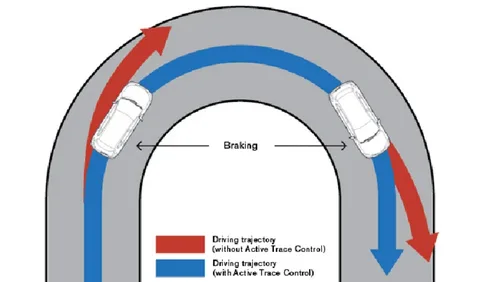
Understeer occurs when a vehicle turns less than the driver expects despite steering input.
In simple terms, the front tires are not generating enough lateral grip for the requested turn, so the vehicle tends to move toward the outside of the corner.
Several factors can contribute to understeer, including excessive speed, road conditions, tire grip, and vehicle setup.
Active systems may help manage understeer by adjusting braking, torque, or suspension behavior.
However, they cannot create unlimited tire grip. If the vehicle enters a corner far too quickly, the available technology may not be able to compensate.
Understanding Oversteer
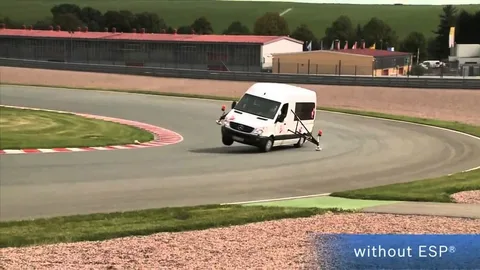
Oversteer is essentially the opposite behavior.
The rear of the vehicle begins moving outward more than expected, causing the vehicle to rotate toward the inside of the corner.
Oversteer can occur because of road conditions, sudden acceleration, abrupt steering, or differences in tire grip.
Electronic stability systems can detect vehicle rotation and intervene through braking or torque reduction.
Again, the purpose is not to make a dangerous maneuver safe. It is to help the driver maintain control within the limits of available traction.
Why Wet Roads Matter
Wet roads reduce tire grip and can make cornering more challenging.
Water can create a slippery surface, and standing water can introduce the risk of hydroplaning.
Active cornering enhancement may help maintain stability when traction changes, but drivers should still reduce speed and increase caution in wet weather.
No electronic system can replace good tire condition and sensible driving.
Tire Condition Still Matters
Even the most sophisticated cornering technology depends on the tires.
Tires are the only components directly connecting the vehicle to the road.
If the tread is worn, pressure is incorrect, or the rubber has aged significantly, available grip can be reduced.
A vehicle equipped with advanced handling technology still needs properly maintained tires.
Checking tire pressure regularly is a simple habit that can affect steering response, braking, comfort, and overall handling.
The Importance of Wheel Alignment
Wheel alignment can also influence cornering behavior.
If alignment angles are incorrect, the vehicle may pull to one side, respond unevenly to steering input, or wear tires irregularly.
Drivers who notice unusual steering behavior should have the vehicle inspected rather than assuming that electronic systems will correct it.
Active cornering enhancement works best when the mechanical components underneath the vehicle are in good condition.
Cornering Enhancement in Electric Vehicles
Electric vehicles have created new possibilities for vehicle dynamics.
Electric motors can respond extremely quickly, and some electric vehicles use separate motors to control individual wheels or axles.
This allows engineers to manage torque with considerable precision.
An electric vehicle with multiple motors may use software to adjust power distribution during cornering.
Because electric motors can change torque rapidly, they can become an important part of modern stability and handling strategies.
Active Cornering and Driver Confidence
One benefit of these systems is that they can make vehicle behavior feel more predictable.
A driver may notice that the vehicle remains composed through a curve instead of producing excessive body movement.
Steering can feel more controlled, and the vehicle may respond more consistently when road conditions change.
This does not mean drivers should intentionally increase speed. The technology should be viewed as a safety and handling aid rather than an invitation to drive aggressively.
Is Active Cornering Enhancement the Same as Stability Control?
Not necessarily.
The terms can overlap because several vehicle systems work together to improve stability.
Electronic stability control primarily focuses on helping the vehicle maintain its intended path when it detects instability.
Active cornering technologies can involve suspension, torque distribution, steering, braking, or combinations of these systems.
A manufacturer may use its own terminology for a particular system, which is why the exact technical definition should be checked in the vehicle’s documentation.
How Software Has Changed Vehicle Handling
Modern vehicles increasingly rely on software to control mechanical systems.
Instead of every handling response being determined entirely by fixed mechanical components, electronic control units can make adjustments based on real-time information.
Software can process sensor data and determine how the vehicle should respond.
This approach allows manufacturers to create different driving modes as well. A comfort setting may prioritize smoothness, while a sport-oriented mode may provide quicker responses and firmer suspension behavior.
Comfort and Handling Can Work Together
In the past, buyers often had to choose between a soft ride and sharper handling.
A very soft suspension can be comfortable but may allow more body movement during cornering. A very stiff suspension can improve control but may transmit more bumps into the cabin.
Active suspension technologies can reduce this compromise by adapting to the situation.
During normal driving, the system can prioritize comfort. When cornering forces increase, it can adjust its behavior to provide additional support.
This is one reason advanced suspension systems have become increasingly common in premium and performance vehicles.
Does Active Cornering Make Driving Safer?
It can contribute to vehicle stability, but safety depends on many factors.
Driver behavior, road conditions, tires, brakes, vehicle maintenance, visibility, and speed all matter.
Electronic assistance can help reduce certain forms of instability, particularly when a driver encounters an unexpected change in traction.
But drivers should never treat active cornering technology as a substitute for safe driving.
The safest approach is still to drive at a speed appropriate for the road and weather conditions.
What Happens If the System Fails?
Like any electronic or mechanical component, active cornering systems can develop faults.
Modern vehicles generally monitor their systems and may display warning messages when a problem is detected.
If a warning light related to stability control, suspension, steering, or drivetrain systems appears, the vehicle should be inspected according to the manufacturer’s recommendations.
A disabled system does not always mean that the vehicle cannot be driven, but it may mean that certain assistance functions are unavailable.
The owner’s manual should always be the first reference for a specific warning.
Maintenance of Active Cornering Systems
Many active systems do not require the same routine maintenance as traditional components, but they still depend on the condition of the vehicle’s mechanical and electronic systems.
Regular inspections should include tires, suspension components, brakes, wheel alignment, steering components, and electronic warning systems.
If the vehicle begins behaving differently during turns, do not ignore the change.
Symptoms such as unusual body movement, strange noises, uneven tire wear, steering vibration, or warning messages can indicate a problem that deserves attention.
Why Road Design Matters Too
Vehicle technology is only one part of the cornering equation.
Roads are designed with curves, banking, surface materials, and speed expectations that influence how safely vehicles can turn.
A well-designed curve can help guide a vehicle through a change in direction, while sharp or poorly maintained roads require greater caution.
Drivers should always follow posted speed limits and adjust their speed further when conditions require it.
The Future of Cornering Technology
Vehicle dynamics are continuing to evolve.
Electric powertrains, advanced sensors, artificial intelligence-assisted control systems, and electronically controlled suspension components are creating new opportunities for managing vehicle movement.
Future systems may respond even more precisely to individual wheel behavior and road conditions.
However, the basic principle will remain the same: keep the vehicle stable, maintain useful tire contact with the road, and give the driver predictable control.
Frequently Asked Questions
What is active cornering enhancement?
Active cornering enhancement describes vehicle technologies that actively influence handling and stability during turns. Depending on the vehicle, the system may use suspension control, braking, torque distribution, steering assistance, or a combination of these technologies.
Does active cornering enhancement prevent accidents?
It can help reduce certain forms of vehicle instability, but it cannot prevent every accident. Safe speed, good tires, proper maintenance, and responsible driving remain essential.
Can active cornering work on wet roads?
Electronic systems can help maintain stability when traction changes, but wet roads still provide less grip. Drivers should reduce speed and drive according to conditions.
Is active cornering technology only found in sports cars?
No. Similar technologies are available in a range of modern vehicles, from performance cars to luxury vehicles and some mainstream models.
Do tires affect active cornering performance?
Yes. Tires provide the actual contact with the road. Worn, damaged, or incorrectly inflated tires can reduce available grip and affect how effectively handling systems can operate.
Can active cornering replace careful driving?
No. It is an assistance technology, not a replacement for responsible driving. The laws of physics still apply regardless of how advanced a vehicle’s electronic systems are.
Final Thoughts
Active cornering enhancement represents the way modern vehicles are combining mechanical engineering with electronics and software to improve handling. Instead of relying entirely on fixed suspension settings and mechanical components, today’s vehicles can monitor their behavior and make rapid adjustments while driving.
These systems can influence body roll, braking, torque distribution, suspension behavior, and overall stability. Their goal is to make the vehicle more predictable and controlled when changing direction.
Still, technology works within limits. Good tires, proper maintenance, appropriate speed, and attentive driving remain fundamental. The most effective approach is to use modern vehicle technology as an additional layer of control rather than assuming it can overcome unsafe conditions.
As vehicles become increasingly electronic and software-driven, active cornering technology will likely continue developing. For drivers, understanding what these systems actually do can make it easier to appreciate their benefits while maintaining realistic expectations about their limitations.











Leave a Reply