
Most of us only think about grammar at the worst moment: an email is half written, a cover letter is due, and one sentence refuses to look right. Is it a comma there, or not? Should that word have an apostrophe? GrammarVista.com is built for exactly those moments. It is a free English grammar and writing resource, branded Grammar Vista, and its real strength is not fancy software. It is short, plain lessons that explain a rule, show it working in a sentence, and leave you able to use it yourself next time.
That teaching focus matters. A correction fixes one sentence. A rule fixes a hundred sentences you have not written yet. So instead of treating this site like a machine you feed text into, it helps to see it for what it mainly is: a small online grammar classroom, open to anyone, with no account and no paywall on the lessons.
Punctuation: Small Marks That Change the Meaning
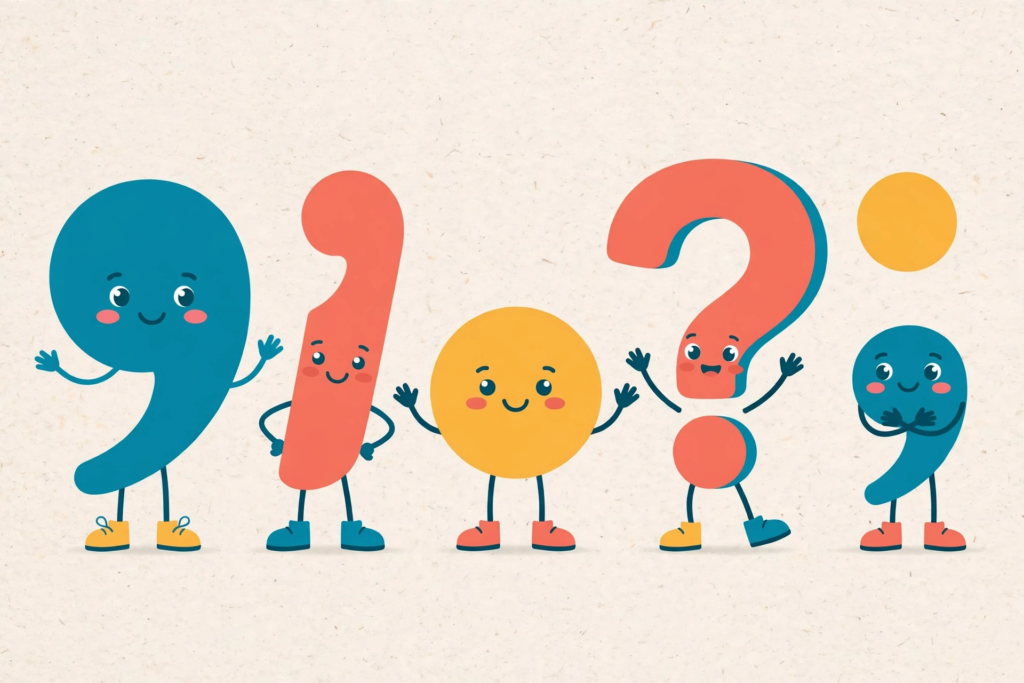
Punctuation is where the lessons usually start, and for good reason. A comma is tiny, but moving it can change who did what. Compare “Let’s eat, Grandma” with “Let’s eat Grandma.” One is an invitation to lunch. The other is a crime scene. The site’s punctuation lessons cover the everyday marks people actually struggle with: commas in lists and after opening phrases, apostrophes, and the full stop, called a period in American English.
The useful habit these lessons teach is pausing where the comma sits. If you would naturally take a breath there, a comma often belongs there too, though not always. Reading a sentence aloud, slowly, catches more punctuation problems than staring at it ever will.
Compound Words: When Two Words Become One
A compound word is what happens when two words join and start working as a single idea. Some close up completely, like notebook, toothbrush and sunflower. Some keep a hyphen, like mother-in-law or well-known. Others stay open, like post office and high school, even though they name one thing. There is no single rule that settles every case, which is why this topic confuses people.
The lessons approach it sensibly: learn the common closed forms by sight, hyphenate compounds that act as adjectives before a noun, and check a dictionary when you are unsure. Over time you stop guessing, because you have seen the patterns often enough to recognise them.
Possessives: The Apostrophe That Shows Ownership
Possessives answer one question: who does this belong to? For most singular nouns, you add an apostrophe and an s: the teacher’s desk, Sara’s notebook. For plural nouns that already end in s, the apostrophe usually goes after it: the students’ books. It is a small system, and once it clicks, it stays clicked.
The pair that trips almost everyone is its and it’s. Its shows ownership, like “the dog wagged its tail.” It’s is always short for it is. The quick test from the lessons is simple: expand it. If “it is” fits the sentence, use it’s. If it sounds wrong, you want its. That one test quietly fixes one of the most common errors in everyday writing.
Sentence Structure: The Skeleton Under Every Sentence
Every complete sentence needs a subject, the person or thing doing something, and a verb, the action or state. “The committee approved the budget” works because committee is the subject and approved is the verb. A group of words without both, like “because the shop was closed,” is a clause that cannot stand alone, and leaving it as its own sentence creates a fragment.
The structure lessons build from there: simple sentences, then clauses joined with words like and, but and because. You do not need the technical names for daily writing. You need the feel of a sentence that is complete, and the habit of checking that yours are.
| Category | What It Covers | Quick Example |
| Punctuation | Commas, apostrophes, periods | Let’s eat, Grandma. |
| Compound Words | Closed, hyphenated and open forms | Notebook; mother-in-law |
| Possessives | Apostrophe-s rules; its vs it’s | Sara’s notebook; its tail |
| Sentence Structure | Subjects, verbs and clauses | The committee approved it. |
The Mistakes These Lessons Keep Coming Back To
Read a few lessons and a pattern appears. The same handful of mistakes shows up again and again, in homework, office emails and application letters alike, so the site returns to them.
- Your and you’re. “Your” shows ownership; “you’re” means you are. “Your interview went well” is right because the interview belongs to you.
- There, their and they’re. “There” points to a place, “their” shows ownership, and “they’re” means they are. Three jobs, three spellings.
- Affect and effect. An effect is usually the result, while to affect is usually the action. “The rain affected the match; the effect was a delay.”
- Misplaced commas. A comma in the wrong place can join two full sentences into a run-on, or split a subject from its verb. Short sentences rarely need rescuing.
None of these errors means someone writes badly. They mean someone writes quickly. That is why the lessons work as refreshers: five minutes on one pair of words can clean up months of future writing.
How to Use a Grammar Blog: A Routine That Takes Ten Minutes
A blog cannot mark your homework, so you have to work it like a workbook. The routine that gets results is plain. First, read the rule, out loud if you can, because hearing it helps it stick. Second, try the example: cover the answer, decide what you would write, then compare. Third, write one sentence of your own using the rule, about your own life, because personal sentences are remembered better than textbook ones.
Do that for one topic a day, ten minutes at a time. Monday can be commas, Tuesday possessives, Wednesday compounds. By the end of a month you will have covered the mistakes that actually appear in your writing, instead of grammar in the abstract.
Who Gets the Most Out of GrammarVista.com
Students get the clearest win, because school writing is judged on exactly these basics. English learners, including ESL students, benefit from the plain wording: rules are explained without heavy jargon, and the American English focus matches what most exams and employers expect. Job seekers writing CVs and cover letters are another natural audience, since one apostrophe error on page one can undermine a strong application. And everyday writers, anyone who sends emails, posts or reports, can treat the site as a quick reference to settle a doubt in a minute.
So, Is There a Checker? Read This Part Carefully
Here is where honesty matters, because the internet disagrees with itself about this site. A direct check in October 2026 found a WordPress blog: grammar lessons and general articles, with no checker tool, no account system and no paywall. Other reviews published in November 2026 describe something quite different: a free, browser-based checker covering 134 grammar rules, a dictionary of about 276,000 words, an 8,000-character limit per check, and text that stays in your browser instead of being uploaded.
Those tool details are reported, not confirmed. They may describe a feature that appeared later, a different page, or a review that got it wrong. The safe advice is to look at the live site yourself before pasting anything into it, and to keep sensitive documents, such as legal or medical text, out of any free tool whose privacy you have not verified.
| Question | A Grammar Blog | Checker Software |
| What does it do? | Explains rules with examples | Scans your text for errors |
| What do you gain? | Skill you keep and reuse | Fixes for that one document |
| Does it need your text? | No, you just read | Yes, you paste or type it in |
| Example | GrammarVista.com lessons | Grammarly and similar checkers |
Names That Cause Confusion
Three lookalikes cause most of the mix-ups. Grammervista.com, spelled with “grammer,” is a different site, so check the address letter by letter. GrammarVista.com USA is not a separate American edition; it is the same site, and the USA label reflects its American English focus. Separately, Grammar Vista textbooks used in Korea are a different product altogether and have nothing to do with this website. One more caution: a single source names Rizwan Aslam as the site’s editor, but that is one source only, not a confirmed fact, so treat it as unproven.
My Honest Take
GrammarVista.com will not replace a teacher, an editor or proper checker software, and it does not claim the polish of a big platform. What it offers is rarer than it sounds: clear, free explanations of the grammar points people genuinely get wrong, written in language a tired student or a busy job seeker can follow. Used little and often, with a notebook beside you, it does the quiet work of making your next hundred sentences better, not just the one in front of you.
Frequently Asked Questions
1. What is the fastest way to learn from GrammarVista.com?
Pick one topic, read the rule, test yourself on the example, then write your own sentence. Ten focused minutes beat an hour of skimming.
2. Can GrammarVista.com help me stop mixing up its and it’s?
Yes. Use its test: expand the word to “it is.” If that fits, write it’s. If it sounds wrong, write its, which shows ownership.
3. Does the site explain compound words like mother-in-law?
Yes. Its compound word lessons cover closed forms like notebook, hyphenated forms like mother-in-law, and open forms like post office.
4. I am learning English as a second language. Is it suitable for me?
Yes. The lessons use plain wording and everyday examples, with an American English focus that suits most exams, classes and workplaces.
5. Can teachers use these lessons in class?
The examples work well as warm-ups or homework support. Check the page first and match it to your syllabus.
6. Will reading the lessons improve my CV or cover letter?
It can. Recruiters notice basics like apostrophes and commas, and the possessives and punctuation lessons target exactly the errors that appear in applications.
7. How is a grammar blog different from using a checker?
A checker fixes the document in front of you. A blog teaches the rule, so you make fewer mistakes in everything you write afterwards.
8. Does GrammarVista.com have a grammar checker or not?
Reports conflict. A direct check found only a blog, while later reviews describe a checker. Treat checker details as reported, not confirmed, and verify live.
9. Is Grammervista.com the same website?
No. Grammervista.com, with “grammer” in the name, is a different site. Always check the spelling in the address bar before you rely on a page.
10. Do I need to pay or create an account to read the lessons?
No. The lessons found on the site were free to read, with no account and no paywall. If a page ever asks for payment, double-check the address.










Leave a Reply