
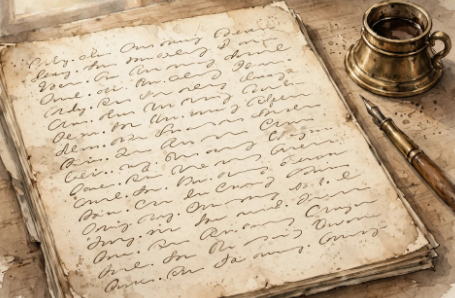
A name that refuses to be found
Every family historian knows the moment. You type a name into a database exactly as it appears on the one document you trust — Sruhl — press search, and the screen comes back empty. No results. No person. It feels like a dead end, but it almost never is. You have been searching for a spelling when you should have been searching for a man.
Sruhl is a rare Yiddish given name, a form of Srul, which JewishGen identifies as the Yiddish shortened form of the Hebrew name Yisrael — Israel in English. That one fact changes the whole investigation, because a man called Sruhl at home could be written down as Srul, Shrul, Yisrael or Israel depending on who held the pen and which country he was standing in. What follows is the detective trail: where a name like this hides, and how researchers coax it back into the light.
Rule one: search the sound, not the spelling
Names in the old country were spoken long before they were written, and every clerk who caught a Yiddish name wrote down what his own language allowed him to hear. The same name might be set down in Hebrew letters in a community register, in Russian Cyrillic by an imperial official, in Polish or German spelling by a shipping agent, and in English by an American census taker. Vowels drifted, consonants swapped, and extra letters — like the quiet h in Sruhl — crept in through transliteration.
So rule one is simple: never trust one spelling. Work through the whole family of forms, and use sounds-like searching where a database offers it.
| Spelling | Where you are most likely to meet it |
| Sruhl | Older transcribed records and JewishGen databases |
| Srul | The standard Yiddish form in most reference works |
| Shrul | Records shaped by German or Polish spelling |
| Sruel | American documents, including death certificates |
| Yisrael | Hebrew and religious records, and gravestones |
| Israel | English-language and later American records |
One discipline matters more than any database trick: never merge two records on the strength of the name alone. Cousins often shared a name. Match on the life around it — age, town, father’s name, wife and children — and only then claim the man.
The world that wrote the name down

To understand why the paper is so messy, picture the world that produced it. For well over a century, most Jews in the Russian Empire were required by law to live inside the Pale of Settlement, a vast western borderland of small market towns — shtetls — from the Baltic towards the Black Sea. Dashev, the town that produced our earliest Sruhl, sat inside that world.
Jewish life inside the Pale was rich and largely self-run, but the paperwork was not. The records that survive were mostly made by the state, for the state’s purposes: who owed tax, whose sons could be taken for military service, who had permission to live where. The officials keeping them were usually not Jewish, often not local, and rarely interested in how a family spelled its own names. A name spoken in Yiddish across a desk came back in Russian administrative dress, and nobody at the desk thought that mattered. Two centuries later, that shrug is the researcher’s biggest obstacle — and also a clue, because the pattern of distortion is itself consistent.
Two clues hiding inside the name itself

Old records reward anyone who reads the name itself as evidence. The first clue is the double name. In the 1883 death records from Peschanka, one father is recorded as Sruhl-Gersh — two given names joined by a hyphen. That was an ordinary pattern: a boy might carry a Hebrew name and a Yiddish name, or be named for two relatives, and different documents would use one half, the other, or both. If your man seems to vanish, search each half on its own before giving up on him.
The second clue is the patronymic, the father’s name carried like a surname before fixed surnames were universal. The 1795 census of Dashev lists a householder as “Sruhl, age 44, son of Ruvin” — a whole genealogy in six words. His sons appear in later lists as sons of Sruhl. Follow them and you can walk a family through the records even when surnames shift — fathers are harder to misplace than spellings.
Five kinds of paper that can find him
No single record tells the story; the trick is knowing what each kind of paper was made for, and what it can give you. JewishGen’s databases gather many of these sources, and they are the natural starting point for a name this rare.
| Record | What it can give you |
| Revision lists | Russian Empire tax and census lists, household by household, with ages and fathers’ names |
| Census records | Household members, ages and birthplaces — spelling depends on the enumerator |
| Ship manifests | The name as the shipping line recorded it, last home town, nearest relative left behind |
| Naturalization papers | Arrival ship and date, name at arrival, sometimes the new name adopted later |
| Gravestones and burial records | The Hebrew name and often the father’s name — the bridge back to Yisrael |
That last source is the one beginners overlook. A gravestone usually carries the Hebrew name, carved by family who knew it. If an American stone says Yisrael, you have been handed the key to every earlier record — the Srul and Sruhl spellings you are hunting are simply that name in its everyday clothes.
The Ellis Island story that never happened

Almost every family with immigrant roots owns some version of the same legend: an officer at Ellis Island could not manage the old name, so he invented a new one on the spot. It is a good story, and mostly a myth, researchers of the period say. Passenger lists were not written on arrival; they were compiled at the port of departure, from the tickets people had bought. Officers at Ellis Island worked from those lists and questioned arrivals through interpreters. Names certainly changed — but usually later, gradually, and at the immigrants’ own hands, as Sruhl became Israel, and Israel sometimes became something shorter still.
For the detective this is good news: the manifest spelling is often closest to the name as used at home — why a rare spelling like Sruhl can survive on a manifest long after American documents tidied it away.
Lookalikes, dead ends and an honest warning
Three traps wait at the end of this trail. The first is the surname trap: on the evidence that survives, Sruhl is a given name, not primarily a surname, and the similar German surname Ruhl belongs to a different family of names. The second is modern: sruhl inside an email address is almost always just initials, typically an S. Ruhl. The third is pure fiction: readers of online serial novels may meet a creature called Sruhl in a web novel hosted on Royal Road. It is an invented monster that shares only the letters.
And the honest warning: the documentation for Sruhl is thin. There are no famous bearers to profile, no popularity charts to quote, and no secret second meaning — anyone offering those is guessing. What exists is a handful of genuine records, spread across more than a century, proving that real men carried this name through real lives. For a family historian, that handful is not a disappointment. It is the whole point of the search.
Frequently Asked Questions

I found the name Sruhl in a record. Where do I look next?
Start with JewishGen’s databases, and search the whole spelling family — Srul, Shrul, Sruel, Yisrael and Israel — not just Sruhl. Then work outwards from the town in your record — records were kept by place, and a rare name in a small town is far easier to follow.
Why can I not find my ancestor under the name Sruhl?
Because the exact spelling is rare and clerks were inconsistent. The same man may be filed under Srul, Yisrael or Israel, or under the other half of a double name. Try sounds-like searching, drop the h, and match on age, town and relatives, not letters alone.
What is a revision list, and why does it matter for this name?
Revision lists were the Russian Empire’s household-by-household tax and census registers, updated over many years. They matter because they group whole families with ages and fathers’ names, so a man like the Sruhl of Dashev appears not as a lone entry but as the head of a traceable household.
What does “son of Ruvin” actually tell me?
It is a patronymic — it names the man’s father. In the 1795 Dashev census, “Sruhl, age 44, son of Ruvin” hands you the previous generation for free, and tells you to look for Ruvin in earlier lists and for “sons of Sruhl” in later ones.
Why do some records join two names with a hyphen, like Sruhl-Gersh?
Double given names were common. A boy might receive a Hebrew name and a Yiddish name, or be named after two relatives, and the two were often written together, as with Sruhl-Gersh in the 1883 Peschanka death records. In searches, try the pair and each name separately.
Did officers at Ellis Island change names like Sruhl?
Almost certainly not in the way the family story tells it. Passenger lists were drawn up at the departure port from ticket information, and Ellis Island officers worked from those lists with interpreters. Most name changes happened afterwards, chosen by the immigrants themselves.
Which records are best for tracing a name this rare?
Revision lists and censuses for the old country years, ship manifests for the journey, naturalization papers for the arrival name and any later change, and gravestones for the Hebrew name. Together, they let one man be recognised across five spellings.
Could Sruhl be a surname in my family?
It is unlikely to have started as one. The documented evidence points to a given name, and the lookalike German surname is Ruhl, which is unrelated. If Sruhl appears as a surname in a modern record, check whether a clerk promoted a father’s given name into the surname column — that happened often.
Why does sruhl appear in email addresses?
Usually for the least romantic reason possible: initials. An address like sruhl@ is typically someone named S. Ruhl, using a first initial plus surname. It is a modern coincidence, unconnected with the historical Yiddish name.
Is the fictional Sruhl connected to the real name?
No. A creature named Sruhl appears in a web novel hosted on Royal Road, but it is a modern invention sharing only the spelling. The historical Sruhl belongs to census lists, death records and family papers — a quieter existence, but a real one.













Leave a Reply