
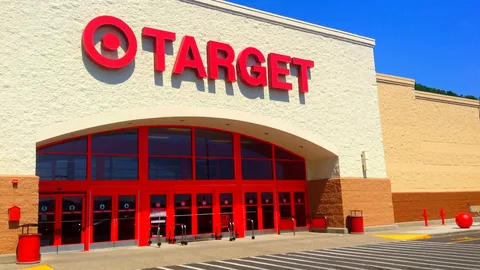
If you have ever typed a company name into Google just to double-check you were landing on the real website, you already understand why this article exists. The short answer is simple. The official Target company URL is target.com. That is the address for shopping, for your account, for orders, returns, registries and gift cards. The company’s corporate home — the place for company news, careers and investor information — sits on the same domain, at corporate.target.com.
It sounds almost too basic to need a whole article. It is not. Target is one of the biggest retailers in the United States, with close to 2,000 stores and hundreds of thousands of team members, and its name is exactly the kind scammers love to borrow. Fake gift card pages, fake job offers, lookalike login screens and prize sites appear constantly, all dressed in red and white, all hoping you will not look closely at the address bar. Knowing the real Target company URL, and knowing how to check it in about five seconds, genuinely protects your money and your personal details.
So this guide does the full job. It gives you the official URL and every important official address that hangs off it. It walks through what each part of the site is actually for, so you stop landing on the corporate pages when you wanted to track a parcel, and stop hunting for jobs on the shopping site. It explains the short history behind the address, from a Minneapolis dry goods business founded in 1902 to the target.com most people now visit on their phones. It shows you how to spot a fake Target page, how the site compares with Walmart and Amazon, and what to do on the rare day the real site will not load. Ten straight-talking FAQs at the end answer the questions people actually search for.
What a company URL is, and why Target’s one matters so much
A URL — Uniform Resource Locator, if you ever need the full name for a quiz — is simply a website’s address. It is the thing you type, tap, bookmark and share. For a small local shop, getting it wrong costs you a minute. For a company like Target, the URL is where a huge amount of real life now happens. It is where you hand over a card number. It is where your home address, your baby registry, your prescription refills and your job application live. The address is not decoration. It is the front door, and it matters that you walk through the right one.
There is a second reason this particular search — target company url — gets typed so often. The word “target” is an ordinary English word. Search for it carelessly and you will meet shooting ranges, marketing articles about target audiences, an Australian retailer that shares the name but not the company, and a long tail of scam pages built to catch exactly that confusion. A clean, verified answer is worth having in one place, and that is what the next section gives you.
The official Target URLs at a glance
Everything official lives under one roof: the target.com domain. What changes is the word in front of it, called a subdomain, or the path after it. Learn the handful in this table and you can navigate the whole company without Google’s help — and, just as usefully, you can spot an outsider instantly, because a fake page can copy Target’s logo but it cannot live inside target.com.
| Address | What it is for | Who should use it |
| target.com | Shopping, account, orders and returns | Everyday shoppers |
| www.target.com | Same main shopping site (the www form) | Everyday shoppers |
| corporate.target.com | Company news, about Target, press and investor pages | Journalists, investors, partners |
| corporate.target.com/careers | Official job listings and applications hub | Job seekers |
| target.com/help (Contact Us) | Help centre for orders, stores, Circle and gift cards | Anyone with a problem to fix |
| Target app (iOS and Android) | Shopping, Wallet, store mode and pickup | Regular in-store shoppers |
Two things in that table are worth slowing down for. First, www.target.com and target.com are the same website — the www is an optional prefix, not a different company. Second, the careers route matters more than people realise. Target itself warns applicants about hiring scams, and its rule is plain: real roles are posted on its corporate careers pages, and applications go through Workday, its official application system. If a “Target job” asks you to apply somewhere else entirely, or to pay a fee, or to hand over banking details by text message, you are not looking at Target. You are looking at a costume.
From a Minneapolis dry goods store to target.com: a short history
The company behind the URL is older than the internet by about ninety years. It began in 1902 in Minneapolis, Minnesota, as a Dayton family dry goods business — the company founded by George Dayton that grew into the Dayton Company, a well-known name in American department stores. For decades there was no Target at all, just Dayton’s and a growing group of stores around it.
The red bullseye arrived in 1962, when the first Target store opened in Roseville, Minnesota, just outside Minneapolis. The idea was a discount store that felt a step above the bare-bones discount barns of the time — wider aisles, better lighting, decent design at low prices. Shoppers later gave that formula its famous nickname, pronouncing the name the French way: “Tar-zhay.” The joke stuck because it captured something true. Target sold cheap, but it tried hard not to feel cheap.
The discount division kept outgrowing the parent company around it. Through mergers and renamings — Dayton Corporation, then Dayton-Hudson Corporation — the Target stores became the engine of the whole business. In 2000 the company finally admitted the obvious and renamed itself Target Corporation. The headquarters stayed where it had always been, at Target Plaza on Nicollet Mall in Minneapolis, and it is still there today. The company trades on the New York Stock Exchange under the ticker TGT.
The website followed the usual path of big retail. An online store grew through the late 1990s and 2000s, first as a catalogue-style shop, then as a real second front door. For a period, Target’s online operation was famously run with help from Amazon’s platform before Target took full control of its own site and rebuilt it in-house. That decision looks wise now. Today target.com carries the full store range, same-day services and store pickup, and it is stitched tightly into the physical shops — you order on the URL, and a team member walks the parcel out to your car. Recent company figures put Target at roughly 1,900 to nearly 2,000 stores across the United States and a team of more than 400,000 people. Exact store and staff counts move a little every year, so treat any single number you read, including here, as the latest reported figure rather than a permanent fact.
One piece of history still causes confusion at the address bar. Target once expanded into Canada, opening stores there in 2013, and closed them again in 2015. There is no separate Canadian Target shopping site to find today. And Target Australia, which uses the same bullseye under licence, is a completely different company owned by Wesfarmers. Its address is target.com.au. Same logo family, different business, different continent — do not use it to track an American order.
What you can actually do on target.com
Most people arrive at the main URL with one of a few jobs in mind, and the site is organised around exactly those jobs. It helps to know the layout before you need it in a hurry — say, on the morning a delivery goes missing.
Shop the full range
The homepage is the shop floor. Groceries, electronics, clothing, home goods, beauty, toys, baby, pets, pharmacy and seasonal ranges all sit one search away, with the weekly deals and Target Circle offers surfaced at the top. Product pages carry the things that matter for a decision: price, store availability near you, delivery estimates, reviews and the pickup options for that exact item. If an item shows stock at your local store, believe the pickup option more than the shelf — staff pick it from the real inventory.
Track orders, returns and refunds
Sign in and your account holds your order history, tracking, receipts and returns in one place. Most returns can be started online and finished in store, and Target’s help pages walk through tracking, cancellations and damaged items step by step. This is also the section scammers imitate most, with fake “your order is held” emails. The safe habit is boring and perfect: ignore the email link, open target.com yourself, and check the order there.
Find a store and use store services
The store finder gives you hours, directions and the services inside each location — which ones have a CVS Pharmacy, a Starbucks, optical, or grocery. Order Pickup and Drive Up both run through the site and the app: order ahead, park in the marked bays, and a team member brings everything out. Same-day delivery through Shipt, Target’s own delivery subsidiary, is arranged from the same product pages.
Target Circle, Circle Card and Circle 360
Target Circle is the free loyalty programme, and its home is your account on target.com: offers you clip, earnings you track, and member prices that apply automatically once you are signed in. The Target Circle Card is the payment card with its own discount at checkout, and Circle 360 is the paid membership built around same-day delivery benefits. All three are managed from the official site — and this is worth underlining — nowhere else. A page offering to “activate” your Circle rewards on a different domain is not helping you.
Registries, lists and gift cards
Baby and wedding registries, everyday shopping lists and gift cards all live on the main domain too. You can build a registry, find someone else’s, check a gift card balance and buy gift cards digitally. Gift card balance pages are a favourite scammer target, which is why the rule in the safety section below exists: only ever type a gift card number into a page whose address is genuinely inside target.com.
The corporate site: news, investors and the company behind the shops
Corporate.target.com is the other half of the Target company URL story, and it is the half most shoppers never visit — which is fine, because it is not built for shoppers. It is where the company talks about itself. You will find its purpose and history, sustainability and community work, press releases and news features, leadership information, and the investor relations material that public companies are required to publish: results, reports and shareholder information.
If you are a journalist, a student writing about retail, a supplier hoping to work with Target, or an investor checking a result, this is your starting address. Starting here also protects you. Supplier and media scams exist just like shopper scams, and a pitch that begins on the real corporate site begins on solid ground. If someone claiming to represent Target contacts you from anywhere else, the corporate site is where you go, independently, to check whether the person and the programme are real.
Careers: the one URL job seekers must get right
Target is one of America’s larger private employers, hiring for stores, supply chain sites and corporate roles, with big seasonal waves through the year. That volume makes its name a magnet for recruitment fraud, and the company is unusually direct about it, so this guide will be too.
The rules, in Target’s own pattern, are these. Open roles are posted through the official careers pages under corporate.target.com. Applications are submitted through Workday, the company’s official application system. Recruiters email from addresses ending in @target.com. Target will never ask you to submit personal information by text message for a job, and it will never ask for payment, gift cards or banking information during hiring. A “recruiter” who wants a fee, your bank details, or an interview conducted entirely over a messaging app with a cheque sent to you in advance is running one of the oldest scams on the internet, wearing a red shirt.
The practical habit takes ten seconds. However you first hear about a Target job — a friend, a job board, a social post — do not apply through that link. Open corporate.target.com yourself, go to careers, and find the same role there. If it is not there, it is not a Target job, whatever the message said.
Target app or target.com: which should you use?
People often ask whether the “real” Target is the app or the website, as if one must be a copy of the other. They are two doors into the same account, the same prices and the same order history. The difference is what each does best.
The website wins on a big screen. Comparing televisions, reading a long review thread, building a baby registry with a partner, or doing a large weekly shop with many filters is simply easier with a keyboard and space to breathe. It is also the natural home for account settings, security options like two-factor verification and passkeys, and the help centre.
The app wins inside the store’s world. It carries your Circle barcode and Wallet for paying, store mode that points you to the right aisle, and the Drive Up flow that tells the team you are on your way and then that you have arrived. Target’s own safety guidance makes a point worth repeating: shopping through the official app is a safe route precisely because it removes the risky step — you never have to judge whether a link was real. Download it only from the Apple App Store or Google Play, check the publisher is Target, and you have removed a whole category of doubt from your life.
Is target.com safe and legit? Yes — and here is how to prove it to yourself
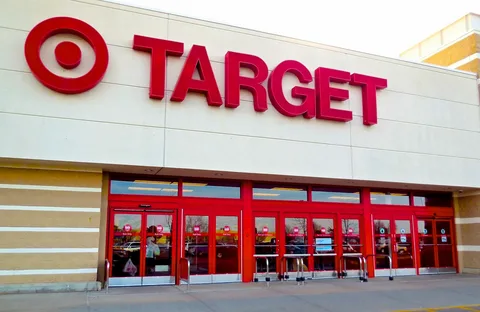
The official site is a legitimate, long-established retail website, and paying there is as safe as online shopping gets when you take the normal precautions. But “trust me” is not a method, so here is the method — the same five-second routine works for Target and for every other big brand in your life.
- Read the domain backwards. The real name sits immediately before the first single slash after https. In corporate.target.com/careers, the domain is target.com and “corporate” is just a subdomain in front of it. In a fake like target.rewards-example.com, the real domain is the strange name at the end, and “target” is only a costume word in front.
- Check the spelling, letter by letter. Scam addresses live on tiny edits: an extra letter, a swapped letter, “tarqet”, a hyphen, “target” followed by an unexpected ending. Real Target shopping happens on target.com — not on .net, .shop, .online or prize-style variants.
- Look for https and the padlock, but do not stop there. A padlock means the connection is encrypted. It does not mean the company is honest. Plenty of scam sites have padlocks. The padlock plus the correct domain is the test, never the padlock alone.
- Hover before you click. On a computer, rest your mouse over any link in an email or advert and your browser shows the true destination. On a phone, press and hold. If the destination is not what the text promised, close it and type target.com yourself.
- Refuse the prize. Target does not hand out large gift cards through random websites, surveys or “recommended deals” funnels. Pages promising a $500 or $750 Target gift card for completing offers are a documented scam pattern: the branding is copied, the pop-ups claiming that someone in another state “just claimed theirs” are theatre, and the personal details you hand over are the real product being collected.
Two account habits finish the job. Turn on two-factor verification in your Target account settings, or add a passkey so you sign in with your fingerprint or face instead of a reusable password. And remember Target’s own line on this: the company will never call you to ask for a one-time code, a PIN, or your Circle Card or gift card numbers. Anyone who does is not calling from Target, whatever the caller ID says.
The mistakes that send people to the wrong Target
Most wrong turns are innocent, and knowing the usual ones makes them easy to dodge. A mistyped address is the classic: one wrong letter can land you on a parked page, an advert farm, or worse, a deliberate lookalike. Autocomplete usually rescues regular visitors, which is one more argument for bookmarking the real address once and using the bookmark forever. Search adverts are the second trap. The first result for a brand search is often a paid placement, and while platforms police them, scam adverts do slip through — glance at the actual URL under the headline before you click, even in Google results.
Then there is simple name confusion. The table below sorts the lookalikes people most often mix up.
| What you typed or found | What it actually is | What to do |
| target.com.au | Target Australia — a separate company under Wesfarmers | Use it only for Australian shopping; it cannot help with US orders |
| A “Target” prize or survey site | Unofficial scam page using copied branding | Close it; real promotions live inside target.com |
| A careers site not under target.com | Possible hiring scam | Re-find the role at corporate.target.com/careers |
| target with an extra letter or hyphen | Typo page or deliberate lookalike | Retype target.com slowly and bookmark it |
| Social media “Target deals” page link | Sometimes real marketing, sometimes a copycat page | Do not sign in there; open target.com yourself instead |
Notice the pattern in the right-hand column. Nearly every fix is the same move: stop, leave the page alone, and type the known address yourself. It takes five seconds and it defeats almost every trick in this article, because a scammer can copy a shop’s shelves but cannot copy its address.
For businesses: sellers, suppliers, advertisers and developers
Not everyone searching for the Target company URL wants to buy shampoo. Businesses come looking for doors too, and the honest advice is to start every approach from the official corporate site rather than from any third party claiming to sell access. Target runs a third-party marketplace, Target Plus, alongside its own range, and its media business, Roundel, works with advertisers who want to reach Target shoppers. Both are real programmes — and both are exactly the kind of programme that attracts middlemen offering shortcuts for a fee.
So the business version of the shopper’s rule applies. Begin at corporate.target.com, follow the company’s own routes for suppliers and partners, and treat any outfit that asks for payment to “get you listed” with deep suspicion until you have verified it through the official site. Developers and researchers should be equally careful with data: product or price information scraped together by random third-party sites is frequently stale or wrong, and Target’s published corporate material is the only version you can safely quote. In business, as in shopping, the URL is the credential. Check it first.
Target’s URL compared with Walmart’s and Amazon’s
Shoppers comparing retailers often end up comparing their websites too, so here is the honest side-by-side. All three companies use the address pattern you would hope for: a short, exact-match .com that is simply the company name. Nobody has to memorise anything.
| Point of comparison | Target — target.com | Walmart — walmart.com | Amazon — amazon.com |
| Company focus | Curated general retail with a design-led feel | Everyday low price general retail at huge scale | Marketplace giant selling almost everything |
| Store network tie-in | Pickup and Drive Up at roughly 1,900+ US stores | Pickup across a larger US store network | Limited physical stores; delivery-first model |
| Membership | Target Circle free; Circle 360 paid tier | Walmart+ paid membership | Prime paid membership |
| Corporate home | corporate.target.com | corporate.walmart.com | About pages under amazon.com |
| Best known strength online | Fast store pickup mixed with pleasant browsing | Grocery and value range depth | Range, reviews and delivery speed |
Read fairly, the table says less about winners than about habits. If your life runs on delivery to the door, Amazon’s machine is built for you. If the weekly shop is about the lowest basket price across the widest grocery range, Walmart presses its advantage. Target’s online strength is the blend: a site that is genuinely pleasant to browse, attached to a nearby store that can put your order in your car within hours. Whichever you use, the discipline from this article travels with you — walmart.com and amazon.com are protected by exactly the same rule as target.com, and faked in exactly the same ways.
A two-minute tour for first-time visitors
If you have never used the site before, the layout becomes obvious once someone names the parts. The top bar is your anchor on every page: the bullseye takes you home, the search box accepts product names, brands or plain descriptions like “blackout curtains”, and the account and cart icons stay in the same corner throughout, so you are never hunting for checkout. Categories sit alongside search for people who prefer to browse an aisle rather than name a product.
Your account page is the quiet control room. That is where addresses, payment methods, order history, Circle offers, registries and security settings live, and it is worth ten minutes on your first visit to set it up properly: confirm your local store, add your details once, and turn on the sign-in protection mentioned earlier. After that, the site does the remembering for you — pickup defaults to your store, offers apply themselves, and reordering something you buy every month becomes a two-tap job. Regular shoppers consistently say these few minutes of setup are the difference between finding the site merely fine and finding it genuinely fast, because nearly every Target service — pickup, delivery, returns, registries — keys off the same account you are looking at.
When target.com will not load: a calm troubleshooting list
Even the biggest retail sites have bad minutes, and the week you most need one is usually the week it blips. Work through these in order; the early steps fix most cases.
- Check whether it is just you. Try the site on a second device or on mobile data instead of Wi-Fi. If it loads there, the problem is local — your connection or your browser — not Target.
- Restart the simple things. Close and reopen the browser, or force-close and reopen the app. A surprising share of “the site is broken” is one tired tab.
- Clear the cache and cookies for target.com, or test in a private window. A corrupted cookie can loop a sign-in page forever, and a private window proves it in seconds because it starts clean.
- Turn off the VPN and any aggressive content blocker for a moment. Retail sites sometimes refuse traffic that appears to come from another country or block pages whose scripts have been stripped. Target serves the United States, so a VPN exit point abroad can genuinely lock you out.
- Update the app. An old app version against a new store system causes failed checkouts and blank pages. Update first, complain second.
- Wait, then check Target’s help pages or official social accounts. During a genuine outage or a huge sale rush, the company posts updates, and there is nothing at your end to fix. Never “fix” an outage by following a stranger’s link to an alternative Target site — that is precisely the moment scam pages advertise hardest.
So, which Target URL should you bookmark?
One bookmark does nearly everything: target.com. From that single address you can shop, sign in, reach the help centre, manage Circle, build a registry and check a gift card. Add a second bookmark for corporate.target.com only if your work involves the company itself — jobs, news, investing or partnership. Everything else you will ever need hangs off those two doors, and everything that does not is, by definition, not Target.
That really is the whole lesson of this rather long answer to a very short question. The Target company URL is target.com. The company behind it is a Minneapolis retailer founded in 1902, renamed for its own discount stores in 2000, and now running close to 2,000 American stores alongside one of the country’s busiest shopping sites. Use the real address, type it yourself when money or personal details are involved, and the internet’s large collection of red-and-white impostors becomes somebody else’s problem.
Frequently asked questions
1. What is the official Target company URL?
The official Target company URL is target.com. That is the main shopping and account website. The company’s corporate information — news, careers and investor pages — lives on the same domain at corporate.target.com.
2. Is www.target.com different from target.com?
No. They are the same website. The “www” is a traditional prefix that many sites still accept, and both forms take you to the same official Target store. What matters is the part that counts: the domain is target.com either way.
3. What is the correct URL for Target careers?
Target jobs are posted through its official careers pages under corporate.target.com, and applications are submitted through Workday, the company’s application system. If a job advert sends you anywhere else, or asks for payment or banking details, treat it as a hiring scam and find the role again on the official careers pages.
4. Is target.com safe to shop and pay on?
Yes. The real target.com is the legitimate website of Target Corporation and is safe for shopping and payment with normal precautions: make sure the address is exactly target.com, keep your account protected with two-factor verification or a passkey, and never sign in through a link sent by email, text or social media.
5. How can I tell a fake Target website from the real one?
Check the domain. A real Target page always sits inside target.com — the name immediately before the first slash in the address. Misspellings, extra words, hyphens, prize offers and endings other than .com are all warning signs. The logo proves nothing, because logos can be copied; the address cannot.
6. Is Target Australia’s website the same company?
No. Target Australia, at target.com.au, is a separate company owned by Wesfarmers that uses the bullseye branding under licence. It cannot access American orders, accounts or gift cards. For anything to do with Target in the United States, use target.com.
7. Does Target have a separate website for Canada?
Not anymore. Target opened Canadian stores in 2013 and closed them in 2015, and there is no separate Canadian Target shopping site today. Canadian shoppers who find pages claiming otherwise should be cautious and use target.com only with the understanding that Target’s stores and delivery serve the United States.
8. Why does target.com not work outside the United States?
Target’s stores, delivery and same-day services are built around the United States, and the site can restrict or behave differently for visitors arriving from other countries — including through a VPN that makes you appear to be abroad. If the site will not load while travelling, check your VPN settings first, and expect the full shopping service to work properly once you are back on a US connection.
9. Where do I check a Target gift card balance using the official URL?
Gift card help, including balance checks, sits inside the official site — start at target.com and follow its gift card pages, or reach them through the help and Contact Us area. Only enter a gift card number on a page whose address is genuinely inside target.com, because fake balance-check pages are a known way thieves harvest card numbers.
10. What should I do if I entered my details on a fake Target site?
Act quickly and calmly. Change your Target password from the real target.com, turn on two-factor verification, and change the same password anywhere else you reused it. Tell your bank if you entered card details, watch the card for unfamiliar charges, and replace gift cards’ risk by contacting Target through its official help pages. Reporting the fake site on the platform where you found it helps protect the next person, too.









Leave a Reply