
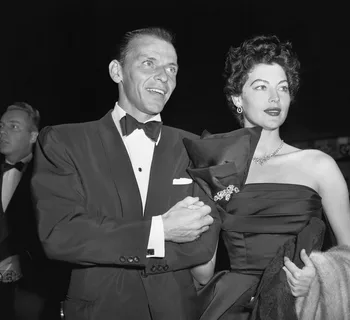
Type both names into a search bar and something odd happens. Frank Sinatra and Kendall Jenner. One name belongs to a singer in a sharp suit, holding a microphone in a smoky Las Vegas showroom sometime in the 1960s. The other belongs to a supermodel stepping off a runway in Paris, phone cameras flashing, the photo already on Instagram before she has even left the building. They feel like they belong to two completely different worlds — because, in almost every way, they do.
And yet people keep searching for them together. Not once in a while. Regularly. So there has to be a reason, right?
There is. But it is probably not the reason most people expect.
This is not a story about a secret friendship. It is not a story about a family link, a duet, or some forgotten photograph of the two of them laughing at a party. Nothing like that exists, and this article is not going to pretend otherwise. Frank Sinatra died on May 14, 1998. Kendall Jenner was born on November 3, 1995. Do the maths and you will see the problem straight away: when Sinatra passed away in Los Angeles, Kendall was two years old. She was a toddler in California while the world was mourning the Chairman of the Board.
So why do their names travel together across the internet?
Because in 2017, almost twenty years after his death, Sinatra’s most famous song became the soundtrack to one of Kendall Jenner’s biggest campaigns. A remix of “My Way” played while she floated in a glass pod, styled after a Renaissance painting, wearing adidas trainers. Old voice, new face. One song, two centuries of fame — almost literally.
That single campaign is the thread. But honestly, it is not the whole story. The deeper reason these two names fit in one article is that they represent two perfect versions of fame, eighty years apart. Sinatra shows you how celebrity worked when there were three TV channels, when radio ruled and a singer had to win a room in person, night after night. Kendall shows you how it works now, when a model can reach hundreds of millions of people from her phone before breakfast — and still has to fight to be taken seriously by the very industry that books her.
Put them side by side and you do not just get a fun comparison. You get a short history of fame itself.
No made-up meetings. No fake quotes. Just two remarkable careers, and the one real moment where they crossed.
The Quick Answer: Did Frank Sinatra and Kendall Jenner Ever Meet?
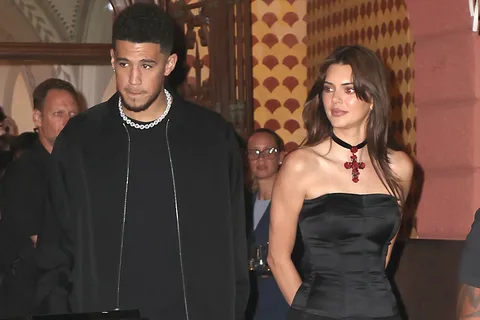
No. They never met, and we should be plain about that before anything else.
Frank Sinatra’s life ran from December 12, 1915 to May 14, 1998. Kendall Jenner’s life began on November 3, 1995. Their lives overlapped for roughly two and a half years, and during that entire overlap Kendall was a baby and then a toddler. There is no photograph of them together, no interview where either mentions the other from that time, and no family or professional connection from Sinatra’s lifetime at all. Anyone who tells you otherwise is guessing, or selling you something.
What does exist is a connection made after Sinatra’s death, by other people, using his music. In August 2017, adidas Originals released the third chapter of its “Original Is Never Finished” campaign. The film was set, once again, to a remix of Sinatra’s “My Way.” Kendall Jenner was its central fashion figure, appearing alongside basketball star James Harden and rappers Playboi Carti, 21 Savage and Young Thug. Sinatra did not “star” in it. He could not. But his voice — or rather, a reworked version of his signature song — was the soul of the whole thing, and Kendall was its face.
Frank Sinatra and Kendall Jenner at a Glance
Before the long stories, here is the short version. Read this table and you will already understand why putting these two lives in one frame is so striking.
| Detail | Frank Sinatra | Kendall Jenner |
| Full name | Francis Albert Sinatra | Kendall Nicole Jenner |
| Born | December 12, 1915, Hoboken, New Jersey | November 3, 1995, Los Angeles, California |
| Died / Status | Died May 14, 1998, Los Angeles, aged 82 | Active — model, TV personality and founder |
| Nickname / Label | “The Voice”, “Ol’ Blue Eyes”, “Chairman of the Board” | One of the leading supermodels of the social-media era |
| Became famous through | Big-band singing, radio and records | Reality TV — Keeping Up With the Kardashians (from 2007) |
| Main craft | Singer and film actor | High-fashion model and media personality |
| Signature work | “My Way”, “New York, New York”, “Strangers in the Night”, the Capitol albums | Runways and campaigns for Chanel, Givenchy, Marc Jacobs, Estée Lauder and Vogue covers worldwide |
| Biggest honour / milestone | Academy Award for From Here to Eternity (1953); 11 Grammy Awards including Legend and Lifetime Achievement honours; Presidential Medal of Freedom (1985) | Named the world’s highest-paid model by Forbes in 2017, with an estimated $22 million that year |
| Famous circle | The Rat Pack — Dean Martin, Sammy Davis Jr. and friends in Las Vegas | The Kardashian-Jenner family, and a generation of model friends in New York, Milan and Paris |
| Business side | Co-founded Reprise Records; Las Vegas headliner for decades | Founder of 818 Tequila (launched 2021); long-running brand ambassador deals |
| Home base in legend | Hoboken roots, Hollywood career, Palm Springs desert house (Twin Palms) | Los Angeles roots, a career split between LA, New York and the European fashion capitals |
| Era of fame | 1940s to 1990s — radio, vinyl, film and television | 2007 to today — reality TV, Instagram and global fashion weeks |
| Shared connection | His signature song “My Way” (1969) | Starred in the 2017 adidas Originals film set to a remix of “My Way” |
Who Was Frank Sinatra? The Kid From Hoboken Who Became “The Voice”
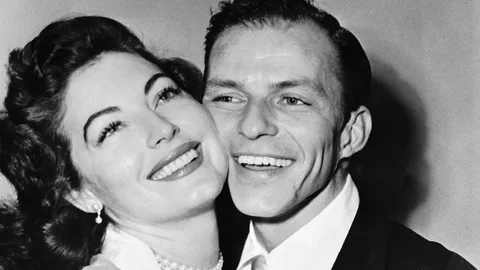
Francis Albert Sinatra was born on December 12, 1915, in Hoboken, New Jersey, the only child of Italian immigrants. His father, Marty Sinatra, had come from Sicily and worked tough jobs — he was a fireman and had boxed. His mother, Dolly, from Genoa, was a force of nature: midwife, political fixer in the neighbourhood, the kind of woman who seemed to know everyone and fear no one. Anyone who reads about Frank’s later life — the loyalty, the temper, the generosity, the refusal to back down — usually ends up saying the same thing. He was his mother’s son.
That confidence could easily have come to nothing. Plenty of kids in Hoboken could sing. What separated Sinatra was a work ethic that people who knew him never stopped talking about. He studied how Crosby breathed. He took jobs singing for his supper in local clubs. He entered amateur contests. In 1935 he got a small break with a local singing group, and in 1939 the bandleader Harry James heard him and signed him. Months later, Tommy Dorsey — whose orchestra was one of the biggest in America — took him on as his featured singer. That was the real launchpad.
Why him? Because of how he sang. Other singers of the era had bigger, louder voices. Sinatra had control. He learned breath technique partly from watching Dorsey play trombone — long, smooth phrases that seemed to float without a break. He treated a lyric like a short story, leaning on the words that hurt, letting the others pass quietly. A love song from him did not sound like a performance. It sounded like a confession at 2 a.m. People who study singing still use one simple phrase for it: he made you believe every word.
The Fall, the Oscar and the Greatest Comeback in Show Business
Here is the part of the Sinatra story that makes it human — and, frankly, makes it useful. By the early 1950s, it was over. Or at least, it looked over.
His voice had suffered. His record sales had collapsed. His film career had stalled. His stormy marriage to the film star Ava Gardner was filling newspapers for all the wrong reasons. The agent dropped him, the studio dropped him, and the same industry that had screamed his name a decade earlier now treated him as yesterday’s man. He was in his mid-thirties, in debt to the taxman, and by his own later admission, there were dark nights when he wondered if he would come back at all.
What saved him was a film role he had to fight for. The novel “From Here to Eternity” was being made into a major movie, and Sinatra wanted the part of Maggio — a small, wiry, doomed soldier who felt, to Sinatra, uncomfortably close to where his own life had landed. He lobbied hard, took the role for a fraction of his old salary, and then acted his heart out. In 1954 he won the Academy Award for Best Supporting Actor. The photograph of him holding that Oscar is famous for a reason. It is not just a man winning a prize. It is a man who was finished, holding proof that he was not.
At almost the same moment, his music found its second life. At Capitol Records he began working with the arranger Nelson Riddle, and together they made a run of albums in the 1950s that critics still place among the finest ever recorded in popular music. There were two Sinatras on those records, and fans argue about them to this day. There was the broken-hearted one, on albums like “In the Wee Small Hours” (1955) — quiet, lonely, sung like the last man awake in the city. And there was the swaggering one, on “Songs for Swingin’ Lovers!” (1956), snapping through upbeat standards with a grin you can actually hear. Same voice. Two completely different men, depending on the night.
Sinatra on Screen and in Las Vegas
Music made him famous, but Sinatra refused to stay in one lane — another thing, you will notice, that echoes loudly in the modern half of this article. Across his career he appeared in dozens of films, and not only musicals. He earned serious respect in “The Man with the Golden Arm” (1955), playing a heroin addict at a time when Hollywood barely touched that subject, and in “The Manchurian Candidate” (1962), a political thriller that still feels sharp and cold today. And in 1960 he led the original “Ocean’s Eleven,” a heist film set in Las Vegas that a later generation would remake with George Clooney and Brad Pitt. If you have seen the remake, you have seen Sinatra’s shadow.
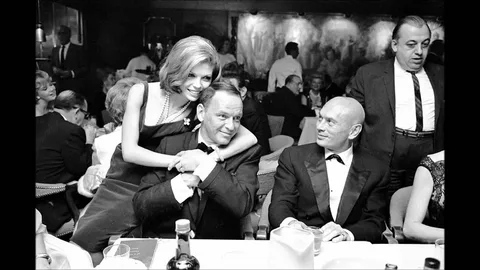
Vegas, really, became his second home. In the 1960s he and his friends — Dean Martin, Sammy Davis Jr., Peter Lawford and Joey Bishop, the circle the press called the Rat Pack — turned the town into their stage. They performed together, filmed together, and by many accounts enjoyed themselves enormously while doing it. The act was loose on purpose: jokes mid-song, friends wandering on stage, the feeling that the audience had been let into a private party. Underneath the looseness was something serious, too. When a Las Vegas hotel refused to serve Sammy Davis Jr. because he was Black, Sinatra — a man whose word ran the town — made clear he would not play places that treated his friend that way, and he used his pulling power for civil rights fundraisers and integrated stages in an era when that cost something. The Rat Pack image is all tuxedos and cocktails in the posters. The record underneath it is a little more complicated, and better.
“My Way”, the Final Decades and a Legacy That Would Not Sit Still
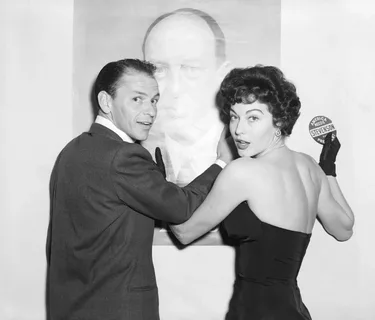
In 1969, Sinatra recorded a song that would outgrow everything else he ever did. “My Way” began life as a French song; Paul Anka rewrote the lyrics in English, thinking specifically of Sinatra and of a man looking back over a whole life. The result was part confession, part defiance: regrets, a few — but too few to mention — and a man standing straight anyway. Sinatra, interestingly, had a complicated relationship with it. He is reported to have called it self-serving at times and grew tired of singing it. Audiences did not care. It became his signature, then a standard for everyone else, then something bigger than a song — a phrase people now put on birthday cards, in speeches and, eventually, on gravestones. His own stone carries a different line, and a hopeful one: “The Best Is Yet to Come.”
The honours kept stacking up across his long career. Eleven Grammy Awards, including the Grammy Legend Award and the Lifetime Achievement Award. The Kennedy Center Honors in 1983. The Presidential Medal of Freedom, presented by Ronald Reagan in 1985. The Congressional Gold Medal in 1997. More than 150 million records sold worldwide — and some counts of his recordings, made across more than five decades and roughly 1,800 tracks, run far higher. He announced a retirement in 1971, typically, and then kept returning to the stage for more than twenty years, because audiences kept asking and because stopping was never really in his nature.
He died of a heart attack on May 14, 1998, in Los Angeles, aged 82. The tributes that week said something revealing: for a man whose prime had been the 1950s, the grief was not confined to his own generation. Younger singers treated him as the standard. Which is exactly why, nineteen years later, a sportswear company could build a youth campaign around his voice and be confident the room would understand. Legends fade. Standards stick around.
Who Is Kendall Jenner? Famous Before She Had a Say in It
Kendall Nicole Jenner was born on November 3, 1995, in Los Angeles, California. Her mother is Kris Jenner, the manager-mother who would go on to build one of the most successful family brands in entertainment history. Her parent Caitlyn Jenner was already famous long before Kendall was born, as an Olympic decathlon champion. Kendall’s younger sister is Kylie Jenner, and her half-siblings include Kim, Kourtney and Khloé Kardashian. In other words, she did not find fame. She was, in a very literal sense, born inside it.
In 2007, when Kendall was eleven years old, the family’s reality show “Keeping Up With the Kardashians” began on television. It ran for 20 seasons, until 2021, and the family later carried on with “The Kardashians” on Hulu from 2022. Think about what that means for a childhood. Her awkward years, her school days, her family arguments and her growing up were not private memories. They were episodes. Millions of people feel they have “known” Kendall since she was a child in braces, because in the limited way television allows, they have.
Here is what makes her story interesting, though, and it is the thing her critics had to slowly admit. Being watched by millions is not the same as being respected by an industry — and fashion, the industry Kendall wanted, is famously cold to outsiders. She started modelling at 14, signing with an agency and doing commercial work like thousands of other teenage girls. The famous surname opened the first door, no question. It also painted a target on her. In high fashion, where careers are built on being discovered, starved of hype and slowly anointed by a tiny circle of editors and designers, arriving with a reality show and tens of millions of followers looked, to the old guard, like cheating.
The Breakout: 2014, 2015 and the Seasons That Silenced the Easy Joke

The answer arrived in 2014 and 2015, and it arrived quickly.
In February 2014, Kendall walked in the Marc Jacobs show at New York Fashion Week — a serious booking, the kind that tells the industry to pay attention. What followed across those two seasons was a run through the top level of the business: runways for high-fashion houses during the New York, Milan and Paris fashion weeks, including names like Chanel and Givenchy. She moved from “the Kardashian sister who models” — the phrase every article used at first — to a working high-fashion model whose bookings stood on their own list of credits.
The commercial side exploded in parallel. She became a brand ambassador for Estée Lauder, one of the biggest beauty names on earth, fronted campaigns and covered magazines including international editions of Vogue, fashion’s most guarded cover of all. Notice the pattern, because it is the exact mirror of Sinatra’s. He had to win the room in person. She had to win rooms that were determined not to be impressed by her fame. Both of them, in the end, were judged on the work in front of people who were ready to say no.
Then came the number that settled the argument in the only language the business fully respects. In 2017, Forbes named Kendall Jenner the world’s highest-paid model, with an estimated income of $22 million in the period it measured. To understand why that headline landed so hard, you need one piece of context: the top spot had belonged to Gisele Bündchen since 2002. Fifteen years of one undisputed queen — ended by a 22-year-old who had grown up on reality television. Whatever anyone thought of how she started, the market had delivered its verdict.
Kendall the Founder: 818 Tequila and the Business of Being Selective
Models’ careers used to come with an expiry date printed on them, and everybody in the industry knew it. Part of what defines Kendall’s generation — and she is a sharp example — is the refusal to accept that arrangement. The modern play is ownership: turn a few peak earning years into businesses that keep paying when the runway calls slow down.
Her biggest move came in 2021, when she launched 818 Tequila, a spirits brand named after the area code of the San Fernando Valley, the part of Los Angeles where she grew up. The launch itself was pure Kendall-era marketing, and worth a sentence: the tequila was released and began winning attention in tastings before her name was loudly attached to it, a reveal designed to say “judge the product first.” You can approve of the tactic or roll your eyes at it, but compare it to Sinatra for a second. He, too, understood ownership earlier than most of his peers — he co-founded his own record label, Reprise Records, in 1960, largely so that no record company could ever drop him the way he had been dropped in the bad years. Different centuries, different products, identical instinct: never again let someone else hold the switch to your career.
The Real Connection: adidas, “My Way” and the 2017 Campaign That Joined Their Names
Now we can give the one real connection the space it deserves, because it explains every search that brought you here.
In 2017, adidas Originals — the heritage, lifestyle side of the sportswear giant — was running a campaign built on a beautiful, slightly cheeky idea: “Original Is Never Finished.” The argument of the campaign was that true originality is not about inventing something from nothing. It is about taking what came before, remixing it, and making it yours. And to make that argument, adidas did something literal. It took Frank Sinatra’s “My Way” — a song that is itself a remake, remember, a French melody with new English words — and remixed it as the soundtrack. A finished classic, deliberately unfinished again.
The campaign rolled out in chapters across the year, with changing casts of musicians, athletes and cultural figures re-creating scenes from earlier chapters in their own style, all under that same remixed anthem. Then, on August 10, 2017, chapter three arrived — and its centrepiece was Kendall Jenner.
The images from that film are the ones that fused the two names together. Kendall appears inside a futuristic glass pod, in a scene openly inspired by Botticelli’s “Birth of Venus,” one of the most famous paintings of the Renaissance — rebirth, staged by a sportswear brand, in trainers. In another sequence she is posed in a re-creation of Leonardo da Vinci’s Vitruvian Man, the ultimate classical image of the human figure. Around her in the same chapter were James Harden, then one of basketball’s biggest stars, and rappers Playboi Carti, 21 Savage and Young Thug. The whole thing lasts about ninety seconds. But what a ninety seconds to stand inside: a Renaissance goddess pose, a Da Vinci diagram, a rapper line-up, an NBA star — and over all of it, the ghost of a singer from Hoboken insisting, one more time, that he did it his way. Contemporary coverage at the time noted that Kendall even echoes the lyric as the film’s opening voice. The past was not decorating the present in that ad. It was handing it the microphone.
Fame Then and Now: What the Comparison Really Shows
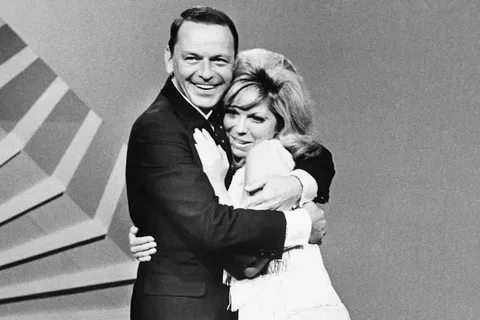
Lay their careers side by side — not the table version, the human version — and a few things jump out that neither biography shows on its own.
First, the gatekeepers changed, but they did not disappear. Sinatra’s gates were a handful of bandleaders, record executives, studio heads and radio programmers. Win them, and America heard you; lose them, as he did around 1950, and America forgot you with terrifying speed. Kendall’s gates look open by comparison — anyone can post a photo — but anyone who has watched fashion knows the truth. The runway castings, the Vogue covers, the Estée Lauder contracts are still handed down by a small circle of the powerful. She did not abolish the gate. She arrived with a crowd already behind her, and the crowd made the gatekeepers nervous enough to open it, after which she still had to perform once inside. The lesson hiding in both stories is unglamorous: distribution is not the same as acceptance, and you need both, in whichever order your era allows.
Second, both of them built a look that works like a logo. Say “Sinatra” and the mind supplies the image before the music: the tilted fedora, the loosened tie at midnight, the suit worn like it owes him money. Say “Kendall” and you get an equally controlled visual language — clean, minimal, off-duty-model polish, the tall silhouette that photographers can spot across an airport. Neither look is an accident, and neither is really about clothes. It is about recognition speed. In a magazine rack in 1958 or a phone feed in 2018, you have about a second. Both of them made sure you would spend that second knowing exactly who you were looking at.
Third — and this one surprises people — both guarded their private lives harder than their images suggest. Sinatra’s public life was enormous, but the man himself was famously moody about access, capable of freezing out journalists for years over a single paragraph. Kendall, raised on reality television, has spent her adult career doing something nobody predicted from that childhood: becoming the quiet one. Fewer interviews than her fame would allow. Relationships kept mostly off camera. Long stretches where the most famous model in the world simply does not post. Each of them learned, in their own decade, the same defensive skill: give the public a version of you that you control, and keep the rest behind a door.
Five Lessons From Two Very Different Icons
Strip away the tuxedos and the runways, and their careers leave behind advice that works in almost any field.
- Craft outlasts the machine that launched you. Sinatra’s fame arrived through radio and big bands, both of which died under him — the singing technique is why he survived their deaths. Kendall’s arrived through a TV format that has also ended — the runway record is why she remained after the finale.
- A comeback is a career skill, not an accident. He rebuilt from “finished” at 38 to an Oscar and his greatest albums. Her whole early career was a slow rebuttal to “just a reality star.” Both treated a verdict as a draft, not a sentence.
- Own something. A record label in 1960, a tequila brand in 2021 — the names and products change, the principle does not. Ownership is what converts fame, which expires, into an asset, which compounds.
- Protect the signature. A voice you can identify in three notes; a silhouette you can identify in a thumbnail. If people cannot recognise your work quickly, the algorithm of any era — a radio dial or a phone feed — will replace you with someone they can.
- Let the work from one era fund the next. Sinatra’s singing paid for the acting risks; the acting revived the singing. Kendall’s modelling peak created 818; the show keeps the audience warm between campaigns. Neither put every egg in the basket that was currently fashionable.
None of this requires you to be a singer or a model. It is the same list a good chef, a coder or a shop owner could tape to the wall. Which is, in the end, why both stories keep being retold — they are career stories wearing celebrity costumes.
Why People Keep Searching These Two Names Together
So we end where we started: with that odd pair of names in a search bar. By now the mechanics are clear — a 2017 adidas campaign put Kendall Jenner inside a film carried by Sinatra’s “My Way,” and every article, video and trivia page since has quietly taught search engines that these two names belong near each other.
But mechanics are not the whole explanation, because plenty of ad campaigns are forgotten by Christmas. This one stuck. It stuck because it put a finger on something audiences genuinely feel: that fame used to look like a man in a suit earning a room’s respect over forty years, and now it looks like a young woman the world watched grow up, earning an industry’s respect in about forty months — and that, somehow, both of those are the same story. Ambition, image, control, comeback, ownership. The vocabulary did not change. Only the stage did.
Final Thoughts
Frank Sinatra and Kendall Jenner never met. History did not give them the chance — he was gone before she could walk a runway, talk in full sentences, or sit in the front row of anything. Any article, video or post that tries to sell you a friendship, a duet or a secret connection between them is inventing it, and you now know enough dates to spot the invention in about five seconds.
What history did give them is better than an invention. It gave them a genuine, documented meeting point — a 2017 campaign in which the defining song of the twentieth century’s defining singer was remixed for a film carried by the defining model of the social-media age. And it gave us, if we are willing to look at both lives honestly, a neat little history lesson: how fame was built when it had to be earned in person, how it is built now that it arrives by phone, and how the performers who last, in any era, are the ones who insist — against labels, gatekeepers and bad years — on doing it their way.
He sang that line until it became the summary of his life. She, in a glass pod styled after a Renaissance painting, mouthed it for a new century. That is the connection. It is enough.
Frequently Asked Questions
Did Frank Sinatra and Kendall Jenner ever meet?
No. Sinatra died on May 14, 1998, when Kendall Jenner was two years old. There is no record of any meeting, photograph or personal connection between them during his lifetime.
What is the connection between Frank Sinatra and Kendall Jenner?
The documented connection is the 2017 adidas Originals campaign “Original Is Never Finished.” Its third chapter starred Kendall Jenner and was set to a remix of Sinatra’s signature song “My Way.” His music and her image were brought together by the brand — nearly twenty years after his death.
Did Kendall Jenner sing “My Way”?
No, she did not record or perform the song as a singer. She appeared in the adidas film that used a remixed version of Sinatra’s “My Way” as its soundtrack, and contemporary coverage noted her echoing its famous closing line in the film.
When was Frank Sinatra born, and when did he die?
Frank Sinatra was born on December 12, 1915, in Hoboken, New Jersey, and died on May 14, 1998, in Los Angeles, California, aged 82.
When was Kendall Jenner born?
Kendall Jenner was born on November 3, 1995, in Los Angeles, California, to Kris Jenner and Caitlyn Jenner.
What are Frank Sinatra’s most famous songs?
His signature songs include “My Way” (1969), “New York, New York,” “Strangers in the Night,” “Fly Me to the Moon,” “I’ve Got You Under My Skin” and “That’s Life.” His 1950s Capitol albums, including “In the Wee Small Hours” and “Songs for Swingin’ Lovers!”, are widely considered classics.
How did Kendall Jenner become famous?
She first became known as a child on her family’s reality show “Keeping Up With the Kardashians,” which began in 2007. She then built a separate high-fashion modelling career from the age of 14, breaking through with major runway seasons in 2014 and 2015.
Was Kendall Jenner really the world’s highest-paid model?
Yes — Forbes named her the world’s highest-paid model in 2017, with an estimated $22 million in earnings for the period it measured, ending Gisele Bündchen’s run at the top, which had lasted since 2002. Like all such figures, the amount is a Forbes estimate rather than an audited figure.
What business does Kendall Jenner own?
Her best-known business is 818 Tequila, the spirits brand she launched in 2021, named after the area code of the San Fernando Valley in Los Angeles, where she grew up.
Why do Frank Sinatra and Kendall Jenner appear together in search results?
Mainly because of the 2017 adidas “My Way” campaign, and because readers enjoy comparing two very different eras of fame. Their names now travel together in articles and videos about that campaign — this one included.












Leave a Reply