
Introduction: The Woman Behind the Name in the Credits
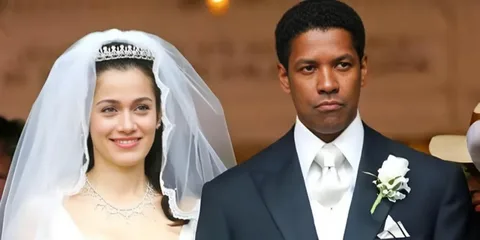
Most people meet Julianna Farrait backwards. They watch American Gangster first. They see Denzel Washington as Frank Lucas, building a heroin business in Harlem in the late 1960s and early 1970s, and they see the elegant wife at his side — Eva, played by Lymari Nadal. She is calm, glamorous, and loyal. She arrives in the story already polished, as if she had always belonged in that world of fur coats, ringside seats, and quiet money.
That is where the tidy film story falls apart, and the real one — messier, thinner on documents, and much more human — begins. Her real name was not Eva. It was Julianna Farrait, in fuller form Julianna Farrait Rodriguez, often shortened in reporting to Julie Farrait or Julie Lucas. She was born in Puerto Rico, married Lucas in 1967, and stayed connected to him, through prison, separation, and reconciliation, until his death in 2019. Along the way she was not just standing next to the story. She was arrested in the famous 1975 raid on their home. She served prison time herself, more than once. And decades later, long after most people would have assumed the story was over, she was arrested again in Puerto Rico in 2010.
This post tells that story the way it deserves to be told: in full, in plain language, and without pretending the record is cleaner than it is. Because with Julianna Farrait, honesty is not a footnote. It is the whole point. Her birth year is given differently by different sources. Her first prison sentence is reported two different ways. Even whether she is still alive is disputed. A blog that smooths all of that into confident “facts” is not informing you. It is copying errors. So here, every disputed point is flagged where it appears, and the Quick Facts table below marks what is settled and what is not.
Julianna Farrait at a Glance
| Detail | What Is Known |
| Full name | Julianna Farrait Rodriguez (also reported as Julie Farrait / Julie Lucas) |
| Born | San Juan, Puerto Rico — year disputed: 1940 in some sources, 1941 in others |
| Nationality | Puerto Rican |
| Known for | Wife of Harlem trafficker Frank Lucas; basis for Eva in American Gangster (2007) |
| Married | Frank Lucas, in 1967 |
| Nickname (couple) | “Black Bonnie and Clyde” |
| Children | 3 biological children with Lucas, plus stepchildren in the blended family |
| Best-known child | Daughter Francine Lucas-Sinclair, founder of Yellow Brick Roads |
| Key events | 1975 Teaneck raid and arrest; further arrests in 1983 and 2010 |
| Film portrayal | Renamed Eva Lucas, played by Lymari Nadal |
| Husband’s death | Frank Lucas died in 2019 |
| Current status | Unconfirmed — sources disagree on whether she is alive; see the later-years section |
| Net worth | Not verified — published figures are estimates only |
Early Life in Puerto Rico: A Story With Very Little Paper
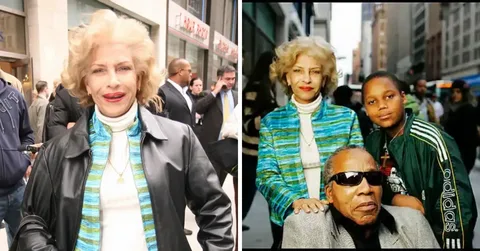
Julianna Farrait was born in San Juan, Puerto Rico. On that much, the sources broadly agree. Almost everything after that sentence needs a softer voice.
Her birth year is the first example. Some sources give 1940. Others give 1941. One version adds a specific day — possibly January 4 — but “possibly” is doing a lot of work in that sentence, and no strong primary record has been produced in public reporting to settle it. The sensible way to write it, and the way this post writes it, is simple: she was born in San Juan around 1940–1941, and the exact year is disputed. Anyone who gives you a single confident year without mentioning the other one is giving you a cleaner story than the sources support.
Her childhood is thinner still. There is no reliably documented public account of her parents, her schooling, or her upbringing that holds up across independent sources, so this post does not invent one. You will find websites that fill this gap with confident detail — family backgrounds, education claims, even exact height and weight. Treat those pages with care. Even something as basic as her height is reported inconsistently, at 5 feet 5 inches in one place and 5 feet 8 inches in another. When the small, checkable things disagree, the big, uncheckable things deserve real doubt.
There is also the beauty queen question, and it belongs here because it attaches to her life before Lucas. Some sources repeat a claim that she was a beauty queen in Puerto Rico. Another strand of reporting says she denied that description. Hollywood, as we will see, took the claim and enlarged it. The honest position is the same as with her birth year: the claim exists, the denial exists, and neither side has produced the kind of documentation that would end the argument. She may have won a local title. She may have been described that way by people retelling the story and then corrected it herself. What she was not — on any serious account — is the established, pageant-crowned figure the film implies. Keep that distinction in mind when we reach the comparison table later.
The Flight, the Meeting, and a Marriage in 1967
The meeting story is one of the few parts of Farrait’s life told in a named person’s own words, which is why it has lasted. In his autobiography, Original Gangster, Frank Lucas described noticing her on a flight from Puerto Rico to New York in the 1960s. In the line most often quoted from that account, he remembered a “cute girl” who kept smiling at him every time he turned around — and, in his telling, he did not need any more of a hint than that. It is a small, human detail, and it is worth noticing what it is not. It is not a nightclub introduction. It is not a pageant. It is two travellers on a plane, talking.
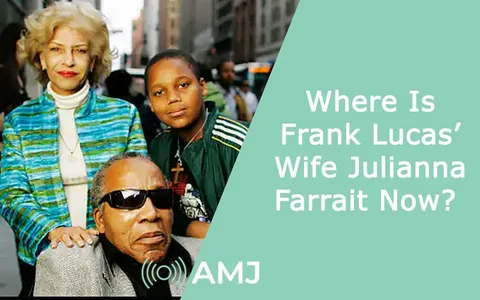
Farrait’s own documented words about Lucas are rarer, which makes them more valuable. In a 2007 interview with the Village Voice, around the release of American Gangster, she explained what drew her to him. She said the first time she met Frank, she was taken by his confidence and calmness — that he was a very self-assured man, which she found attractive, and still did. That is the second of only two quotes this post relies on, and it is attributed here exactly as it should be: to her, in that interview, in 2007. Anything beyond those two documented lines — the long, polished quotes about love and loyalty that float around biography sites without a source, a date, or a publication — should be read as decoration, not evidence.
They married in 1967. That date is one of the settled ones, repeated consistently across reporting, and its timing matters. In 1967 Lucas was not yet the figure of legend. He was a North Carolina-born man who had come to Harlem, worked around the edges of the underworld associated with Ellsworth “Bumpy” Johnson, and was building toward the direct-supply heroin business that would make him rich and, eventually, make him a target. Farrait did not marry a finished empire. She married a man on the way up, which meant she lived through the climb as well as the peak — the money arriving, the lifestyle changing, and the danger changing with it.
Life at the Top: Money, Visibility, and the Coat That Gave Them Away
By the early 1970s, the Lucas household was wealthy in a way that was impossible to hide, even if the couple had wanted to hide it — and for a while, they clearly did not. They lived in Teaneck, New Jersey, a suburban choice that itself tells a story: close enough to New York for business, far enough out to feel like a family home. They bought each other extravagant gifts. Reporting on the couple has long repeated the figures for the most famous of them: a coat she bought for Lucas for $125,000, with a matching hat at $40,000, paid in cash. Those numbers come from accounts of Lucas’s life rather than from receipts anyone can inspect today, so read them as widely reported, not audited. The scale, though, is not in doubt. This was a household spending at a level that drew eyes.
The most famous of those eyes belonged to law enforcement, and the most famous moment came at a boxing match in 1971. Lucas wore a full-length chinchilla coat — the gift from his wife — to a Muhammad Ali fight, and sat in seats better than those of far more famous guests. Lucas himself later called wearing that coat a massive mistake. In his own retrospective telling, he left that fight a marked man. Investigators who had not been paying close attention to him suddenly were. It is a neat parable, and like many neat parables in the Lucas story it has probably been polished in the retelling. But its core lesson is documented by what happened next: the more visible the lifestyle became, the more inevitable the investigation became. Farrait was part of that visibility. The gifts, the clothes, the ringside presence — the image of the couple was a joint production, and it carried a joint risk.
It is also in this period that the couple picked up the nickname that still follows them in headlines: the “Black Bonnie and Clyde.” The comparison is to Bonnie Parker and Clyde Barrow, the Depression-era couple whose names became shorthand for partners in crime who stay together to the end. As a label it is catchy, and as history it needs handling with care. It flatters a drug business into a romance. What it captures truthfully is narrower: that Farrait was understood, by reporters and by the authorities, not as an unaware bystander but as a partner who knew the life she was in — and that the two of them, unusually, kept coming back to each other across decades, prisons, and separations that ended most marriages. You can hold both thoughts at once. The loyalty was real. So was the harm of the trade that funded the lifestyle. A serious biography does not trade one of those truths for the other.
January 1975: The Raid on the Teaneck Home
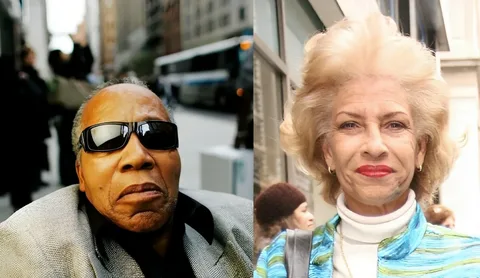
In 1975, federal agents raided the Lucas home in Teaneck, New Jersey. Lucas was arrested, and the empire that had seemed untouchable began the collapse that ended with his conviction and a sentence so long — 70 years, before his cooperation changed his position — that it was meant to be the rest of his life.
Farrait’s part in the raid is the single most repeated scene of her life, and it has the quality of a film moment because, frankly, it is one. As agents came into the house, she reportedly threw suitcases containing more than $500,000 in cash out of a window — in some versions, the bathroom window — in an attempt to keep the money from being seized. She was arrested alongside her husband. The core of that account, the raid, the cash, and her arrest, is consistently reported. The fine staging details vary a little between retellings, as details of a chaotic morning tend to do when they are retold for fifty years, so this post reports the scene as it is generally told and does not pretend to a frame-by-frame certainty no source can offer.
What followed for Farrait is our second honesty flag, and it is a significant one. How long was her first prison sentence? One strand of reporting says six months. Others say five years. Both figures appear in sources that present themselves as straightforward biography, with no explanation of the gap. There are innocent ways such a gap can arise — a sentence imposed versus time actually served, a sentence on one count reported alongside a different charge, a short sentence in one case confused with a longer one in another — but guessing which explanation is right would be inventing a fact to fill a hole, and this post does not do that. The settled part is this: she was convicted for her role in her husband’s criminal enterprise and she served prison time as a result of the fall of that enterprise. The disputed part is the length of that first sentence, reported as six months by one source and five years by others. If you need a single number for your own notes, go to court reporting rather than to biography websites — including this one.
The Hard Years: Further Arrests, Separation, and an Unlikely Reconciliation
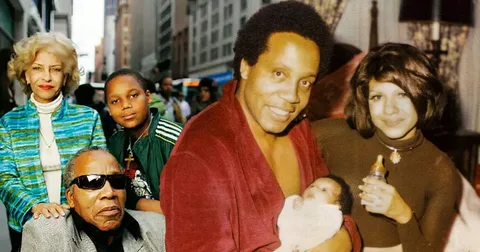
Farrait’s legal troubles did not end with the 1970s. She was arrested again in 1983, in a case connected to an attempt to help her husband through a drug deal while he was in prison. Reporting on that episode is thinner than reporting on the 1975 raid, and the precise details vary, but the broad outline — an arrest in the early 1980s, further prison time, and a pattern in which loyalty to Lucas kept pulling her back into the orbit of the trade — is a consistent part of her biography. It is also the part that complicates any simple telling of her as a passive figure. Whatever mixture of love, habit, loyalty, and choice was at work, the record shows a woman who was prosecuted for her own actions, more than once, across more than three decades. That is her record, and a biography that hides it to make her more sympathetic would be lying by omission.
And yet, in 2006, they reconciled. That date, too, is consistently reported. They were, by the accounts that followed, together again as a married couple in the final stretch of Lucas’s life — a marriage that, on paper, had lasted from 1967 to his death in 2019, more than fifty years, with a long interruption in the middle. However a reader judges the choices inside it, the duration itself is remarkable, and it is the fact that the 2007 Village Voice quote captures. When Farrait said she still found him attractive — still, after everything — she was describing a bond that prison, distance, and time had bent severely without quite breaking. Readers do not have to admire that to find it humanly interesting. Most of the people who search her name, in the end, are searching for exactly that puzzle: why did she stay, and why did she go back?
American Gangster: Eva Lucas vs the Real Julianna Farrait
In November 2007, Ridley Scott’s American Gangster arrived in cinemas, with Denzel Washington as Frank Lucas and Russell Crowe as Richie Roberts, the detective who pursued him. The film was a major critical and commercial success, it revived global interest in Lucas, and it created the version of his wife that most of the world now carries in its head. That version’s name is Eva.
| Point | In the Film (Eva) | In the Record (Julianna) |
| Name | Eva Lucas | Julianna Farrait Rodriguez; also Julie Farrait / Julie Lucas |
| Played by | Lymari Nadal | — |
| Beauty title | Presented as a former Miss Puerto Rico | Beauty queen claim is disputed; one strand of reporting says she denied it |
| How they met | Romanced after meeting in New York nightlife | Met on a flight from Puerto Rico to New York, per Lucas’s autobiography |
| Background | Polished and glamorous from the start | Described by Lucas as a “country girl” with simple tastes who grew into the role |
| Her legal story | Largely softened; focus stays on Frank | Arrested in the 1975 raid; prison time; further arrests in 1983 and 2010 |
| After Frank’s fall | Story effectively ends with his | Separation, Puerto Rico, reconciliation in 2006; marriage lasted until his 2019 death |
2010: The Arrest Nobody Expected
In 2010, in Puerto Rico, Julianna Farrait was arrested again — this time in connection with a cocaine conspiracy, in an operation in the Isla Verde area of Carolina, near San Juan. She was, by either disputed birth year, around seventy years old. The arrest was reported by news agencies at the time and remains the most startling fact in her later biography, precisely because of when it happened: more than three decades after the Teaneck raid, years after the reconciliation, and long after the Lucas empire had passed into film and folklore. Whatever a reader makes of it, it ended any version of her story in which the criminal chapter had simply closed in the 1970s.
This post reports that episode at biography level, and deliberately no deeper. The publicly reported outline is that she was accused of involvement in an attempt to move cocaine, with New York as the intended market, and that the case proceeded through the federal courts in Puerto Rico. One source reports that she was sentenced in 2012 to five years in prison. That sentence detail is attributed here to that reporting rather than stated as independently verified by this post, in keeping with how the rest of her record has been handled. The operational detail of the case — who met whom, in what sequence, by what method — is not biography, it is the mechanics of a drug transaction, and it has no place in an article like this one. What matters historically is simpler and sadder: at an age when most people are deep in retirement, Farrait was once again a defendant in a drug case, facing prison again, in the place she had come from.
Her Children, and the Daughter Who Built Something From the Ruins

Farrait and Lucas had three biological children together, and she was also stepmother within his larger family — Lucas fathered seven children in total across his relationships, which is why some sources describe Farrait loosely as a mother of seven. The accurate version, and the one this post uses, is the distinction: three children of her own with Lucas, plus stepchildren. Most of those children have lived entirely private lives, and they are entitled to that privacy; there is very little verified public information about them, and none is invented here.
The exception is Francine Lucas-Sinclair, the daughter who was three years old when the 1975 raid turned her childhood upside down. Francine entered the witness protection programme with the family in 1977, grew up with the experience of an incarcerated parent, and as an adult founded Yellow Brick Roads — a resource, later described as a non-profit effort, supporting children of incarcerated parents. Of everything that came out of the Lucas story, it is arguably the only wholly redemptive thread: a child of the story using the worst part of it — what parental imprisonment does to the children left behind — as the basis for helping other children through the same experience. When people ask what good, if any, can be taken from the Farrait–Lucas story, Francine’s work is the honest answer. It does not excuse anything her parents did. It does show that the story’s consequences did not all run in one direction, and that the family’s youngest generation answered the story rather than repeating it.
Later Years: Is Julianna Farrait Still Alive?
This is the question readers most often bring to this subject, and it is the one this post must answer most carefully, because the honest answer is: the public record does not settle it.
Here is what the sources do. One strand of reporting states that she passed away in 2017, before her husband’s death in 2019. Another version describes her more loosely as having died sometime in the late 2010s, again without a firmly documented date. A third position treats her as believed to be alive, with the last confirmation of her being alive placed in 2019. Those three positions cannot all be right, and none of them, in the material publicly available to a blog writer, comes with the kind of primary documentation — a confirmed obituary, an official record, a family statement — that would allow a responsible writer to print a death date as fact.
So this post prints none. Julianna Farrait’s current status is unconfirmed. If she is alive under the 1940 birth year, she would be in her mid-eighties; under the 1941 year, a year younger. If the reports of a passing in the late 2010s are correct, she died in her late seventies, quietly, having outlived the empire, the trials, and the film, though not her husband. Either way, the shape of her final years is consistent across accounts: private, in or connected to Puerto Rico and the United States, away from interviews and cameras. The woman who once sat ringside in a fortune’s worth of fur ended her public story, fittingly and perhaps deliberately, by disappearing from public view almost entirely.
A note on net worth belongs in this final section, because it is the other question readers ask and the other one that must not be overstated. Published estimates for Farrait’s net worth include figures around $1 million and ranges of $1–5 million. None of these figures comes with a verifiable basis. The couple’s known wealth was largely seized in the 1970s, both of them served prison time, and no credible financial disclosure for Farrait exists in the public record. Those published numbers are unverified estimates only, most likely recycled from site to site, and they should be read that way — as an indication that the internet dislikes an empty box, not as information about her actual finances.
Why Her Story Still Holds Readers
There is also the marriage itself, which resists every easy category. It was not a story of an innocent wife deceived — she was convicted, repeatedly, for her own part. It was not a simple partnership in crime either — there was a long separation, a return to Puerto Rico, years apart, and then a reconciliation in old age that no screenwriter would have dared to invent because it makes emotional sense without making logical sense. It lasted, formally, fifty-two years. The documented quotes bookend it neatly: a young trafficker on a plane who “did not need any more of a hint,” and a wife in 2007 still describing the same man’s confidence as the thing that drew her in. Whatever judgment a reader brings to the life between those two lines — and judgment is appropriate, given what the money was made from — the endurance inside it is the human fact that keeps the story alive.
Her legacy, then, is best stated plainly. She was a Puerto Rican woman who married into one of the most destructive trades in modern American history, shared its wealth and its punishment, lost years to prison, was arrested for the last time at around seventy, and spent her final chapter in near-total privacy. Her daughter turned the family’s hardest experience into help for other families. And her public record remains, in places, genuinely unresolved — a useful reminder, in an age of confident instant biographies, that some lives leave only a partial paper trail, and that the honest response to a partial trail is to say so.
If you came to this post from the film, leave with this: Eva was a character. Julianna Farrait was a person — more complicated, less glamorous, more culpable, more enduring, and considerably less knowable than the character who carries her story on screen. That is not a lesser story. It is the real one, gaps and all.
Frequently Asked Questions
1. Who is Julianna Farrait?
Julianna Farrait — full name Julianna Farrait Rodriguez, also reported as Julie Farrait or Julie Lucas — was the Puerto Rican-born wife of Harlem heroin trafficker Frank Lucas. She married him in 1967, was arrested in the 1975 raid on their Teaneck, New Jersey home, served prison time on more than one occasion, and remained married to him, through a long separation and a 2006 reconciliation, until his death in 2019. She is the real woman behind Eva in the film American Gangster.
2. When and where was Julianna Farrait born?
She was born in San Juan, Puerto Rico. Her birth year is disputed: some sources give 1940 and others give 1941, with one version adding a possible date of January 4. No publicly available primary record settles the year, so any single confident birth date should be treated with caution.
3. How did Julianna Farrait meet Frank Lucas?
According to Lucas’s autobiography, Original Gangster, they met on a flight from Puerto Rico to New York in the 1960s. He recalled a “cute girl” who kept smiling at him each time he turned around. They married in 1967. In a 2007 Village Voice interview, Farrait said she was drawn to his confidence and calmness, describing him as a very self-assured man she found attractive — and still did.
4. Was Julianna Farrait really a beauty queen or Miss Puerto Rico?
This is disputed. American Gangster presents her character as a former Miss Puerto Rico, but in the real record the beauty-queen claim is contested: some sources repeat it, while another strand of reporting says Farrait denied it. She is sometimes described more modestly as a homecoming queen. The Miss Puerto Rico title, as shown in the film, is not documented and should not be stated as fact.
5. Why were they called the “Black Bonnie and Clyde”?
The nickname compared Frank Lucas and Julianna Farrait to Bonnie Parker and Clyde Barrow, the famous outlaw couple, because she was seen as his partner in the life — not just his wife — and because the two stayed loyal to each other through prison, separation, and reconciliation over more than five decades. It is a vivid label, though it also romanticises a heroin business that caused serious harm, so it is best used with that context.
6. What happened to Julianna Farrait in the 1975 raid?
Federal agents raided the couple’s home in Teaneck, New Jersey, in 1975. Farrait reportedly threw suitcases containing more than $500,000 in cash out of a window as agents entered, and both she and Lucas were arrested. She was convicted for her role in his criminal enterprise. Reports disagree on her first sentence — six months in one source, five years in others — and that disagreement is flagged rather than resolved in this post.
7. Was Julianna Farrait arrested again after the 1970s?
Yes, more than once. She was arrested in 1983 in connection with an attempt to help her husband through a drug deal while he was in prison. Most strikingly, she was arrested again in Puerto Rico in 2010, at around seventy years old, in connection with a cocaine conspiracy. One source reports she was sentenced in 2012 to five years in prison for that case.
8. Who played Julianna Farrait in American Gangster?
In the 2007 film American Gangster, her character was renamed Eva Lucas and played by Puerto Rican actress Lymari Nadal, opposite Denzel Washington as Frank Lucas. The film changed several details of her real life, including her name, her pageant background, and how the couple met, and it ends long before her separation, reconciliation, and 2010 arrest.
9. How many children did Julianna Farrait have?
She had three biological children with Frank Lucas, and was also a stepmother within his larger family — Lucas fathered seven children in total, which is why some sources loosely call her a mother of seven. Her best-known child is her daughter Francine Lucas-Sinclair, who was three at the time of the 1975 raid and later founded Yellow Brick Roads, supporting children of incarcerated parents.
10. Is Julianna Farrait still alive, and what is her net worth?
Her current status is unconfirmed. Sources disagree: one reports she passed away in 2017, another places her death in the late 2010s, and another describes her as believed alive with a last confirmation in 2019. No death date is stated as fact in this post because none is firmly documented. Her net worth is likewise unverified — published figures of around $1 million and $1–5 million are estimates only, with no credible financial disclosure behind them.









Leave a Reply