
Some names become familiar because they belong to famous people, popular brands, or widely recognized places. Others are much less common and attract attention precisely because information about them is limited. Ruschek is one such name. People searching for it may be interested in its meaning, family background, historical records, or a particular person or business associated with the name.
Ruschek is best understood as a rare surname with documented connections to European family records. A surname reference available through FamilySearch, drawing on the Dictionary of American Family Names, classifies it as German and associates it with someone who lived near a reed bed. That explanation provides a useful starting point, although it does not prove the exact ancestry of every family carrying the name. FamilySearch+1
Understanding Ruschek requires separating linguistic history from individual family history. A surname can have a general origin while the people who carry it today have different nationalities, migration experiences, and family connections. Similar spellings can also create confusion, especially when historical documents were written in different languages.
This article explores the possible meaning of Ruschek, its European background, the importance of historical records, and practical ways to research the name accurately.
What Does Ruschek Mean?
Ruschek is primarily encountered as a family name rather than as an ordinary English word. It does not have a widely recognized everyday English definition.
One published surname explanation identifies Ruschek as German and connects it with the word form Rusch. The description refers to a person who lived near a reed bed, an area where reeds grow naturally, often around wetlands, riverbanks, or lakes.
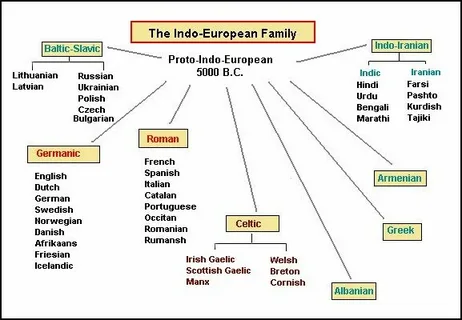
This is an example of a topographic surname. Topographic surnames developed from geographical features associated with a person’s home or surroundings. In earlier communities, people were often distinguished by where they lived, the landscape near their homes, or recognizable local landmarks.
For example, a family might become associated with a woodland, a river, a hill, or a marshy area. Over generations, a descriptive name could become a hereditary family surname.
The reed-bed explanation is useful, but it should be treated carefully. It does not establish that every Ruschek family lived in the same place or descended from one known ancestor. A surname dictionary offers a linguistic interpretation, not a complete family tree.
Historical Background of the Ruschek Surname
European surnames developed over many centuries. Some began as descriptions of occupations, while others referred to geographical locations, personal characteristics, family relationships, or places of residence.
Ruschek has a documented German-language surname connection, but its precise earliest birthplace has not been established by the available evidence. It is therefore more accurate to describe its published meaning than to claim that the name originated in one specific village or region.
Historical records show that the surname was used in Central Europe by at least the late eighteenth century.
For example, FamilySearch lists a baptism record for Carl Friedrich Ruschek in Brandenburg an der Havel in 1792. Another record identifies George Friedrich Wilhelm Ruschek in a baptism entry associated with Königsberg in 1793. These documents demonstrate historical use of the surname, although they do not establish that the individuals belonged to the same family. FamilySearch
These records are valuable because they give researchers actual names, dates, and locations to investigate. They are more useful for building a family history than an unsupported claim about an ancient family origin.
Where Is the Ruschek Name Found?
Ruschek appears in genealogical records associated with several countries, including Germany, Austria, Hungary, and the United States.
FamilySearch identifies the United States, Austria, and Hungary among the locations represented in its surname-related family-tree information. Its historical collection also includes records from German-speaking areas. FamilySearch+1
The presence of a surname in multiple countries can reflect several historical developments.
Migration Across Europe
People moved between European regions for employment, education, marriage, religious reasons, and other personal circumstances.
As families relocated, their names could appear in the records of different towns and countries. A person born in one region might marry and raise children somewhere else, creating several geographical connections for later generations.
Movement to Other Countries
European migration to North America and other destinations introduced many Central European surnames into new communities.
Immigration records, passenger lists, census documents, and naturalization papers can help researchers trace these movements.
Changes in Government and Borders
Historical Central Europe experienced significant political and administrative changes. Places that once belonged to one political territory may now be located in another country.
This can make genealogy research confusing. A historical document may identify a location using an older regional or political name that differs from its modern name.
Researchers should therefore examine the historical context of each record instead of relying exclusively on current national borders.
Antal Ruschek: A Historically Documented Name-Bearer
One notable historical person with this surname was Antal Ruschek, a Hungarian Catholic priest, religious writer, preacher, and translator.
His biography is useful because it demonstrates that the surname appears in historical cultural and religious records, not only in modern genealogy databases.
Antal Ruschek was born on March 5, 1851, in Győr, Hungary. He completed his secondary and theological education in his hometown and was ordained as a priest on July 27, 1873. His early career included religious appointments in the Győr area. Lexikon ::+1
His Religious Career
After his ordination, Ruschek worked in several religious positions.
Historical biographical information records his work as an assistant priest and later as a preacher and parish priest. His responsibilities connected him with different communities around Győr.
These appointments illustrate the role religious institutions played in the professional and social lives of nineteenth-century Central European communities.
His Literary Activities
Antal Ruschek also had a connection with religious literature.
Historical records associate him with religious publications, translations, sermons, and writing. His listed works include publications about religious figures, Catholic life, and Christian teachings.
He was also associated with the Szent István Society’s scientific and literary activities from 1890. A historical account published by Győri Szalon describes his literary contribution and records a royal ecclesiastical distinction awarded in 1906. Lexikon ::+1
His life provides a specific historical example of someone carrying the Ruschek surname. However, one person’s biography should not be treated as the history of every family with the same name.
Similar Surnames and Why They Matter
When researching Ruschek, it is important to distinguish it from similar-looking family names.
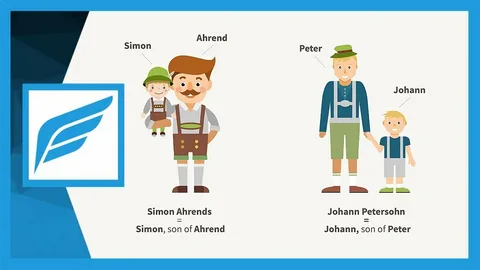
European surnames have frequently changed through migration, local pronunciation, handwriting, transcription, and differences between languages. Two names that appear similar may share a linguistic background, or they may have developed independently.
Some relevant spellings include:
| Surname | Research consideration |
|---|---|
| Rusch | Connected with the published etymological explanation for Ruschek |
| Rüscher | Mentioned as a related form in the FamilySearch surname reference |
| Ruschke | A similar-looking surname that should be investigated separately |
| Rusek | A different surname with its own possible Polish and Czech explanations |
| Russek | Another distinct spelling found in Central European and Jewish surname records |
| Rushek | A similar-looking form appearing in genealogy databases |
FamilySearch specifically connects Ruschek with Rusch and mentions Rüscher in its surname explanation. This is a linguistic relationship, not proof that everyone carrying these names belongs to one family. FamilySearch+2
Why Historical Spelling Changes Occur
There are several reasons why a surname may appear differently in old records.
Handwriting differences: Historical documents were often handwritten. A clerk’s writing could make certain letters difficult to distinguish.
Language differences: A surname recorded in German might be written differently in another language or administrative system.
Immigration records: Officials sometimes recorded names according to how they sounded rather than following the family’s preferred spelling.
Personal decisions: Families may have changed the spelling of their names after relocating to another country.
Record transcription: Modern databases may contain spelling errors introduced when handwritten documents were converted into searchable records.
For these reasons, researchers should not automatically assume that Ruschek, Ruschke, Russek, and Rusek describe the same family.
How to Research Your Ruschek Family History
Anyone researching the Ruschek surname can make progress by starting with information that is already known within the family.
A successful genealogy project does not require discovering an ancient ancestor immediately. It usually begins with basic documents and gradually connects different generations.
1. Start With Living Family Knowledge
Speak with older relatives who may know about parents, grandparents, family locations, marriages, and migration.
Write down names carefully, including middle names and alternative spellings.
Even a small detail, such as the name of an old town or a relative’s approximate birth year, can help narrow a historical search.
2. Collect Family Documents
Look for documents that may contain useful information, including:
- Birth certificates.
- Marriage certificates.
- Death certificates.
- Old passports.
- Immigration papers.
- Family photographs.
- Letters and personal documents.
- Religious records.
- Military documents.
Original documents can provide valuable clues about dates, locations, relationships, and spelling variations.
3. Search Historical Church Records
Church records are particularly important when investigating European family histories.
Baptism registers may identify children and their parents. Marriage registers can provide information about spouses and family relationships, while burial records may establish death dates and locations.
For historical Central European research, religious records can sometimes extend further back than civil registration documents.
4. Investigate Civil Registration Records
Civil records may contain official details about births, marriages, and deaths.
Availability varies by country and historical period.
Researchers should identify the relevant registration office or archive according to the location and approximate date of the event.
5. Examine Immigration Records
If a Ruschek ancestor moved internationally, passenger lists and immigration records may help establish the journey.
These documents can sometimes identify a person’s age, birthplace, destination, occupation, and relatives.
A combination of immigration and census records can help connect an individual with a new household or community.
6. Build a Family Timeline
Organizing information chronologically makes it easier to identify gaps and possible mistakes.
A simple timeline might include:
| Event | Information to record |
|---|---|
| Birth | Full name, date, and location |
| Baptism | Religious record and parents |
| Marriage | Spouse, date, and location |
| Migration | Departure, arrival, and destination |
| Residence | Town, address, and household |
| Death | Date, location, and available certificate |
This approach helps prevent different people with the same surname from being mistakenly combined.
7. Verify Every Family Connection
A genealogy website may suggest that two people are related, but a suggested connection should not automatically be treated as fact.
Researchers should look for documents supporting each relationship.
For example, if a family tree identifies someone as the child of a particular couple, a birth or baptism record may help confirm that relationship.
The strongest family histories are built through connected evidence rather than assumptions.
The Role of Online Genealogy Platforms
Digital genealogy platforms have made historical research easier by bringing records from different locations into searchable databases.
They can help researchers identify names, dates, and locations without visiting every archive personally.
However, online databases have limitations.
FamilySearch
FamilySearch provides surname information, historical records, and user-contributed family-tree profiles.
Its Ruschek entry includes a published surname explanation and historical record collections. These can provide useful starting points for further research. FamilySearch+1
Historical Archives
National, regional, municipal, and religious archives may preserve original documents.
These institutions can be especially useful when online databases contain only partial information.
Genealogy Communities
Online genealogy communities allow researchers to exchange information and compare family records.
Members may have photographs, documents, or research notes that are not available elsewhere.
Nevertheless, information shared by other users should be verified before it is added to a family history.
Digital Libraries
Historical books, newspapers, and directories can reveal information about people who carried the surname.
The Antal Ruschek biographical material, for example, demonstrates how historical reference works and local publications can provide details that ordinary surname databases do not contain. Lexikon ::+1
Can DNA Testing Help Research the Ruschek Family?
DNA testing can be useful when investigating family relationships, especially when traditional records are incomplete.
However, it is important to understand what a DNA test can and cannot establish.
Finding Biological Relatives
Some genealogy services compare DNA results to identify people who may share biological ancestors.
A match can provide a useful lead when investigating family branches.
Exploring Regional Ancestry
DNA services may provide broad regional estimates based on their reference populations.
These estimates can help suggest possible geographical connections, but they do not prove that a specific ancestor lived in a particular town.
Supporting Documentary Research
DNA results are most useful when combined with historical documents.
For example, a potential DNA match may help researchers identify a family branch, while birth and marriage records can establish how the people are connected.
Understanding the Limitations
A DNA match does not establish the linguistic meaning of Ruschek.
It also cannot independently identify the first person who used the surname.
Genealogical conclusions should be based on a combination of reliable evidence, not on a single test result.
Is There a Ruschek Family Crest?
People researching European surnames sometimes look for a family crest or coat of arms.
Heraldry has a long history in Europe, but it is important to understand how it works.
A coat of arms historically belonged to a particular person, family line, or institution under the relevant heraldic traditions. It was not automatically assigned to every individual sharing a surname.
Therefore, finding a coat of arms associated with a similar surname does not establish that it belongs to every Ruschek family.
Anyone investigating a possible family crest should look for historical heraldic records that identify the specific family or lineage.
The most useful evidence would connect the arms with a documented ancestor rather than simply displaying the surname alongside a decorative design.
Is Ruschek a Common Surname?
Ruschek appears to be an uncommon surname in comparison with widely used European family names.
FamilySearch includes a substantial number of historical records indexed under the spelling, but this figure should not be interpreted as the number of people currently living with the surname. A single person may appear in multiple records, and historical databases include people who are no longer alive. FamilySearch+1
It is also possible that some family members appear under different spellings.
This is why estimating the actual number of living people named Ruschek requires a reliable population dataset with clearly defined methods.
A historical record count and a current surname population estimate measure different things.
Ruschek as a Search Term in the Modern Digital World
Today, people may encounter the name Ruschek through search engines, online directories, professional profiles, historical publications, and small business listings.
A single search term can therefore lead to different types of information.
Someone searching for family history may be looking for an ancestor. Another person may be trying to identify a historical writer or religious figure. Someone else may have encountered the name through a business or online profile.
This makes context important.
Searching for a Person
When looking for an individual named Ruschek, use additional information such as a first name, occupation, country, or approximate age.
A surname alone is rarely sufficient to identify a particular person accurately.
Searching for a Business
If Ruschek appears as a business name, verify the official business identity separately.
Check the company’s legal details, location, services, ownership information where publicly available, and independent customer information.
A surname appearing in a business listing does not establish a connection with every other person carrying the name.
Searching for Historical Information
For historical research, give preference to archives, libraries, official institutional publications, and original records.
General articles can help explain the subject, but they should not replace documentary evidence.
Common Mistakes When Researching Ruschek
Researching a rare surname can be rewarding, but several common mistakes can lead to incorrect conclusions.
Assuming Everyone With the Surname Is Related
People can share a surname without belonging to the same documented family line.
A relationship must be established through historical evidence.
Treating Similar Spellings as Identical
Ruschek, Ruschke, Rusek, and Russek may look similar, but they should be investigated as separate names unless records establish a connection.
Confusing Record Counts With Population
A database may contain thousands of indexed documents without containing thousands of different living people.
Researchers should understand what a database actually counts.
Accepting Online Family Trees Without Verification
User-created family trees are helpful for finding research leads, but they may contain errors.
Every important relationship should be checked against available historical records.
Inventing a Precise Origin
The German topographic explanation offers a meaningful starting point, but it does not identify the exact location where the first Ruschek family lived.
A responsible article should distinguish established information from possibilities.
Frequently Asked Questions About Ruschek
1. What is Ruschek?
Ruschek is a rare family surname documented in historical and genealogical records. It has a published German topographic surname explanation associated with a person who lived near a reed bed.
2. What does the surname Ruschek mean?
FamilySearch, citing the Dictionary of American Family Names, describes Ruschek as a German surname associated with someone who lived near a reed bed. This is a general linguistic explanation rather than proof of an individual family’s ancestry.
3. Is Ruschek a German surname?
Yes. The published surname reference classifies it as German and connects it with Rusch and the related form Rüscher. Historical records also show the surname in different Central European locations. FamilySearch+1
4. Where does the Ruschek family come from?
The exact birthplace of the earliest Ruschek ancestor has not been established by the records discussed here. German-language surname references provide a linguistic starting point, while historical documents show the name in locations including Brandenburg and Königsberg.
5. Is Ruschek a rare name?
Yes, it appears to be uncommon. Genealogical databases contain historical entries for the surname, but their record totals should not be interpreted as an exact count of living people.
6. Who was Antal Ruschek?
Antal Ruschek was a Hungarian Catholic priest, preacher, writer, and translator born in Győr in 1851. Historical sources document his religious career and literary activities. Lexikon ::+1
7. Are Ruschek and Ruschke the same surname?
They are similar spellings, but they should not automatically be treated as the same surname. A genealogical connection would require historical documents linking specific individuals or family branches.
8. Is Ruschek connected with Austria and Hungary?
The surname appears in genealogical information associated with both countries. Historical records also document people named Ruschek in German-speaking regions. These appearances demonstrate geographical distribution, not necessarily a single shared family origin. FamilySearch+1
9. How can I find old Ruschek family records?
Search baptism, marriage, burial, civil registration, census, immigration, and military records. Start with known family dates and locations to narrow the search.
10. Does Ruschek have a family coat of arms?
There is no basis for assuming that one coat of arms belongs to every person with the surname. Heraldic claims should be checked against records identifying a specific family or lineage.
11. Can DNA testing reveal the origin of Ruschek?
DNA testing may help identify biological relatives and suggest regional ancestry. It cannot independently establish the surname’s meaning or prove the location of the earliest Ruschek ancestor.
12. Is Ruschek a company or a brand?
The surname itself does not identify a particular company or brand. Any business using the name should be researched independently through its official business information and records.
13. Why does the spelling of Ruschek sometimes vary?
Historical handwriting, language differences, migration, transcription mistakes, and personal spelling changes can all affect surnames. Researchers should compare dates, locations, and family relationships before deciding that two spellings refer to the same family.
14. What is the best way to research Ruschek?
Begin with known relatives, collect original family documents, search historical archives, and connect generations through verified birth, marriage, and death records.
Conclusion
Ruschek is an uncommon surname with a documented presence in European historical and genealogical records. Its published surname explanation connects it with a German topographic name referring to someone who lived near a reed bed. This provides a useful linguistic starting point, although it does not establish the exact ancestry of every person carrying the name.
Historical records demonstrate that Ruschek was used in Central Europe by the late eighteenth century. The name is also associated with Antal Ruschek, a Hungarian Catholic priest and writer whose religious and literary activities are documented in historical sources.
For anyone interested in the family history, the most useful approach is to examine original documents, investigate spelling variations carefully, and connect individual records through verified relationships. Similar surnames should not automatically be treated as identical, and online family trees should be considered research leads rather than final proof.
The name’s history is best understood through a combination of linguistic research, historical records, and individual family evidence. Although some questions about its earliest origin remain open, the available information provides a solid foundation for anyone interested in learning more about Ruschek and the people who have carried this distinctive surname.





Leave a Reply