
A Small Timber in the Roof With a Big Job
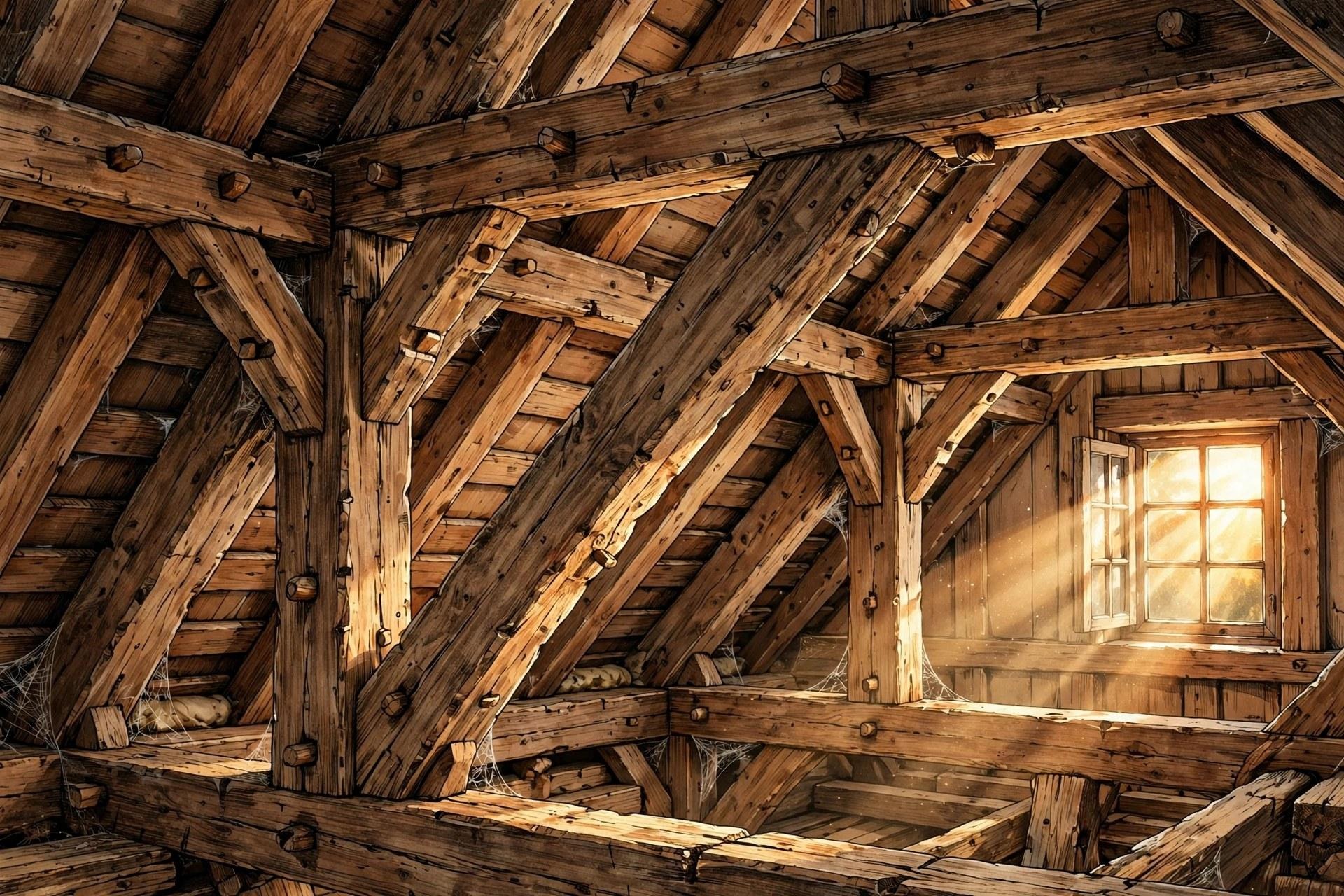
If you have ever poked your head into an old attic and wondered why some timbers run diagonally while everything else goes straight up or across, you have probably been looking at a windstrebe. The word sounds technical, and plenty of people search it expecting a brand, a product or a tool they can buy. It is none of those things. Windstrebe is simply a German construction term, and once you break it into its two halves, it almost explains itself.
Wind means wind. Strebe means a brace or strut. Put them together and you get wind brace, which is how German-English dictionaries translate it. The plural is die Windstreben. In plain English, a windstrebe is a diagonal piece of timber, or in newer work a metal member, fitted at an angle inside a roof or timber frame to stop the frame moving sideways.
That last part matters. A windstrebe does not hold the roof up like a beam or a post. Take the beams away and the roof falls down. Take the windstreben away and it may stay up on a calm day, yet slowly lean, twist or rack out of shape when wind pushes from the side. It braces against movement, not gravity, and confusing the two leads to the classic mistake of cutting one out because it looks like it is doing nothing.
Why Diagonal Bracing Matters So Much
Picture a simple rectangular frame, like a garden gate. Push it from one corner and it happily turns into a slanted parallelogram. Carpenters call that racking. Now screw one diagonal bar across the same frame and push again. Almost nothing moves, because the diagonal has turned loose rectangles into triangles, and a triangle is the one shape that cannot change its angles without changing the length of its sides.
A roof frame faces the same problem, only bigger and higher up. Wind pushes sideways against gables, lifts at the edges and shoves along the building. Rafters in a neat row can all lean together like dominoes if nothing ties them at an angle. A windstrebe ties neighbouring rafters, posts or purlins together diagonally, so a sideways push is shared and resisted instead of letting the frame drift.
You rarely notice good bracing, and that is the point. Doors keep closing properly and roof lines stay straight. When bracing fails, the clues appear elsewhere first: a ridge that no longer looks level, cracks in gable walls, or a roof plane that waves instead of running flat.
Where You Will Actually Find a Windstrebe
You will meet the term most often in German-speaking building work and old-building surveys, but the thing itself exists everywhere timber frames exist. In a traditional roof, look for a shorter diagonal timber between a rafter and a purlin, or between a post and a beam, usually near the corners where bracing does the most good. In half-timbered houses, diagonal braces fill the wall panels at an angle.

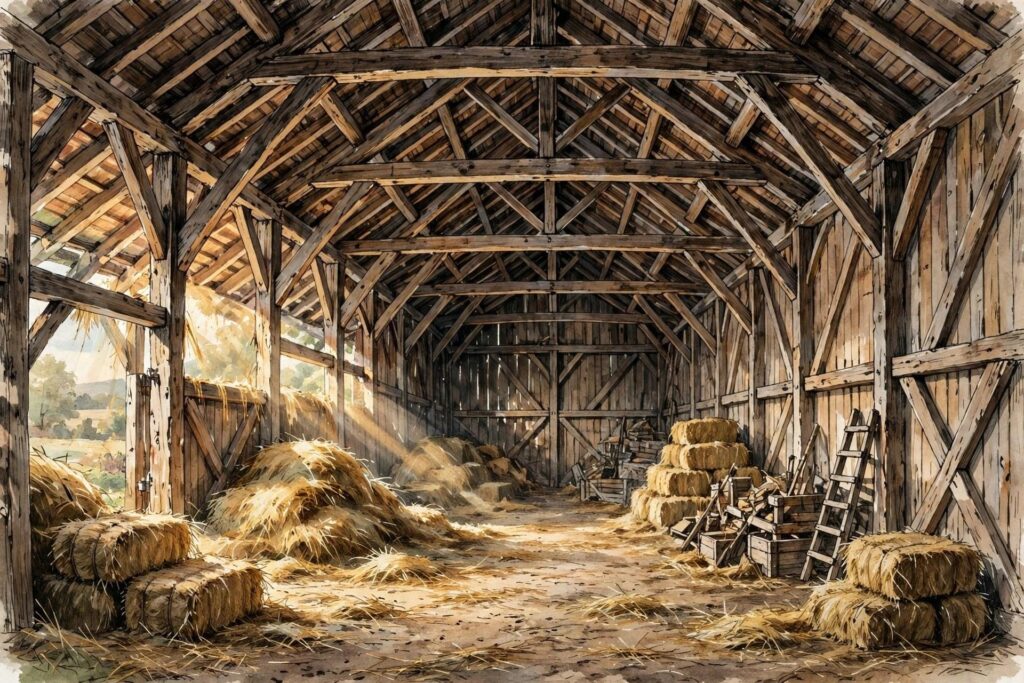
Barns are another good place to spot them, because wide spans and big roofs catch a lot of wind. You will also meet windstreben during loft conversions, which is exactly when they get into trouble, because a diagonal timber sitting where someone wants headroom looks, to an untrained eye, like wasted space.
| Place | What to look for | Why it is there |
| Roof between rafter and purlin | Short diagonal timber near the frame corners | Stops rafters leaning along the roof |
| Half-timbered walls | Angled timbers inside the wall panels | Keeps the wall frame square |
| Barns and wide-span frames | Long diagonals across posts and beams | Resists strong side winds on big roofs |
| Loft conversions | Older braces crossing the new room | Original bracing still holding the roof |
Timber, Steel and Straps: What Windstreben Are Made Of
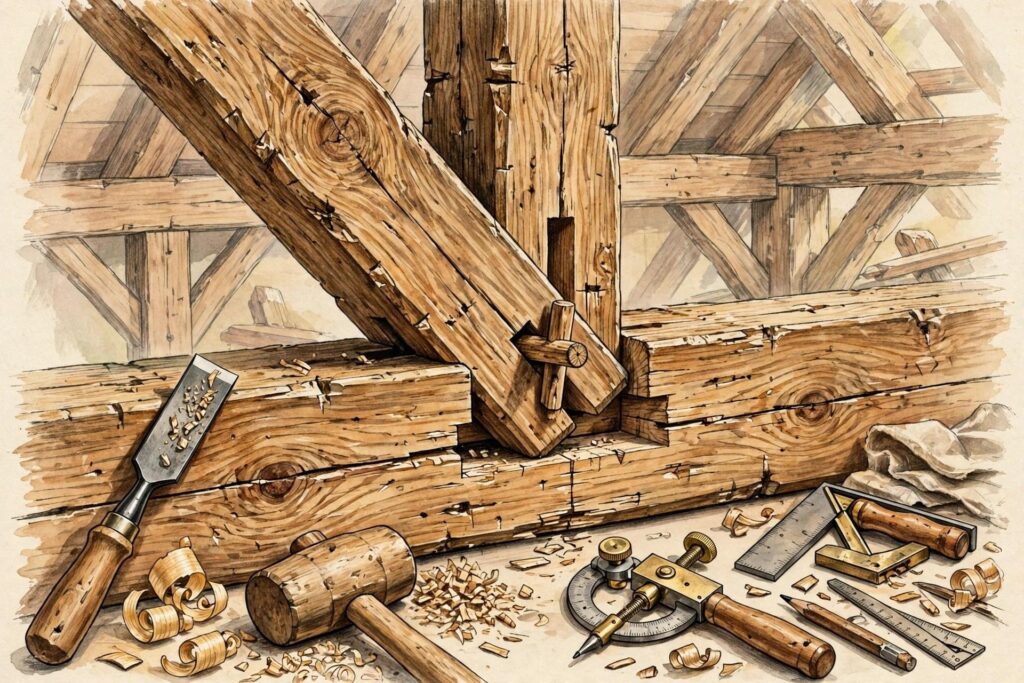
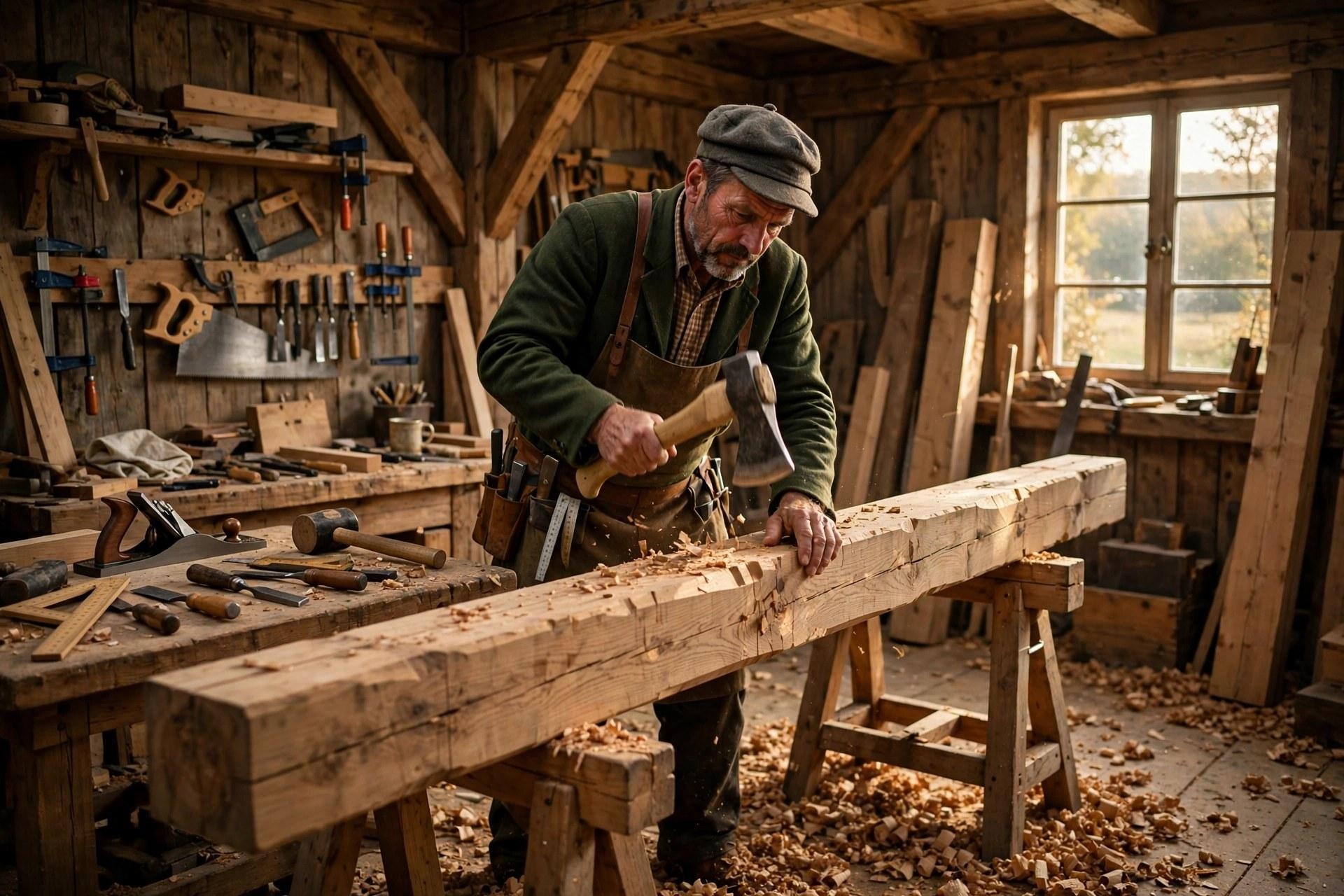
Traditionally, a windstrebe was simply another piece of the timber frame, cut from the same kind of wood and joined with the same mortise, tenon and peg work as the rest of the structure. Those joints are worth admiring up close, because a well-cut brace is locked into the frame at both ends, not just nailed on as an afterthought.
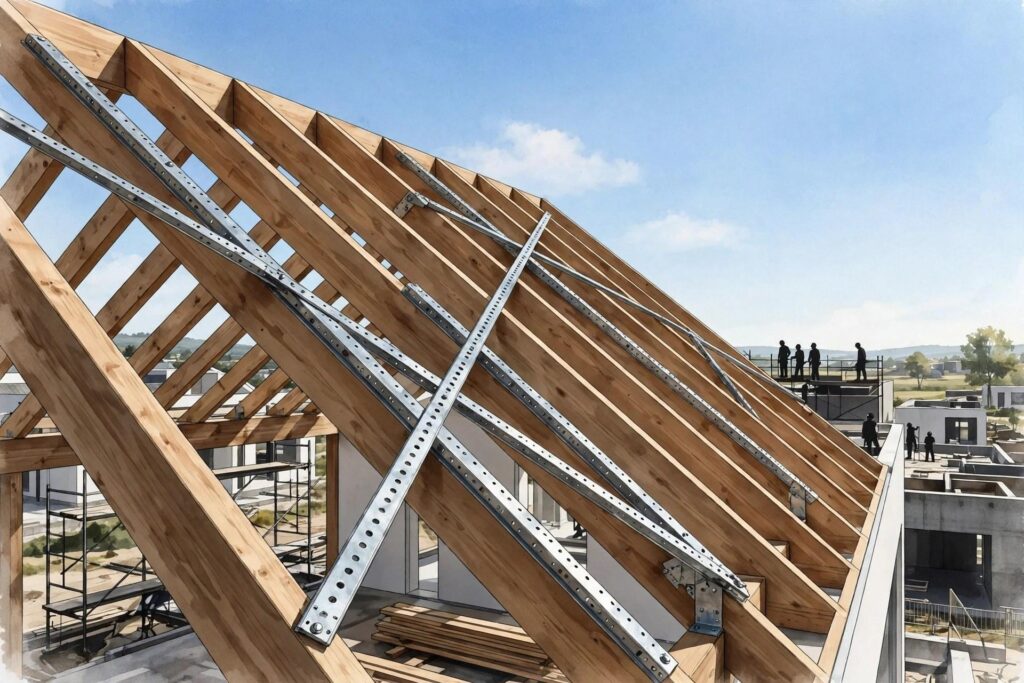
Modern construction often does the same job differently. Instead of a chunky timber, builders may use flat steel sections or, very commonly in timber roofs, a perforated metal strap fixed diagonally across the rafters. The material changed, but the idea did not: something has to run at an angle and stop the rectangle becoming a parallelogram.
One honest warning belongs here. Windstrebe is not a standard product in one fixed size. Two buildings can both rely on wind bracing while using completely different sizes, materials and layouts, because the right answer depends on the span, roof shape and loads on that building. Anyone selling a single universal brace for every roof is selling a story, not a structure.
Windstrebe, Windrispe and Windrispenband: Sorting Out Three Similar Words
This is where most readers get tangled, and fairly enough, because German building vocabulary has several near-identical words for closely related things. A Windrispe is also a wind brace, used especially for diagonal bracing in timber roof construction, so in many roofs the two words point at much the same idea. A Windrispenband is different in form: the band at the end tells you it is a strap, a perforated metal band fixed diagonally across rafters or studs to provide the bracing.
| Term | What it is | Typical form |
| Windstrebe | A diagonal brace against sideways movement | Timber strut in a roof or frame |
| Windrispe | A wind brace in timber roof construction | Diagonal timber bracing in the roof |
| Windrispenband | A bracing strap, not a solid strut | Perforated metal band fixed diagonally |
In everyday conversation the terms overlap, and even tradespeople do not always use them precisely. Describe what you can see, a solid diagonal timber or a flat metal strap, rather than arguing over the label. What matters is that diagonal bracing exists, is sound and is fixed at both ends, whichever word the paperwork uses.
Signs That a Wind Brace Is in Trouble
Timber is honest material. It tends to show its problems before it fails completely, if someone bothers to look. During a renovation or a simple attic inspection, the warning signs are a brace that is cracked along its length, split at the joint, soft or crumbly from rot, or bored through by insects. Loose or missing pegs and fixings matter too, because a brace that is no longer firmly connected is decoration, not bracing.

Just as worrying is the brace that is not there at all. In older houses, a previous owner often removed a diagonal for storage space, or cut it back for a hatch. The roof rarely falls down the same week, which is why people assume the cut was harmless. Instead the frame gains freedom to move, and that shows up slowly in sticking doors, cracked plaster and a roof line that is no longer straight.
Movement you can see is the biggest red flag. A leaning gable, a wandering ridge or walls drifting out of plumb mean the frame is already telling you its bracing is not coping.
When to Call a Structural Engineer
Here is the simple rule: never cut, move or remove a windstrebe just to make space. If a brace sits where your loft conversion or staircase needs to go, that is a design problem to solve on paper first, not with a saw on the day. A structural engineer or experienced timber-frame carpenter can usually find another way to provide the bracing, but the replacement must be in the plan before the original comes out.
Call an engineer before work starts if you are converting a loft or buying an older timber-framed property with visible movement. Call one promptly if you find a cracked or rotten main brace, fresh cracks in gable walls, or a roof that has changed shape. Photographs help more than descriptions, so take clear pictures before anything is touched.
None of this should frighten anyone away from old buildings. Timber frames with proper windstreben have stood through centuries of storms. Treat the diagonal timbers with respect, replace like with like where you can, and get professional eyes on the frame before you change it.
Frequently Asked Questions
1. What does windstrebe mean in English?
It means wind brace. Wind is wind and Strebe is a brace or strut, so the word describes a diagonal brace that protects a frame against wind-driven sideways movement.
2. Is a windstrebe the same as a beam?
No. A beam carries weight downwards, while a windstrebe resists sideways movement. Both matter, but they do different jobs, and one cannot simply replace the other.
3. Where is a windstrebe found in a house?
Most often in the roof, running diagonally between rafters, purlins or posts. You can also see diagonal bracing in the walls of half-timbered houses and in barn frames.
4. Can I remove a windstrebe during a loft conversion?
Not without a replacement plan. Removing it weakens the bracing of the whole frame. Ask a structural engineer or timber-frame carpenter to design alternative bracing first.
5. What is the difference between a windstrebe and a Windrispenband?
A windstrebe is a solid diagonal brace, traditionally timber. A Windrispenband is a perforated metal strap fixed diagonally. They do the same bracing job in different forms.
6. Is Windrispe a different thing altogether?
Not really. Windrispe is another word for a wind brace, used especially for diagonal bracing in timber roofs, so it overlaps closely with windstrebe in practice.
7. What materials are wind braces made from?
Traditional frames use solid timber, joined into the frame. Modern work may use steel sections or perforated metal straps. The right choice depends on the individual building.
8. How can I tell if a wind brace has failed?
Look for cracks, splits at the joints, rot, insect damage or loose fixings. Visible movement, such as a leaning gable or a wandering ridge line, is a more serious sign.
9. Is windstrebe a product I can buy in a standard size?
No. It is a construction term, not a brand or a standard product. Sizes, materials and layouts vary from building to building, depending on the frame and its loads.
10. Who should check a damaged windstrebe?
A structural engineer, ideally alongside an experienced carpenter for timber work. Take clear photographs first, and avoid cutting or moving anything until you have their advice.













Leave a Reply