
Introduction
The term Mahadhivakta is an important word in the Indian legal and constitutional context. It is associated with the position of the Advocate General, a senior legal officer who represents and advises a state government on important legal matters. The role is significant because it connects constitutional law, government administration, and the judicial system.
Understanding Mahadhivakta requires more than knowing its English translation. It is useful to explore the constitutional position, appointment process, qualifications, responsibilities, powers, and relationship with other legal authorities in India.
The Indian legal system has several important positions that help maintain constitutional governance. Judges interpret the law, lawyers represent individuals and institutions, and government legal officers provide advice and represent public authorities in court. The Mahadhivakta has a special place among these legal professionals because the office is established under the Constitution of India.
Although the position is connected with the state government, its responsibilities involve legal principles, constitutional provisions, public administration, and the rule of law. This makes the subject relevant to law students, competitive examination candidates, researchers, and anyone interested in understanding India’s constitutional structure.
Meaning of Mahadhivakta
Mahadhivakta is a Hindi term used for the Advocate General of a state. In simple language, it refers to the state’s highest-ranking constitutional legal adviser.
The word is connected with two important ideas: legal representation and senior legal authority. The Mahadhivakta provides legal opinions to the state government and may represent the government in important court proceedings.
The position should not be confused with the Attorney General of India. The Attorney General works at the Union or central government level, whereas the Advocate General serves a particular state.
For example, Uttar Pradesh, Maharashtra, Rajasthan, Bihar, and other Indian states have their own Advocate General offices.
Constitutional Basis of Mahadhivakta
The office of the Advocate General is established under Article 165 of the Constitution of India.
Article 165 provides three important constitutional rules:
- The Governor of each state appoints a person qualified to become a High Court judge as the Advocate General.
- The Advocate General advises the state government on legal matters and performs other legal duties assigned under the Constitution or applicable law.
- The Advocate General holds office during the pleasure of the Governor and receives remuneration determined by the Governor.
This constitutional provision gives the position a special status in state administration. It is not simply an ordinary government employment position. It is a constitutional office with specific responsibilities.
Article 165 is therefore the most important constitutional provision for anyone studying Mahadhivakta. IndiaCode+1
Appointment of a Mahadhivakta
The Governor appoints the Advocate General of a state. The appointment is made according to the constitutional requirements.
The candidate must possess the professional and legal qualifications required for appointment as a judge of a High Court.
The process involves selecting an experienced legal professional who can provide reliable advice on complicated legal questions.
The role requires strong knowledge of constitutional law, civil law, criminal law, administrative law, and government procedures.
The Advocate General may also work with other government lawyers and legal officers who assist in representing the state before different courts.
Qualifications Required to Become a Mahadhivakta
The qualifications for becoming an Advocate General are linked to the qualifications for becoming a High Court judge.
Under Article 217 of the Indian Constitution, a person must be a citizen of India and satisfy the prescribed professional or judicial experience requirement.
A person may qualify through either of the following routes:
- Having held a judicial office in India for at least ten years.
- Having been an advocate of a High Court, or of two or more such courts in succession, for at least ten years.
These requirements help ensure that the person appointed has considerable experience in the legal profession.
Apart from formal qualifications, an effective Mahadhivakta should possess excellent communication skills, professional judgment, legal research abilities, and an understanding of constitutional principles.
Major Responsibilities of a Mahadhivakta
The responsibilities of a Mahadhivakta extend across several areas of government and the legal system.
1. Providing Legal Advice
One of the primary responsibilities is advising the state government on legal matters.
Government departments regularly face questions involving legislation, public administration, taxation, government contracts, constitutional rights, and regulatory decisions.
The Advocate General examines these issues and provides legal opinions when referred or assigned.
Such advice helps government authorities understand their legal responsibilities before making important decisions.
2. Representing the State in Court
A Mahadhivakta may represent the state government in important legal proceedings.
These cases can involve constitutional questions, public administration, civil disputes, criminal matters, and challenges to government decisions.
The Advocate General presents legal arguments, examines relevant laws, and explains the government’s position before the appropriate court.
3. Advising on Legislation
Government departments sometimes prepare new laws, amendments, regulations, and administrative rules.
The Advocate General may provide legal advice about whether proposed measures comply with constitutional provisions and existing legislation.
This can help identify legal problems before a proposal becomes a law.
4. Handling Constitutional Matters
Constitutional disputes can involve fundamental rights, the division of powers, government authority, and the responsibilities of public institutions.
A Mahadhivakta may assist the state government in understanding these questions and presenting its position before constitutional courts.
5. Supporting Government Departments
Different departments may require legal assistance in administrative decisions, contractual disputes, service matters, and litigation.
The Advocate General can provide advice within the scope of the duties assigned to the office.
The Maharashtra Law and Judiciary Department, for example, describes several responsibilities involving government advice, court representation, and assistance to government officers. India+1
Powers and Privileges of a Mahadhivakta
The Advocate General has certain constitutional rights that allow the office to perform its responsibilities effectively.
Article 177 of the Constitution gives the Advocate General the right to speak in and otherwise take part in the proceedings of the state legislature and its committees, subject to the constitutional provisions.
However, the Advocate General does not have the right to vote merely because of holding this office.
This distinction is important. The position allows participation in legislative discussions on relevant matters, but it does not make the Advocate General an elected legislator.
Article 194 also deals with the powers, privileges, and immunities of state legislatures and their members, including relevant provisions concerning participation in legislative proceedings.
These constitutional arrangements allow the Advocate General to provide legal assistance and clarify legal questions when required. Law Department+1
Tenure and Remuneration
Unlike some constitutional positions that have a fixed term, the Advocate General does not have a fixed constitutional tenure.
Article 165 states that the Advocate General holds office during the pleasure of the Governor.
This means that the Constitution does not prescribe a standard five-year term for the position.
The Advocate General may also resign from the office. The remuneration is determined by the Governor under Article 165.
The exact arrangements may differ between states according to applicable rules and government decisions.
Difference Between Mahadhivakta and Attorney General
The Mahadhivakta and Attorney General are both senior constitutional legal officers, but they serve different levels of government.
The Attorney General of India is the highest law officer of the Union government, while the Advocate General is the chief legal adviser of a state government.
| Basis | Mahadhivakta | Attorney General |
|---|---|---|
| Position | Advocate General | Attorney General of India |
| Government | State government | Union government |
| Appointment | Governor | President |
| Constitutional Article | Article 165 | Article 76 |
| Main responsibility | State legal advice | Union legal advice |
| Court responsibilities | State-related legal matters | Union-related legal matters |
| Legislative participation | State legislature | Parliament |
| Voting right through office | No | No |
Both positions require significant legal experience and a strong understanding of constitutional law.
Importance of Mahadhivakta in Indian Democracy
The Mahadhivakta plays an important role in maintaining constitutional governance.
Government decisions must follow the Constitution and applicable laws. When legal questions arise, the Advocate General can help the government understand its responsibilities.
This role is important for several reasons.
Protection of constitutional principles: Legal advice can help state authorities avoid decisions that conflict with constitutional requirements.
Better administration: Government departments can receive professional legal guidance before taking important actions.
Effective court representation: The state can present its legal position through experienced lawyers.
Support for the rule of law: The office helps maintain the relationship between government authority and legal accountability.
Legal awareness: Advice from senior constitutional officers can help public institutions understand complex legal issues.
Role of Mahadhivakta in High Courts
High Courts are important institutions in India’s judicial system. They deal with constitutional matters, civil disputes, criminal proceedings, administrative challenges, and appeals.
The Advocate General may appear before the relevant High Court on behalf of the state government.
In such proceedings, the Advocate General must understand the facts, identify the applicable legal provisions, and present arguments clearly.
The work may include preparing legal submissions, responding to petitions, explaining government decisions, and advising on possible appeals.
Not every case involving the state must personally be handled by the Advocate General. Other government pleaders and law officers may represent the state according to their assigned responsibilities.
Role in Public Interest and Government Accountability
The office of the Mahadhivakta also has a connection with public accountability.
Government authorities exercise significant powers over public resources, administrative decisions, public employment, and regulatory activities.
When these decisions face legal challenges, the state must explain its position according to the law.
The Advocate General can help the government understand the legal issues involved and respond through the appropriate judicial process.
This does not mean that the Advocate General replaces the judiciary or decides the outcome of a dispute. Courts remain responsible for independently interpreting and applying the law.
Challenges Faced by a Mahadhivakta
The position comes with several professional challenges.
Complex Legal Questions
Government cases may involve multiple laws, constitutional provisions, regulations, and previous court decisions.
Understanding these issues requires careful research and legal reasoning.
Heavy Workload
State governments may face numerous cases across different courts. Managing important matters while providing legal advice can require considerable time and organization.
Balancing Government Representation and Legal Duties
The Advocate General represents the state’s legal interests while working within the constitutional framework.
Professional responsibility requires accurate legal advice and respect for the rule of law.
Changing Laws
Legislation, judicial interpretations, and government regulations may change over time.
A Mahadhivakta must remain familiar with important legal developments to provide effective advice.
How Does a Mahadhivakta Work With Other Government Lawyers?
The Advocate General does not necessarily handle every legal matter personally. The office works with a broader team of legal professionals.
These may include:
- Additional Advocate Generals
- Government advocates
- Public prosecutors
- Government pleaders
- Legal advisers
- Departmental law officers
Each professional may have different responsibilities depending on the state’s legal arrangements.
Additional Advocate Generals can assist with court appearances, legal research, and other assigned responsibilities.
Government pleaders generally represent government departments in proceedings according to their appointments and instructions.
This team-based approach helps state governments manage a large number of legal matters efficiently.
Mahadhivakta and the Rule of Law
The rule of law is a fundamental principle of democratic government. It means that public authorities must exercise their powers according to established laws rather than personal preferences or arbitrary decisions.
The Mahadhivakta contributes to this principle by providing constitutional and legal advice to the state government.
For example, if a government department plans to introduce a new administrative policy, legal questions may arise concerning its authority, implementation, or effect on citizens.
The Advocate General may examine these questions and explain the applicable legal requirements.
This helps government departments make informed decisions and reduces the possibility of avoidable legal disputes.
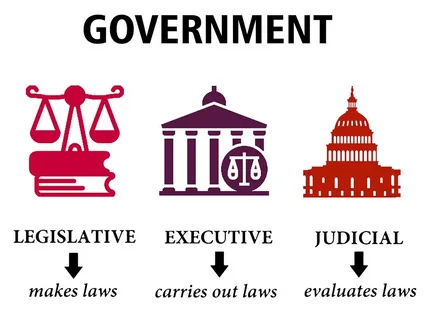
The office also helps maintain communication between the executive government and the judicial system.
Difference Between Mahadhivakta and a Government Advocate
Although both positions are connected with government legal work, they are not identical.
A Mahadhivakta holds a constitutional office under Article 165. A government advocate generally works under an appointment or arrangement made according to applicable government rules.
The Advocate General has broader constitutional responsibilities, including advising the state government on legal matters.
Government advocates usually handle particular cases, departments, or categories of legal proceedings.
The distinction is important for law students and people preparing for competitive examinations because constitutional offices have a different legal status from ordinary government legal appointments.
Famous Legal Institutions Connected With the Mahadhivakta
Several institutions are closely connected with the work of an Advocate General.
High Courts: High Courts are central to the legal responsibilities of state governments. The Advocate General may represent the state in important proceedings before these courts.
State Legislative Assemblies: The Advocate General may participate in legislative discussions under Article 177.
State Law Departments: These departments coordinate legal advice, government litigation, and administrative legal work.
Supreme Court of India: Certain disputes involving state governments may reach the Supreme Court, where the state can be represented through appropriately instructed legal counsel.
These institutions demonstrate how the office operates within India’s constitutional structure.
Career Opportunities Related to the Mahadhivakta
Although the position of Mahadhivakta is a senior constitutional appointment rather than an ordinary entry-level job, students interested in this profession can develop their careers through legal education and practical experience.
A typical professional journey may include the following stages:
- Complete higher secondary education.
- Obtain a recognized law degree, such as a five-year integrated LLB or a three-year LLB after graduation.
- Complete the applicable professional enrollment requirements.
- Begin legal practice and develop courtroom experience.
- Study constitutional law, civil procedure, criminal law, and administrative law.
- Build professional experience in High Court litigation.
- Develop a strong understanding of government and constitutional matters.
There is no ordinary public recruitment examination specifically for becoming an Advocate General under Article 165. The appointment is made by the Governor subject to the constitutional qualifications.
Why Law Students Should Study Mahadhivakta
The topic Mahadhivakta is particularly useful for students studying Indian polity, constitutional law, public administration, and legal studies.
It helps students understand the relationship between the state executive and the legal system.
The subject is also relevant to several competitive examinations, including civil services examinations and state-level public service examinations.
Students should pay particular attention to these points:
- Article 165 establishes the office.
- The Governor appoints the Advocate General.
- The candidate must qualify for appointment as a High Court judge.
- The Advocate General advises the state government.
- There is no fixed constitutional tenure.
- Remuneration is determined by the Governor.
- Article 177 provides legislative participation rights.
- The Advocate General has no voting right merely by holding the office.
Remembering these constitutional provisions can make examination preparation easier.
The Future of the Mahadhivakta’s Office
The legal system is constantly developing. New technologies, changing administrative requirements, digital government services, and emerging legal disputes are creating new challenges for public institutions.
The role of the Mahadhivakta is likely to remain important as state governments deal with these developments.
Cybersecurity, data protection, digital transactions, environmental regulation, public procurement, and technology-related disputes are examples of areas that may require specialized legal knowledge.
Modern legal offices also benefit from digital case-management systems, electronic research tools, and better coordination between government departments.
However, technology cannot replace the professional judgment and constitutional understanding required from a senior legal adviser.
The future effectiveness of the office will depend on legal expertise, professional integrity, efficient administration, and a strong commitment to constitutional principles.
Frequently Asked Questions About Mahadhivakta
1. What is the meaning of Mahadhivakta?
Mahadhivakta is a Hindi term used for the Advocate General, the chief constitutional legal adviser of a state government in India.
2. Which article of the Indian Constitution deals with Mahadhivakta?
Article 165 of the Indian Constitution deals with the appointment, duties, and tenure of the Advocate General for a state.
3. Who appoints the Mahadhivakta?
The Governor of the respective state appoints the Advocate General.
4. What is the main responsibility of a Mahadhivakta?
The main responsibility is to advise the state government on legal matters and perform other legal duties assigned under the Constitution or applicable law.
5. Is Mahadhivakta a constitutional position?
Yes. The office of the Advocate General is a constitutional office established under Article 165.
6. What qualifications are required for Mahadhivakta?
The person must be an Indian citizen and satisfy the qualifications required for appointment as a High Court judge under Article 217.
7. Does Mahadhivakta have a fixed tenure?
No. Article 165 provides that the Advocate General holds office during the pleasure of the Governor.
8. Can a Mahadhivakta participate in legislative proceedings?
Yes. Under Article 177, the Advocate General can speak and participate in the proceedings of the state legislature and its committees, subject to the constitutional provisions.
9. Does Mahadhivakta have voting rights in the state legislature?
No. The Advocate General does not receive voting rights simply by holding the constitutional office.
10. What is the difference between Mahadhivakta and Attorney General?
The Attorney General is the chief legal officer of the Union government under Article 76, whereas the Advocate General is the chief legal adviser of a state government under Article 165.
11. Can a Mahadhivakta represent the state in court?
Yes. The Advocate General may represent the state government in court proceedings when required and appropriately instructed.
12. Is Mahadhivakta more powerful than a High Court judge?
No. The Advocate General and a High Court judge perform different constitutional functions. The Advocate General is a legal adviser and government law officer, while judges exercise judicial authority independently.
13. Can a Mahadhivakta resign?
Yes. The Advocate General may resign from the office by submitting a resignation to the Governor.
14. Who decides the remuneration of a Mahadhivakta?
Article 165 provides that the remuneration of the Advocate General is determined by the Governor.
15. Is Mahadhivakta important for competitive examinations?
Yes. The topic is relevant to Indian Constitution, Indian polity, legal studies, and general knowledge examinations.
Conclusion
Mahadhivakta is an important constitutional position within India’s state-level legal system. The Advocate General serves as the principal legal adviser to the state government and performs responsibilities connected with constitutional law, government administration, and judicial proceedings.
Article 165 provides the constitutional foundation for this office, while Article 177 explains the Advocate General’s participation rights in the state legislature. The qualifications are connected with those required for appointment as a High Court judge.
The position is important because government decisions must follow constitutional principles and established laws. Through legal advice, court representation, and professional guidance, the Mahadhivakta contributes to the effective functioning of state administration.
For law students, researchers, and competitive examination candidates, understanding Mahadhivakta provides useful knowledge about the relationship between the executive, judiciary, and constitutional institutions.
Ultimately, the office represents an important connection between government authority and the rule of law in Indian democracy.









Leave a Reply