
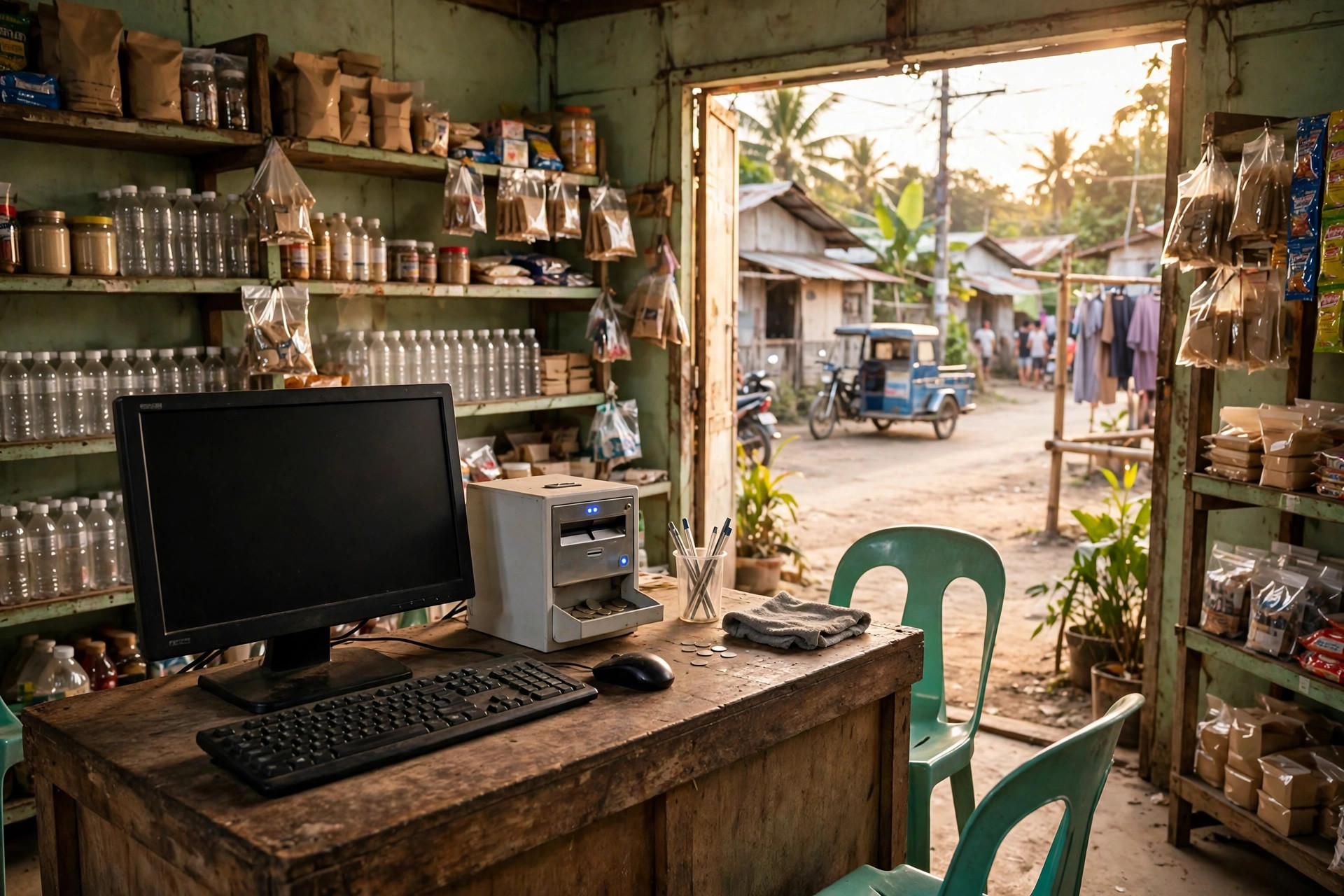
Walk down a side street in almost any Philippine town and you will see them if you know what to look for: a desktop computer on a wooden counter, a small metal box bolted beside it, and a plastic chair pulled up close. Somebody drops a coin in the slot. The screen wakes up. A timer starts counting down. That is a pasonet — the Philippines’ coin-operated internet kiosk, and one of the cleverest small-business ideas the country ever produced.
The name itself tells you the whole story. Pasonet is a blend of “piso” — the Philippine peso — and “internet”. Peso internet. Internet you buy the way you buy a single sachet of shampoo or one stick of cigarette from the corner store: in the smallest amount you can afford, exactly when you need it.
For millions of Filipinos in the early 2010s, when pasonet spread across the country, that small amount was the whole point. They did not own a computer. They did not have a broadband line at home. Some lived where the nearest internet café was a jeepney ride away. A pasonet put the internet on their own street, for the price of a coin or two.
What Is Pasonet?
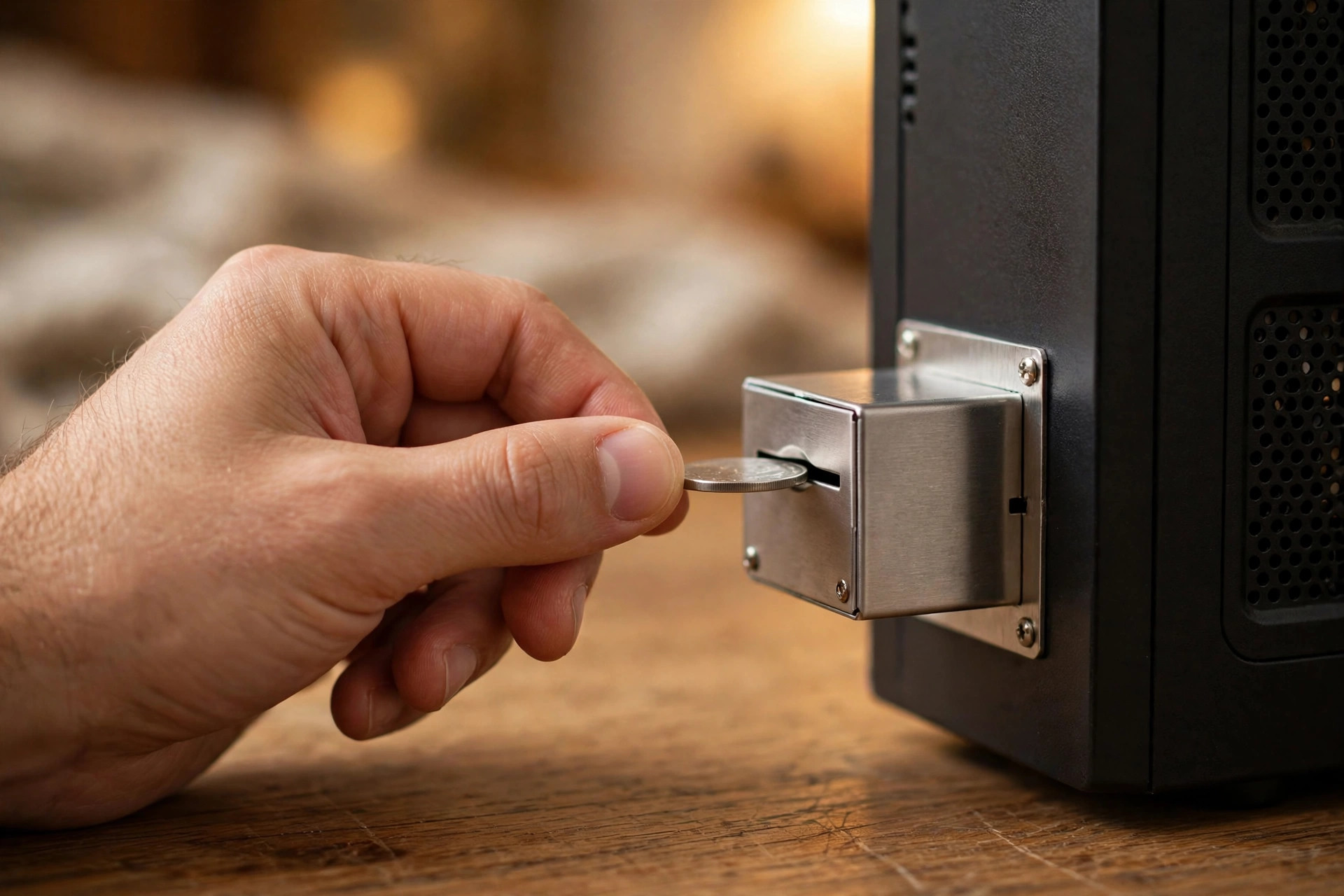
A pasonet is a pay-per-use internet station built around an ordinary desktop computer. The setup is deliberately simple: a computer, a monitor, a keyboard, a mouse, and a coin acceptor — a small metal box with a slot, wired to a timer program. A customer walks up, inserts a coin, and the timer gives them internet time in exchange. When the time runs out, the screen locks until another coin goes in.
Most machines accepted 1, 5 and 10-peso coins. What you got for each coin depended on the owner and the connection behind the machine, but the rough pattern people remember is consistent: a single peso bought a short slice of time, and a few coins together bought somewhere in the region of 15 to 30 minutes online. Nobody was getting rich off one coin. The point was volume — a steady stream of neighbours dropping by through the day, each spending a little.
It is worth saying plainly what a pasonet is not. It is not an app you download. It is not a brand of router or a telecom product. It is a physical thing — a computer, a coin box and a timer — usually sitting in someone’s front room, garage or sari-sari store. The machine belongs to a neighbour who decided to turn a spare computer and an internet connection into a small income.
How a Pasonet Machine Actually Works
The mechanics are humble, and that is the beauty of them. The owner takes a standard desktop computer, connects it to the internet — usually through a home DSL or broadband line — and installs a timer program. The coin acceptor is wired into the system so that every coin dropped in adds minutes to the clock.
Here is how a typical session went. You sat down and the screen showed a locked page or a countdown of zero. You pushed a coin into the slot and heard the small mechanical clunk as it dropped into the collection box. The timer jumped up — fifteen minutes, maybe twenty. You typed in your Facebook password, opened a chat window, or loaded a game, keeping one eye on the clock the way you would keep one eye on a parking meter.
When your minutes ran low, the screen usually flashed a warning. You had a choice: feed it another coin, or wrap up fast. Students learned to type quickly. Gamers learned to finish a match before the timer hit zero. Everyone learned the small panic of a page loading slowly while the clock kept running.
The owner, meanwhile, had almost nothing to do during the day. The machine collected the coins itself. At the end of the day, the owner unlocked the coin box, counted the take, and restarted anything that had frozen. That is why the model spread so fast. It was a business you could run from your own living room, with no staff, no till and no complicated bookkeeping.
Why Pasonet Took Off in the Philippines
To understand why the pasonet worked, you have to understand the Philippines in the early 2010s. Internet access was growing fast, but it was not evenly spread. Cities had internet cafés and broadband, but plenty of households — especially outside the big cities — had neither a computer nor a home connection. A broadband subscription was a monthly bill, and monthly bills are a big ask when money comes in day by day.
The pasonet solved that problem by matching how people actually spent money. The Philippines runs on what economists call the sachet economy: small, single-use portions of everyday things, priced for a day’s pocket money. A sachet of shampoo. A single-serving coffee mix. The pasonet did the same thing for the internet. You did not need a contract, a deposit or a monthly plan. You needed a coin in your pocket.
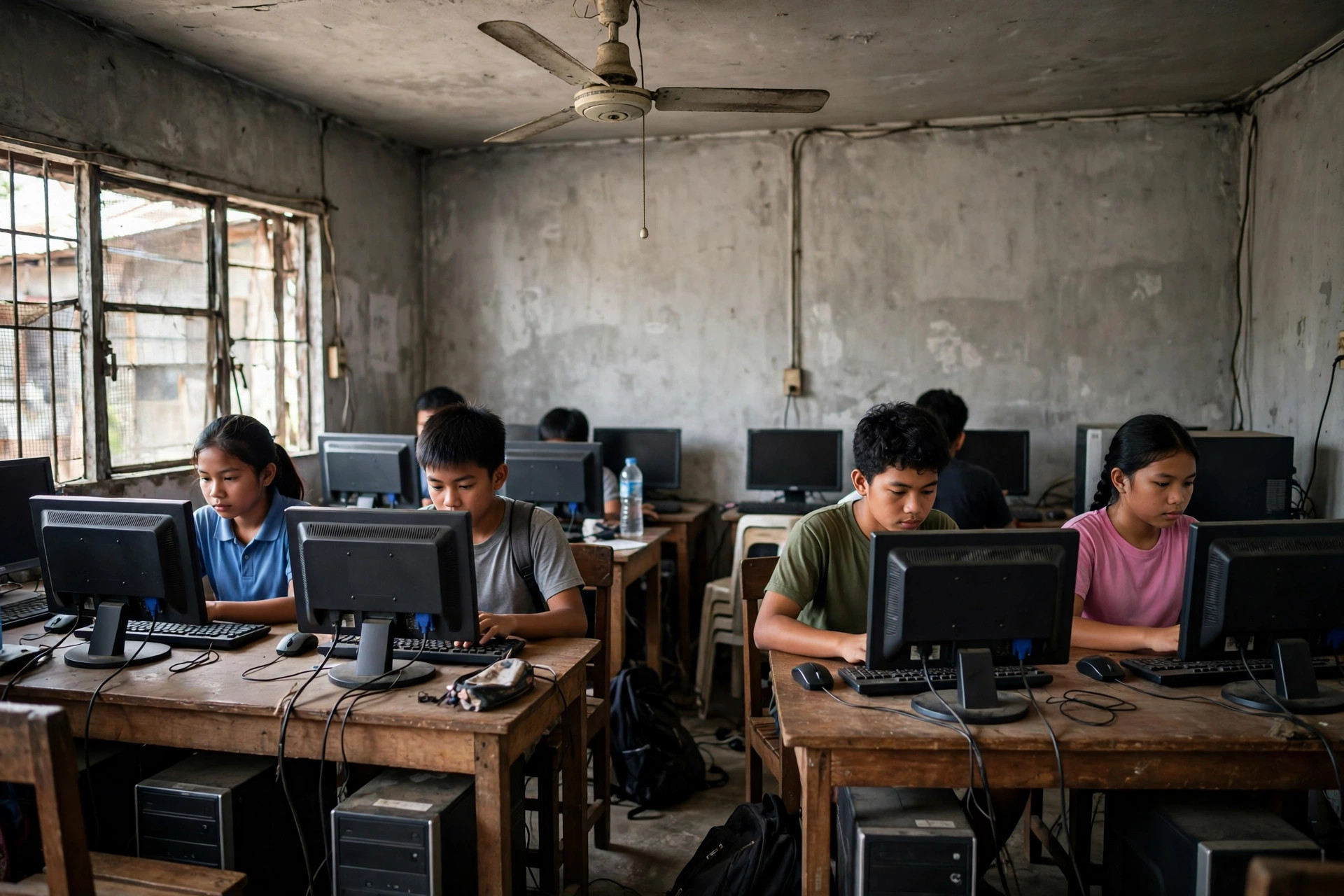
That mattered most for the people who used it. Students were the biggest group by far — stopping at the pasonet on the way home from school to research an assignment or print a project. Job seekers used it to send applications and check for replies. Gamers used it for the online games they could not play at home. Families with a relative working overseas used it for video calls, the screen freezing now and then, everybody laughing about it anyway.
Location did the rest. Pasonet machines did not sit in shopping malls. They sat in the places people already walked past every day: the front of a house on a barangay street, the corner of a sari-sari store, a small room beside a laundry shop. You did not plan a trip to a pasonet. You just stopped in — and because the owner was usually a neighbour, people chatted while they waited for a free machine and kids crowded around whoever was playing a game.
Who Uses a Pasonet — and for What?
A pasonet was a different thing to different people, but a few uses came up again and again.
Schoolwork came first. For students, the pasonet was a study tool before it was anything else. Research for assignments, the school’s online portal, a document typed up and printed — all of it happened in fifteen-minute bursts between classes or on the walk home. Teachers knew it too: in some areas, a teacher would tell a class to look something up online, fully aware that half the class would be doing it at the neighbourhood pasonet that evening.
Staying in touch came second. The Philippines has one of the largest overseas workforces in the world, and whole families organise their lives around calls and messages from abroad. Long before video calling was something you did from your pocket, a pasonet was where you went to see your mother’s face on a screen.
Games came third, and nobody should pretend otherwise. Online gaming was a huge part of pasonet culture. Teenagers pooled their coins to keep a match going, took turns at the keyboard, and argued about who had wasted the last five minutes. Owners learned to expect noise in the afternoons and a queue on weekends.
And then there was everything else. Checking a job posting. Sending a résumé. Looking up a bus schedule. Watching a music video. Printing a form for a government office. The pasonet was a general-purpose window onto the internet for people who had no other window, and they used it for exactly the same ordinary things everyone else uses the internet for — just in smaller, cheaper slices.
Pasonet vs. the Internet Café
People sometimes confuse the pasonet with the internet café, and it is easy to see why. Both give you a computer and a connection you do not own. But they are different businesses, built for different streets, and the differences explain why the pasonet found its own niche instead of just being a smaller café.
| Pasonet | Internet café | |
|---|---|---|
| Size | Usually one machine, sometimes two or three | A room full of computers, often ten or more |
| Payment | Coins dropped in a slot, pay as you go | Pay at the counter, usually by the hour |
| Staff | None on duty — the machine runs itself | An attendant, sometimes a technician |
| Location | A home, a garage, a corner store | A rented commercial space |
| Typical session | Short — a coin or two, 15 to 30 minutes | Longer — an hour or more at a time |
| Startup cost | Low — a spare computer and a coin box | Higher — rent, many machines, staff |
The café was the better choice if you wanted to settle in for hours. The pasonet was the better choice if you had ten pesos, twenty minutes, and a street corner to spare. In many towns they existed side by side — the café on the main road, the pasonet on the side street — and people used whichever one fit the moment.
The Business Side: Running a Pasonet
For the owner, the appeal was obvious. A pasonet was one of the cheapest internet businesses a person could start. You did not need a shopfront or employees. If you already had a computer and an internet line at home, the main extra cost was the coin acceptor and the timer setup. After that, the machine did the work: collecting coins, counting down minutes, and locking itself when the money ran out.
The daily routine was small. Open up in the morning, make sure the machine was on and the connection was up, and in the evening, empty the coin box and count what came in. The income was modest — nobody was buying a car with pasonet coins — but it was steady, and it came from an asset the owner already had sitting in the house.
There were risks, of course. Coins got stolen from the box. Machines got tampered with by clever teenagers. A slow connection on a busy evening meant unhappy customers and coins wasted on loading screens. And the computer itself — the single point of failure — needed replacing eventually, which was a real expense for a small earner.
It is also worth being honest about what we do not know. There are no reliable public statistics for how many pasonet machines existed at the peak, how much a typical one earned in a month, or exactly when the first one appeared. Those numbers were never collected in any formal way, because the business was informal by nature. Any article that gives you a precise national figure is making it up.

Pasonet vs. Passnet — Do Not Mix Them Up
Search for “pasonet” online and you will eventually trip over a word that looks almost the same: Passnet. The two are spelled one letter apart and they have nothing to do with each other, so it is worth clearing up the confusion before it starts.
Passnet was a Japanese magnetic-stripe fare card for trains and buses in the Tokyo area — buy the card, and the gates deducted your fare each time you travelled. It was discontinued on 31 January 2018, replaced by the IC cards — Suica and Pasmo — that Tokyo commuters use today.
Pasonet, on the other hand, is Filipino, it takes coins, and it sells internet time. Different country, different purpose, different word. If an article about “pasonet” starts talking about Tokyo train stations, it has the wrong word.
The Other Meanings of “Pasonet” You Will Find Online
Here is where an honest article has to slow down and be careful. The coin-operated kiosk is the documented meaning of pasonet — the one tied to a real place, a real practice and real people who remember using the machines. But if you search the word today, you will also find blogs using “pasonet” for completely different things: a professional networking platform, a framework for robot networks, an IT services company, and a handful of other concepts that share little more than the name.
Let us be plain about those. They are claims made by individual blogs and marketing pages, not established facts. There is no verified record of a single, widely recognised product called Pasonet in any of those senses — no well-documented launch, no agreed founder, no user base you can check. Some of the pages read like descriptions of an idea rather than a thing that exists. Treating them as settled fact would be dishonest, and this article will not do that.
That is a normal thing on the internet, by the way. A short, catchy name gets picked up in more than one place, and the search results start mixing a real, physical thing with concepts that borrow its spelling. The coin kiosk is the meaning with streets and coins and customers behind it. The rest are names on a page. If any of them grows into something verifiable, the record can be updated. Until then, they should be described exactly as what they are: unverified claims, not facts.
Is Pasonet Still Around?
The honest answer is: less than it was, but not gone. The world that made the pasonet necessary has changed. Cheap smartphones put a screen in almost every pocket, and mobile data — sold in the same small, prepaid slices Filipinos were already used to — did what the pasonet did, without the chair and the coin slot.
Related ideas have carried the model forward. Piso WiFi, for example, is the wireless cousin of the pasonet: a small vending machine for WiFi time, where you drop in a coin and connect your own phone instead of sitting at someone else’s computer. It uses the same logic — the internet, sold by the coin — and it fits a world where the device is already in the customer’s hand.
But the pasonet has not vanished entirely. In places where mobile signal is weak, where data is still expensive relative to income, or where a student needs a full keyboard and a big screen to finish a project, a coin machine still earns its keep.
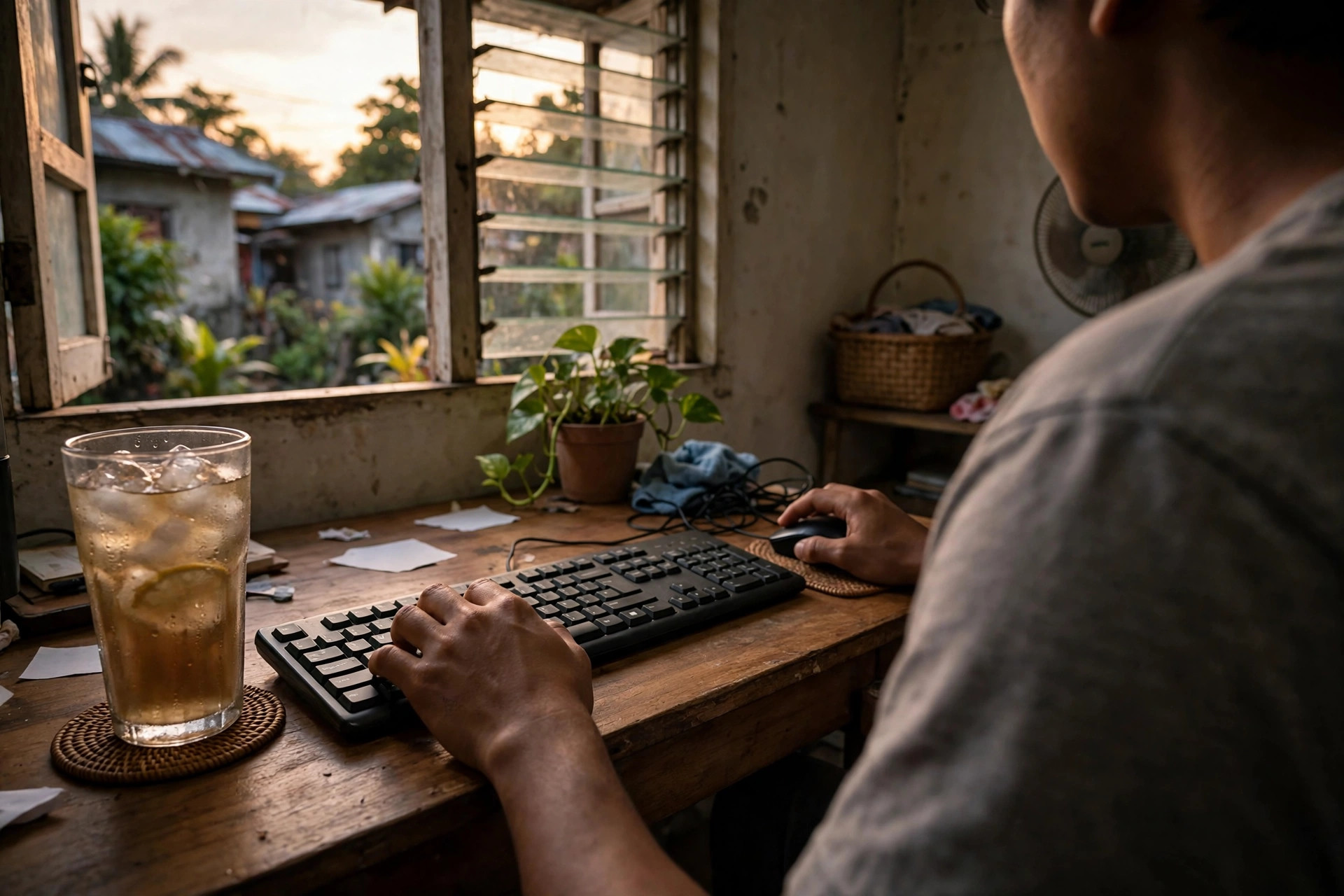
There is a larger lesson in the pasonet, too, and it is not really about technology. It is about access. The internet was not built for people who could only afford it fifteen minutes at a time, and yet those people found a way in anyway — with a coin, a chair, and a neighbour who owned a computer. The pasonet did not wait for perfect infrastructure or perfect prices. It took what existed and made it small enough to buy: take the big thing, cut it into pieces people can afford, and sell it on the corner where they already are.
Pasonet at a Glance
| Detail | What we know |
|---|---|
| Meaning | Coin-operated internet kiosk |
| Name origin | “Piso” (Philippine peso) + “internet” |
| Payment | 1, 5 and 10-peso coins in a slot |
| Typical session | Roughly 15–30 minutes per few coins (varied by owner and connection) |
| Where | Homes, garages and sari-sari stores across the Philippines |
| Spread | Early 2010s, as affordable pay-per-use access |
| Main users | Students, job seekers, gamers, families calling relatives abroad |
| Not to confuse with | Passnet — a Japanese transit card, discontinued 31 January 2018 |
FAQs
What is pasonet?
Pasonet is a coin-operated internet kiosk from the Philippines. It is a desktop computer fitted with a coin acceptor and a timer: you insert 1, 5 or 10-peso coins and get internet time in return, usually in slices of around 15 to 30 minutes. The name blends “piso” (Philippine peso) and “internet” — peso internet, sold in small, affordable amounts.
How much does pasonet cost?
There was no single fixed price, because each machine was owned by a different person who set their own rate. What was consistent was the payment method: 1, 5 and 10-peso coins dropped into a slot, with a few coins typically buying roughly 15 to 30 minutes of internet time, depending on the owner and the connection. Any article that states one exact national price is guessing.
Is pasonet the same as Passnet?
No. Passnet was a Japanese magnetic fare card for trains and buses around Tokyo, discontinued on 31 January 2018. Pasonet is a Filipino coin-operated internet kiosk. The names differ by one letter, but they are different words for different things in different countries.
Is pasonet still used today?
Less than at its peak in the early 2010s, but it has not disappeared completely. Cheap smartphones and prepaid mobile data have taken over much of what the pasonet used to do, and related coin-operated models such as piso WiFi carry the same idea forward for people connecting their own phones. Pasonet machines still make sense where mobile signal is weak, data is costly, or someone needs a full computer for schoolwork.
What are the other meanings of pasonet online?
Some blogs use “pasonet” for other ideas — a professional networking platform, a robotics network framework, an IT services firm, and similar concepts. These are unverified claims by individual pages, not documented facts: there is no reliable record of a single established product called Pasonet in any of those senses, and no verified founder, launch date or user numbers. The coin-operated internet kiosk is the documented meaning of the word.









Leave a Reply