
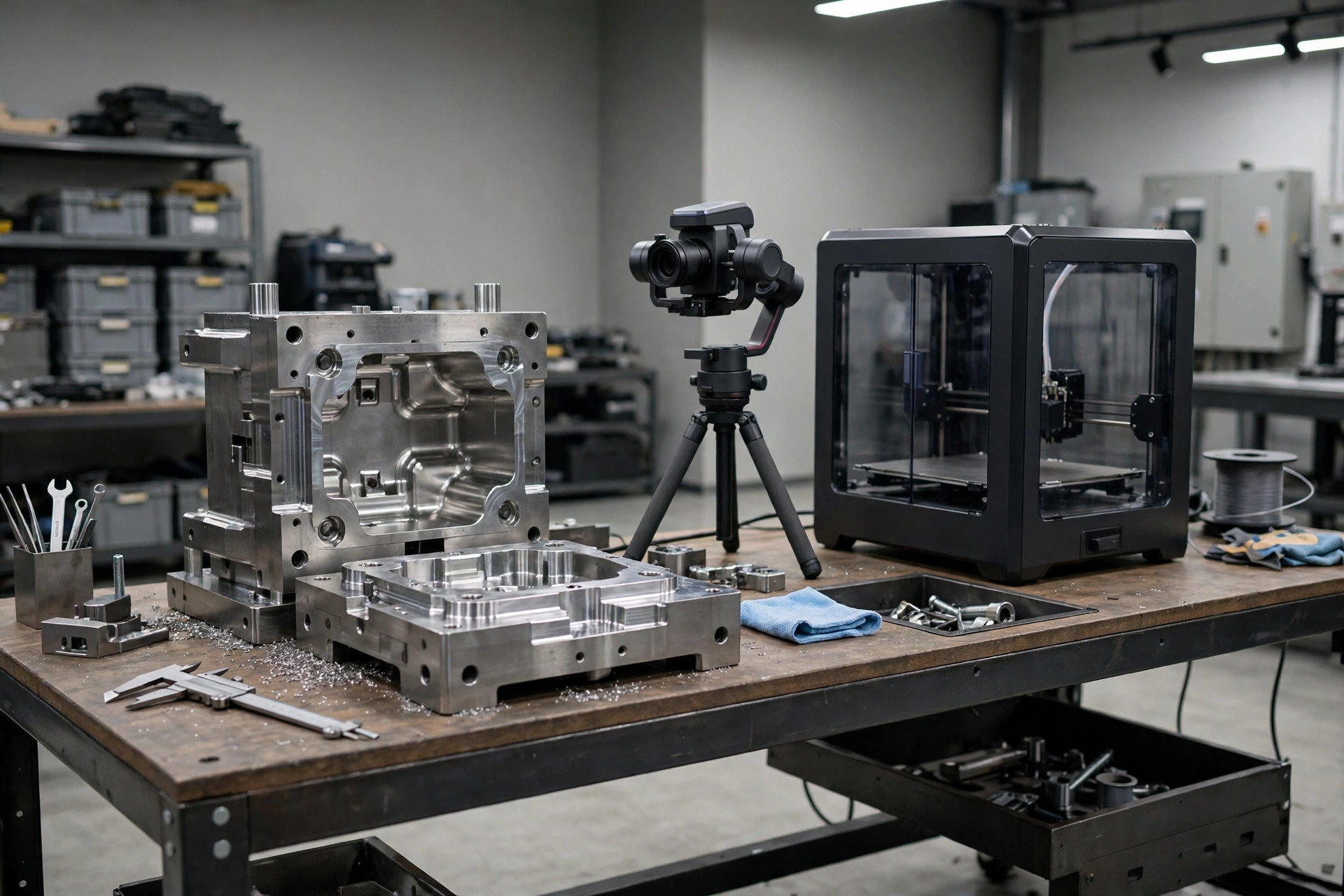
If you have typed “repmold” into a search engine, you have probably noticed something odd. The word shows up on a handful of blogs and manufacturing pages, and almost every one of them explains it a little differently. One page calls it a digital molding system, another calls it a service, and a third treats it as a general idea rather than any one product at all. That confusion is not your fault — and it is the most important thing to understand first.
Here is the honest starting point: repmold is not a formally standardised industry term. It has no single agreed definition the way injection molding does, and there is no single company, founder, patent, or official website that can be verified as the source of the word. What does exist is a cluster of real, well-established techniques — 3D scanning, CAD design, 3D printing, silicone casting, and rapid tooling — and a new, informal word writers use as shorthand for combining them to copy or repair a mold.
What Does Repmold Mean?
Strip the word down and the meaning is fairly plain. “Rep” points toward replicate, replica, reproduction, or repeatable, and “mold” points toward molding or mold making. Put together, repmold describes the idea of reproducing a mold — making a copy of one, rebuilding one that is worn out, or creating one quickly from a digital design instead of machining it from a solid block of metal the traditional way.
Most online writing about repmold agrees on that broad picture, even when the details differ. The typical description goes like this: a digital design or a 3D scan of an existing part is used to create a mold, often with the help of 3D printing, and that mold is then used to cast or form repeated copies of the part. Some writers emphasise repair — scanning a damaged mold, fixing its geometry on a computer, and producing a restored version. Others emphasise replication — copying a mold so a workshop has a spare, or so a part can be made again after the original tooling is lost. Neither use is exactly wrong, but the looseness matters: if a supplier offers you “repmold” work, ask which job they actually mean.
What Repmold Is Not
First, repmold is not a single machine you can buy. There is no “repmold machine” with a model number and a spec sheet; the workflow uses ordinary, separate tools — scanners, CAD software, 3D printers, CNC machines, silicone, and resin — and the word describes how those tools are combined. Second, as far as can be verified from public sources, repmold is not one branded company or product either. Some articles describe it as if it were a company, but no verifiable company behind that description — no headquarters, no named founders, no official site — turned up in the research for this article, and there is no published, verifiable price list for repmold as a service. Finally, it is not a formally recognised term in manufacturing standards or textbooks. An engineer with thirty years in a tool shop may never have heard the word, while knowing everything about the techniques it describes.
Repmold, Replication Molding, and Rapid Tooling
Part of the confusion is that repmold overlaps with older, properly defined terms. Replication molding is the older, more precise idea: a master object provides the shape, a mold captures it as a negative, and the mold is used to make copies — something jewellers, dentists, and prototype shops have done for decades. Rapid tooling is the term for making tooling quickly for prototypes or short runs, using 3D printing or soft tooling instead of hardened-steel production molds: faster and cheaper up front, but with shorter tool life. Repmold sits across both ideas, adding a digital step — scanning and CAD — that neither older term requires. Think of it less as a new invention and more as a label for a digital version of things workshops already did by hand.
| Term | What it means | How established is it? |
|---|---|---|
| Repmold | Informal shorthand for digitally copying, rebuilding, or quickly making molds | Emerging and informal; no single agreed definition |
| Replication molding | Making a mold from a master pattern so copies can be cast | Long-established practice with many documented forms |
| Rapid tooling | Making molds or tooling quickly for prototypes and short runs | Recognised manufacturing approach with known trade-offs |
| Injection molding | Forcing molten material into a mold under pressure | Fully standardised, mainstream mass-production process |
How a Repmold Workflow Actually Works
Although writers describe the process with different numbers of steps, the workflows they describe share the same backbone. Here it is, in plain language, in the order the work usually happens.
Step 1: Capture the Shape
Everything starts with a shape. Either it already exists — a part, a master pattern, or a worn mold — or it exists only as an idea to be drawn first. If it already exists, a 3D scanner measures its surface and turns it into a digital model, capturing the shape as it is right now, including wear, dents, and damage. That matters: a worn mold is not the shape you want to copy, it is the shape you want to correct. If the shape does not exist yet, it is drawn in CAD software instead.

Step 2: Fix and Prepare the Digital Model
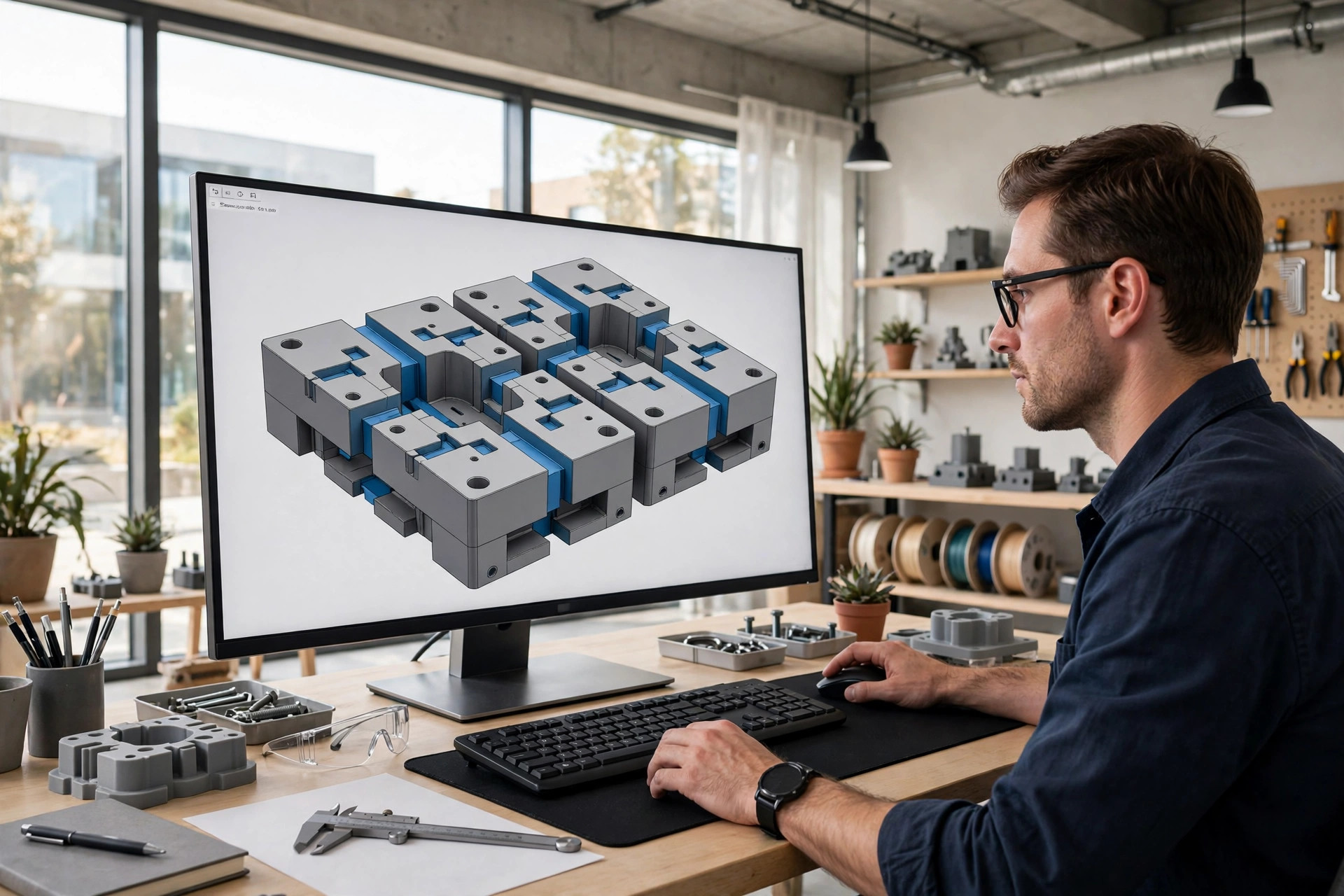
This step separates a repmold-style job from simply photocopying a shape. An engineer opens the scan in CAD software, compares it with the original design or a good reference part, and repairs the digital model: filling worn areas, straightening edges, restoring the surfaces that matter for how the final part fits and works. The model is also checked for practical things, such as how the finished part will come out of the mold. Get this step wrong and you print the damage instead of fixing it.
Step 3: Make the Mold
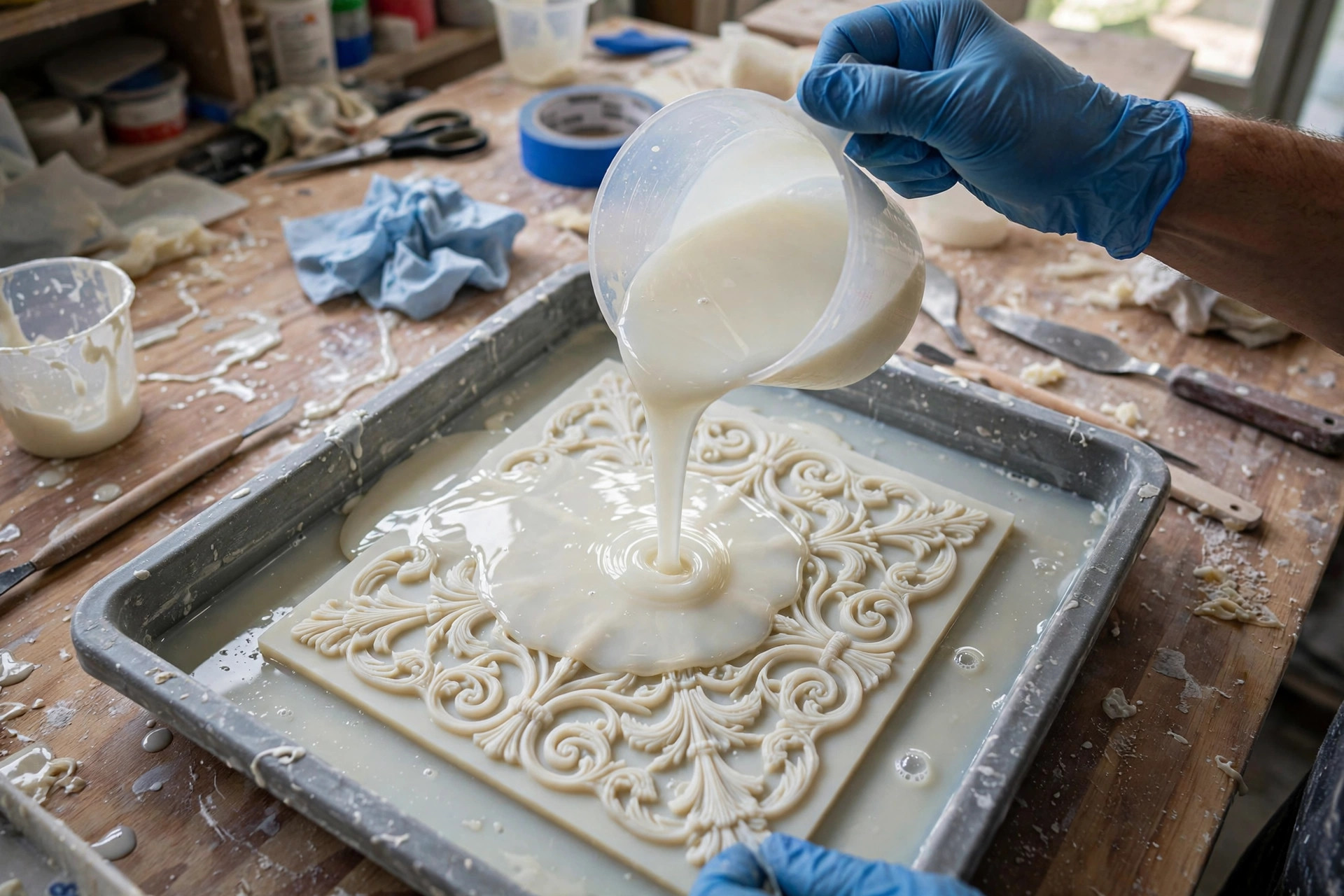
Once the digital model is ready, the mold itself is made, and there are two broad routes. The first is 3D printing the mold directly, usually in resin — fast, and good with complex shapes, but printed molds generally do not last as long as machined metal ones. The second is making a master model, often 3D printed, and casting a mold around it in silicone, polyurethane, or epoxy resin. Silicone molds are flexible and capture fine detail well, but they wear out and are not suited to high temperatures or pressure. The right route depends on the part, the material, and how many copies are needed.
Step 4: Cast, Mold, and Finish the Parts
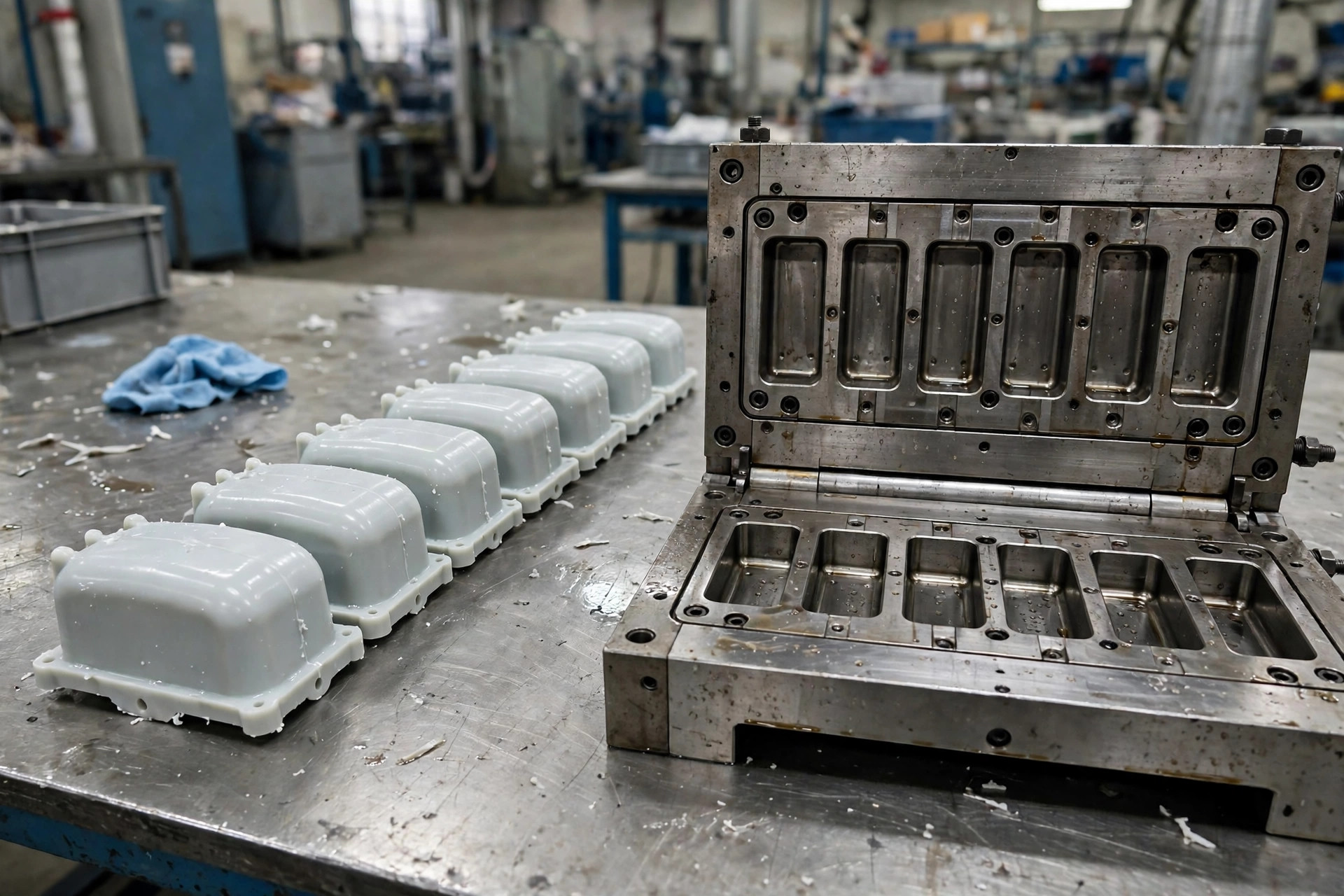
With the mold ready, the parts are made: resin, plastic, rubber, or another casting material is poured or injected into the mold, left to set, and removed. Fresh parts are checked, trimmed, and finished by hand — flash removed, edges cleaned up, surfaces polished where needed. Every part should be inspected, and anything that has to fit or seal should be measured. A mold that looks right but produces parts a fraction of a millimetre out is not a good mold.
Repair or Replication: Two Jobs Under One Word
Repair is the job of saving a mold that already exists. The mold is valuable — it may have cost a great deal to machine, or it may be the only tooling for a part that still sells — but it is worn or damaged. The repmold-style answer is to scan it, correct the geometry, and produce a restored version, extending the life of tooling that would otherwise be scrapped. The risk is that the scan records the damage and the CAD work does not fully correct it, or that a hidden problem, such as a crack inside the mold, never shows up in a surface scan.
Replication is the job of making a copy, usually because the original is lost, damaged beyond use, or needed in more than one place. The surviving part becomes the master, a mold is made from it, and production can resume. It is also how a workshop makes a spare mold so production does not stop when the main tool goes in for maintenance. The risk is a quiet one: every copy of a copy loses a little fidelity, so a mold made from a molded part carries the small distortions of the first molding, plus its own. For decorative objects that hardly matters; for precision parts, a good shop measures the first articles instead of assuming they match the original.
Materials Used in Repmold-Style Work
There is no official materials list for repmold, but the materials named again and again online are the familiar ones from replication molding and rapid tooling. Silicone is the workhorse for flexible molds and fine detail. Epoxy and polyurethane resins are used both for molds and for the parts cast in them, while rubbers, plastics, composites, and metal-filled resins cover most prototype and short-run parts. Each material brings its own limits — temperature, pressure, shrinkage, and how many pulls it survives — and choosing the wrong one is the most common reason a replicated mold disappoints.
Where Repmold-Style Work Is Used
The industries named in connection with repmold are the ones you would expect for fast, small-batch mold making: automotive workshops for trim, connectors, and prototype brackets; consumer electronics teams testing enclosures and housings before production tooling; medical device developers prototyping casings; aerospace and industrial teams making low-volume ducts and housings; and crafts, education, and product design, where a silicone mold from a single master is often the whole job. What these uses share is a pattern: the numbers are small, the design may still change, or the original tooling is gone. Nobody describes repmold as the right way to make a million identical bottle caps — its home is the awkward middle.
Why People Are Interested: The Honest Benefits
The appeal is easy to see, and most of it is genuine. Speed is the headline: a mold that might take weeks in a machine shop can, in the right circumstances, be scanned, corrected, and printed or cast in days. Cost follows — less machining time, less material wasted, and no need to start from scratch when a usable shape already exists. Flexibility is the third benefit: because the design lives as a digital file, a change is a CAD edit rather than a new block of metal. And for repair work, there is a benefit that is hard to put a price on: keeping an old part in production when its original mold is gone.
The Limits Nobody Should Skip
A replicated or printed mold is not the equal of a machined production mold, and pretending otherwise is how projects go wrong. Printed and cast molds wear faster, so they suit tens or hundreds of parts rather than tens of thousands — and any supplier who quotes a precise tool life for a “repmold” without knowing your part and material is guessing. Heat and pressure are the second limit: many printed resins and silicones cannot take the temperatures and pressures of industrial injection molding. Precision is the third: scanning, printing, and casting each add small errors, and those errors stack up. Finally, there is the definition problem: two suppliers offering “repmold” may be offering different processes and quality levels entirely.
| Factor | Traditional machined mold | Repmold-style mold |
|---|---|---|
| Lead time | Usually weeks; machining and finishing take time | Often days for suitable parts, once the scan or CAD file exists |
| Up-front cost | High; skilled machining and metal stock | Lower for small runs; less machining, less material waste |
| Tool life | Long; built for high-volume production | Shorter; suited to prototypes and short runs |
| Materials it can mold | Wide range, including hot, high-pressure processes | Narrower; limited by the mold material’s heat and pressure tolerance |
| Design changes | Slow and expensive once metal is cut | Faster; edit the digital file and remake the mold |
| Best suited to | Mass production, tight tolerances, long runs | Prototypes, short runs, repairs, and lost tooling |
What About Cost?
This is the question most readers actually want answered, and it is the one with the least honest answer available. There is no verified standard price for repmold work, because there is no standard service — the cost depends on the size and complexity of the part, the condition of the original, the scanning and CAD time, the material, and how many copies are needed. A small silicone mold from a simple master is a modest job; rebuilding a large, damaged industrial mold is a serious engineering project. Any article quoting a single price for “repmold” is either quoting one supplier’s job as if it were a market rate, or inventing a number. Get a quote for your actual part, in writing.
How to Judge a Repmold Offer Before You Pay
If you are thinking of hiring someone for this kind of work, a few questions will tell you more than the word “repmold” ever will. Ask what process they actually use — scanning and printing, casting from a master, or a mix — and what material the mold will be made from. Ask how many parts the mold is expected to survive, and what tolerance they will guarantee. Ask to see first articles measured against the original, and ask who pays for the remake if the mold fails early or the parts are out of spec. If a supplier calls themselves “the” Repmold company, or quotes capabilities that sound too good to be true, check them like any unfamiliar supplier: a real address, real past work, real references. A good shop will welcome those questions.
Repmold and the Future of Making Molds
Whatever the word ends up meaning, the direction behind it is not in doubt. Scanners get cheaper and more accurate, 3D printers get faster and handle more materials, and CAD software keeps getting easier to use. Each trend makes it easier to copy, repair, or quickly build a mold — the real story here is not a single invention, but a steady lowering of the barrier to making tooling. The likely future is mixed: digital replication for prototypes, repairs, and short runs, alongside traditional machining for high-volume production. Whether the word repmold survives is genuinely uncertain; it may catch on, or fade while the older terms absorb the work.
FAQs
What is repmold?
Repmold is an informal, emerging term for digitally copying, rebuilding, or quickly making molds, usually by combining 3D scanning, CAD design, and 3D printing or casting. It has no single agreed definition, so different writers use it for slightly different jobs — mold repair, mold replication, or rapid mold making.
Is repmold a company or a product?
No verifiable single company or branded product behind the name turned up in research for this article — no confirmed headquarters, founders, official website, or product line. Some online articles describe it as a company, but that could not be verified. In most writing, repmold describes a process, not a brand.
How does repmold work?
The usual workflow has four stages: capture the shape by 3D-scanning an existing mold or part, or drawing it in CAD; correct the digital model, fixing wear and checking the design; make the mold, by 3D printing it or casting silicone, resin, or polyurethane around a master; then cast the parts, finishing and inspecting them.
What is repmold used for?
It is mainly described for prototypes, short production runs, testing designs before production tooling, repairing worn molds, and recreating molds whose originals are lost. Industries named include automotive, consumer electronics, medical devices, aerospace, and crafts — wherever small numbers, tight deadlines, or lost tooling make machining impractical.
Is repmold better than traditional mold making?
It is faster and usually cheaper up front for small runs, repairs, and prototypes, and design changes are easier because the design lives as a digital file. But replicated and printed molds generally have shorter tool lives, narrower material and temperature limits, and looser tolerances than machined molds. For high-volume production, traditional mold making remains the right choice.
Final Thoughts
Repmold is a useful word to know and a risky word to trust on its own. It points at something real — the growing habit of scanning a shape, fixing it on a computer, and printing or casting a mold instead of machining one from scratch — and for prototypes, short runs, and rescued tooling, that habit saves real time and money. But the word itself is new, loose, and unverified in the ways that matter: no standard definition, no single company or product behind it, no published price list. Judge the job, not the word: ask what process is used, what material, what tolerance, and how many parts the mold will survive — and get the answers in writing.











Leave a Reply