

If you typed “wat wax” into a search box, you probably expected a straight answer: the product, the price, where to buy it. Instead, you likely got pages that do not agree. One calls it a gentle hair-removal kit. Another says it is not a product at all.
That confusion is not your fault — it is the story of this term. Here is the honest starting point: wat wax has no single, verified meaning. No dictionary entry, no brand we could verify, no official ingredient list, founder, or company. This article explains what the phrase seems to mean, where it probably came from, and what to know before trying it.
Most of the time, wat wax means hair removal — at-home waxing, usually hard wax or sugar wax, the kind of thing that blew up in short TikTok videos. That is the usage this article spends the most time on.

The Honest Answer: Wat Wax Has No Single Verified Meaning
If wat wax were a real, established product, you would expect to find a manufacturer, a seller, an ingredient list, a price, and customer reviews over a long period. We looked, and none of that turned up in any verifiable form.
What turns up instead is a handful of content websites that do not agree. One site, watwax.co.uk, presents it as a specialised hair-removal wax, softer and gentler than traditional waxes, often made with beeswax, essential oils, and soothing ingredients. Another calls it a home-use hair-removal kit. A third says the opposite: it is not a product line or a formula at all, but a misspelling of “what wax” that caught on in social media captions and became attached to DIY waxing videos.
None of these pages names a manufacturer, gives a verifiable ingredient list, a price, a launch date, or a company behind the name. The pages using the term mostly date from 2025 — very recent for a beauty term. This is a new, internet-driven phrase, not a product with a track record you can check.
You may also come across a site calling wat wax an “ancient ear care ritual.” We could find no credible evidence for that — no recognised treatment by this name, no professional body behind it, no sources on the page. Treat it as unverified, and do not put warm wax in your ears. Note too that “wat” alone is the Thai word for a temple, and a wood-finish brand called Watco sells a Satin Wax — neither has anything to do with hair removal.
Where the Phrase Seems to Come From
The most believable explanation is the social media one. On TikTok, short beauty videos live or die by their captions and hashtags. A creator types “wat wax” — possibly a quick misspelling of “what wax” — on a waxing video, the video does well, other creators copy the wording, and suddenly a typo is a keyword. Search engines pick up the trend, content sites publish articles to match it, and each describes the term differently — there was never an original product to describe.
That would explain why the term appears almost entirely in recent, low-authority blog posts rather than in dictionaries or beauty industry publications — and why the descriptions are vague words like “gentle” and “natural.” This is a plausible explanation, not a proven fact, and we are not going to invent a history for the term. What we can say is that wat wax behaves like a viral search phrase, not a product with an owner.
What People Usually Mean: Hair-Removal Waxing
Strip away the mystery, and the reality is simple: people talking about wat wax are almost always talking about waxing — warm wax spread on the skin, left to set, and pulled away, taking hairs out from the root.
Wax itself is well understood: a pliable material, solid at room temperature, that softens and melts when warmed. Beeswax is the classic example; plant waxes like carnauba and mineral waxes like paraffin belong to the same family. In hair removal, that melting-and-setting behaviour is the whole point: warm wax flows around the hairs, grips them as it cools, and comes away with them.
That is why waxing lasts longer than shaving. A razor cuts hair at the surface, so stubble can return within a day or two; waxing pulls hair from the root, so skin usually stays smooth for weeks. How long exactly? Sites writing about wat wax typically quote three to six weeks, others around three. It varies a lot by person — hair growth rate, the area waxed, and how often you wax all matter — so anyone promising an exact number is guessing. Regrowth may come back finer over time, but that is not guaranteed, and it is not permanent removal.
| Claim you may see about wat wax | What we could actually verify |
|---|---|
| It is a specific branded product or kit | No verified brand, manufacturer, or official product page could be found. |
| It is a TikTok hair-removal trend | Yes — this matches how the term appears online, mostly in videos and recent blog posts. |
| Results last three to six weeks | Partly — a commonly quoted range, but real results vary a lot by person. |
How Waxing Actually Works
The basic idea is the same whatever wax you use: warm it until spreadable, apply it to clean, dry skin, let it set, and remove it quickly against the direction of hair growth while holding the skin taut. Grip the hair, not the skin, and pull from the root.
Temperature matters more than most beginners realise. Wax that is too hot can burn you; wax that is too cool will not grip the hair, so you end up going over the same patch again and again. Follow the heating instructions on the product — not a video — and test a small amount on your wrist first. Trim hair to roughly a quarter of an inch, about the length of a grain of rice, before you start, and exfoliate gently the day before to help prevent ingrown hairs.
The Main Types of Wax You Will Come Across
Because wat wax is not one product, anything sold under that name could be any kind of wax. In practice, the videos mostly show three types.
Hard Wax
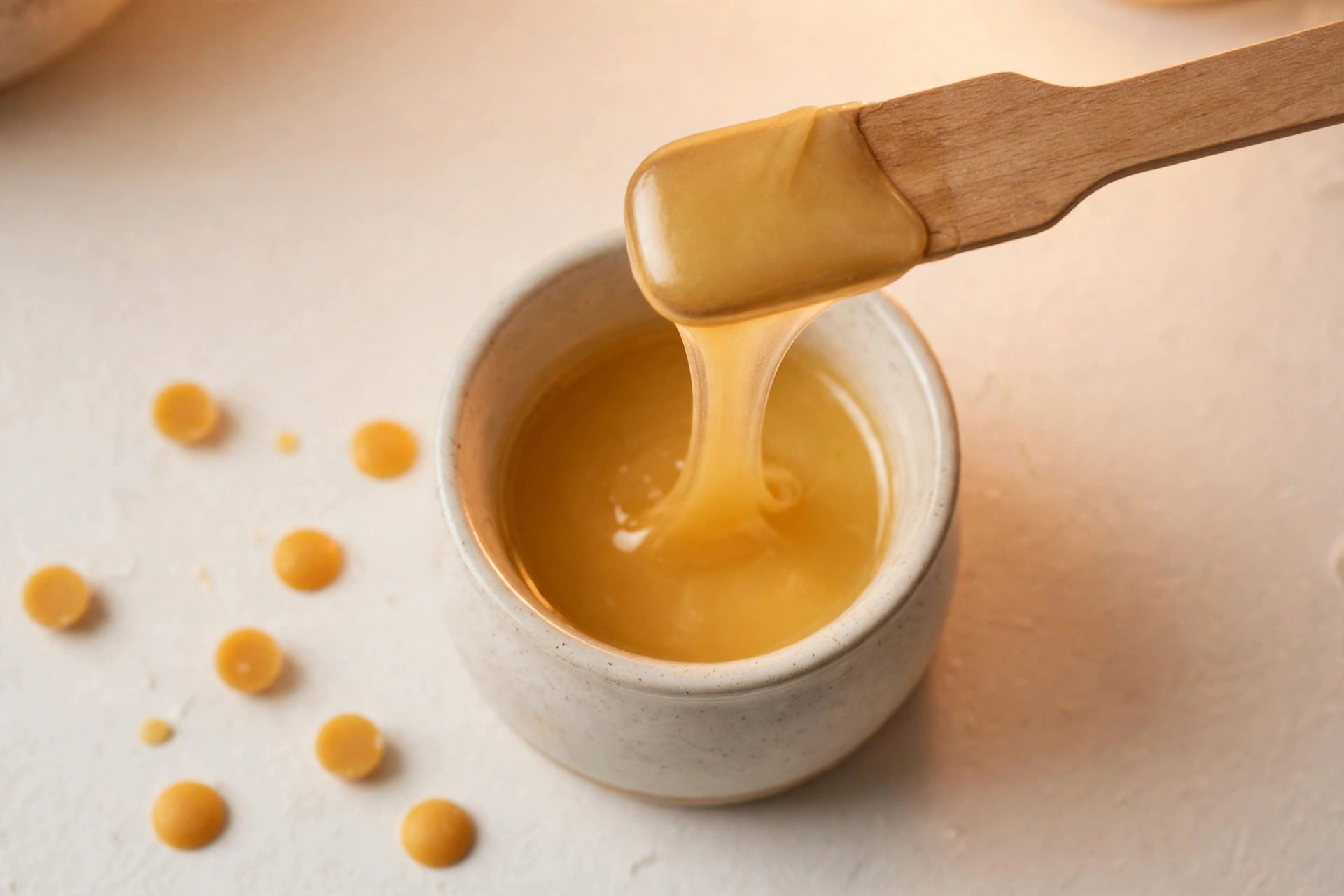
Hard wax, sometimes called stripless wax, is the one you see most in those satisfying slow-motion videos. It is applied warm, left to cool into a flexible, rubbery layer, and peeled off by hand — no cloth strips needed. Because it clings mostly to the hair rather than the skin, it tends to hurt less on sensitive areas like the underarms, the face, and the bikini line. The trade-off is that it takes practice: applied too thinly, it can crack when you peel it.
Soft Wax, or Strip Wax
Soft wax is the classic salon style: warm wax in a thin layer, a cloth or paper strip pressed on top, and the strip pulled away sharply. It is fast and efficient for large areas like legs, arms, and the back. The downside is that it sticks to skin as well as hair, so it can hurt more — and going over the same patch twice is how irritation and bruising happen.
Sugar Wax
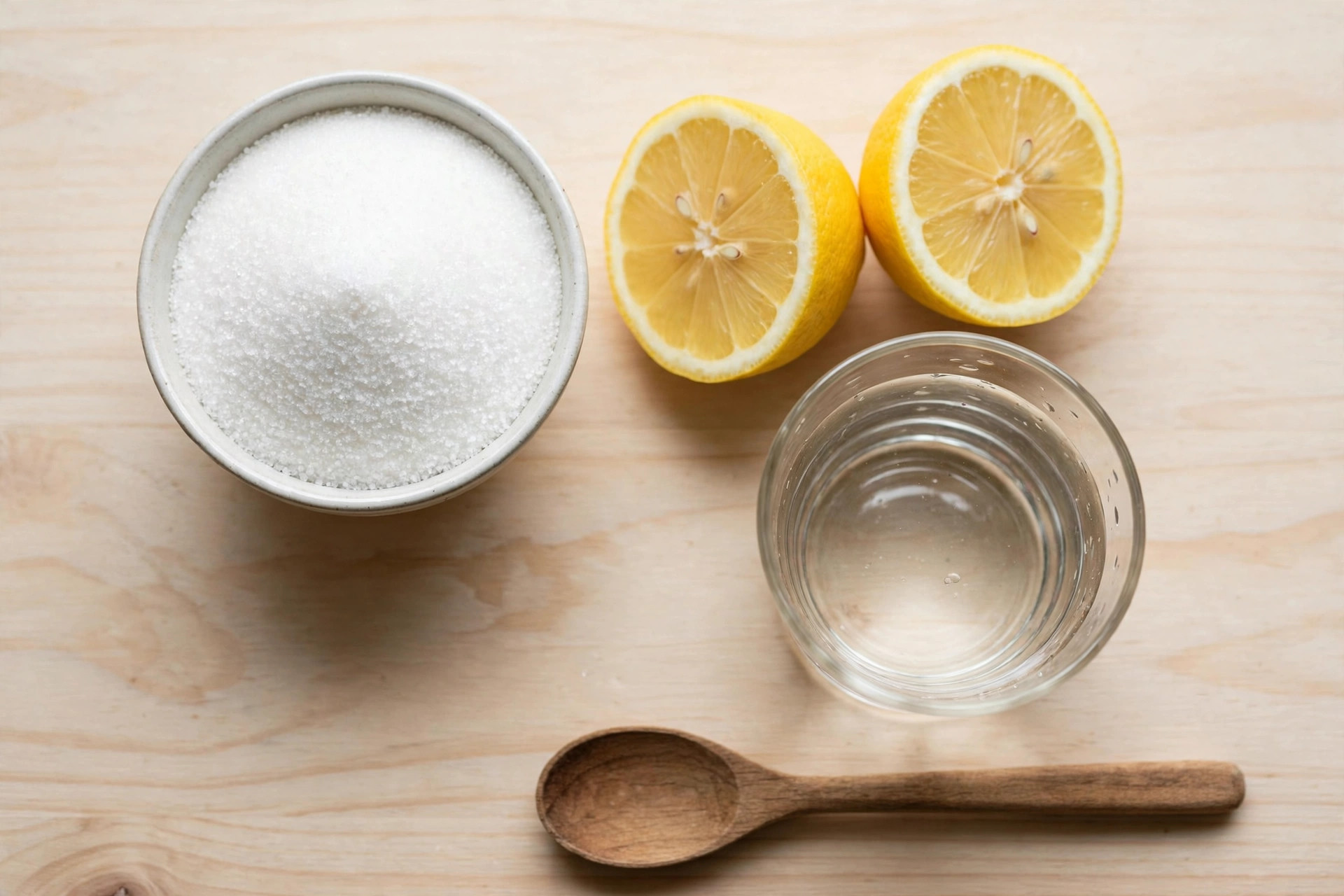
Sugar wax, also called sugaring, is a paste usually made from sugar, lemon juice, and water, heated into a thick, honey-like gel. It is one of the oldest hair-removal methods, popular because the ingredient list is short and the paste washes off with water, and it is often described as gentler on the skin. The catch is that it can be sticky and messy, and making it yourself is easy to get wrong.
| Type of wax | How it is removed | Best for | Watch out for |
|---|---|---|---|
| Hard wax | Peeled off by hand, no strips | Sensitive areas, coarse hair, face and bikini line | Cracks if applied too thin |
| Soft wax (strip wax) | Cloth or paper strip pulled away | Large areas such as legs, arms, back | Sticks to skin too; do not re-wax the same spot |
| Sugar wax | Paste flicked or stripped off; washes off with water | People who prefer simple, natural ingredients | Messy; homemade batches are hard to get right |
How At-Home Waxing Is Usually Done
There is no single official “wat wax method,” because there is no single product. What follows is the standard at-home routine the guides agree on — general guidance only. Any product’s own label instructions come first.
Start by washing and drying the area — no lotion or oil first, or the wax will not stick. Trim longer hair to about a quarter of an inch, and exfoliate gently the day before, not right before you wax.
Heat the wax exactly as the packaging says, and test the temperature on your wrist first. You want a consistency like thick honey — smooth and spreadable, not runny. Apply the wax in the direction your hair grows, working in small sections. For hard wax, leave a thicker edge to grip when peeling; for strip wax, press the strip down firmly.
Then comes the removal. Hold the skin taut with your free hand — the single most useful tip in waxing — and pull the wax or strip off quickly, close to the skin, against the direction of hair growth. Afterwards, soothe the skin with a gentle, fragrance-free moisturiser or post-wax oil. For 24 hours, avoid hot baths, saunas, heavy workouts, sunbathing, and tight clothing on the area, plus strong exfoliants, acids, and retinoids. Mild redness usually fades within a day; blistering or spreading redness is not normal — get proper advice.
What It Does Well — and the Downsides, Honestly
The biggest upside is how long smoothness lasts: weeks rather than days, commonly quoted as three to six weeks. Fewer sessions mean less repeated irritation than daily shaving. Waxing also doubles as exfoliation, taking dead skin cells with it, which is why skin often feels softer straight after. And you can do it at home, on your own schedule, for less per session than a salon visit.
None of this makes waxing painless, and that is where the videos mislead you: a well-edited clip shows the smooth result, not the first-timer who used wax that was too hot. Pulling hair from the root hurts, especially the first few times and on sensitive areas. It usually gets easier with practice, but with a low pain tolerance, waxing may simply not be for you.
Irritation is common too: redness, small bumps, and stinging usually settle within a day. Ingrown hairs are the longer-term annoyance, when a new hair curls back into the skin; gentle exfoliation between sessions helps. Allergic reactions are possible even with so-called natural waxes — sugar wax contains lemon, and beeswax and essential oils can also trigger reactions — so patch test every new product. Bruising and skin lifting are less common but more serious, usually caused by wax that is too hot, skin not held taut, or going over the same patch repeatedly. Skin lifting is most likely with retinoids, strong acids, certain acne medications, recent sunburn, or a recent chemical peel.
Who Should Be Careful, or Skip Waxing Altogether
Most healthy adults can wax safely, but a few situations call for extra care. If you use tretinoin, retinol, or other strong retinoids, or take acne medication that thins the skin, talk to a doctor or professional esthetician before waxing — waxing skin that is already being exfoliated from the inside can cause peeling and damage. The same applies to strong acid exfoliants.
Do not wax skin that is sunburned, broken, cut, inflamed, or recovering from a rash or a peel, and do not wax over moles, warts, or varicose veins. If you have diabetes, poor circulation, or a condition that affects healing, check with a healthcare professional first. A bad reaction to one product does not mean a similar-sounding one is safe — check the ingredients and patch test. And plainly: nobody should put warm wax in their ears. Earwax protects the ear canal; if you have a problem with it, ask a doctor or pharmacist.
Common Mistakes Beginners Make
Most bad waxing experiences come from a handful of avoidable mistakes:
- Waxing wet or oily skin. Wax will not grip, leaving patchy results.
- Pulling slowly. It hurts more and breaks hairs instead of removing them.
- Not holding the skin taut. Loose skin bruises more easily, so use your free hand every time.
- Going over the same spot again and again. Once, or twice at most with hard wax.
- Skipping the patch test. A few minutes can save you a full-body reaction.
- Trusting a video over the label. A creator’s technique worked for them, with their product. Your product’s instructions are the ones that apply to you.
How to Judge Any Kit Sold as “Wat Wax”
Because the term has no verified owner, anyone can put “wat wax” on a product page. Judge the product, not the phrase.
First, look for a real ingredient list: a listing that only says “natural” and “gentle” is a red flag, as is a seller with no brand name, address, or contact details.
Second, read reviews sceptically: a few detailed, mixed reviews are more believable than hundreds of identical five-star comments. Third, check the kit: it should include the wax, applicators, and aftercare, plus clear heating instructions and safety warnings. A bag of beads with no instructions is not a good deal.
Finally, be suspicious of big promises. “Painless,” “permanent,” “zero irritation” are marketing words, not facts. Waxing means pulling hair out from the root: never entirely painless, never permanent. A seller who says otherwise is exaggerating.
Wat Wax Compared With Other Hair Removal Options
Shaving is the fastest, cheapest, and painless option, but results last a day or two. Depilatory creams are quick and painless but can irritate sensitive skin. Epilators give longer-lasting results like waxing but are often painful and slow. Laser lasts longest but is expensive and needs multiple sessions. Waxing sits in the middle: longer-lasting than shaving or creams, cheaper than laser, and doable at home — at the price of discomfort and a learning curve.
FAQs
What is wat wax?
Wat wax is an ambiguous term used mostly online for at-home hair-removal waxing, especially hard wax and sugar wax. It is not a verified brand or a single product with a confirmed manufacturer, ingredient list, or price. One explanation is that it began as a misspelling of “what wax” in social media captions that became a keyword for DIY waxing videos. In practice, it means waxing — warming wax, spreading it on the skin, and pulling it away to remove hair from the root.
Is wat wax a real product I can buy?
There is no single verified product called wat wax that we could confirm. Kits using the name come from different sellers with different contents, and none could be traced to an official brand or manufacturer. Judge any kit like any other cosmetics product: check the ingredients, the seller, the instructions, and honest reviews, and patch test first.
How long do wat wax results last?
Because wat wax is not one product, there is no single verified answer. Waxing removes hair from the root, and sources typically quote three to six weeks of smoothness, some saying around three. It varies a lot by person and area, so expect a few weeks, not a few days — and distrust any seller promising an exact number.
Does wat wax hurt?
Yes — pulling hair from the root is uncomfortable, especially the first few times and on sensitive areas. It usually gets easier with practice; holding the skin taut, working in small sections, and pulling quickly all help. Claims that any wax is completely painless should not be believed. If you have a low pain tolerance, waxing may not be the best hair-removal method for you.
Is wat wax safe for sensitive skin?
It depends on the product and on your skin. Hard wax is often described as gentler, sugar wax as mild — but neither is a guarantee for any kit sold as wat wax, because there is no standard formula. Patch test first, skip waxing on sunburned, broken, or irritated skin, and check with a professional first if you use retinoids or strong acids. Blistering or spreading redness means stop and seek advice.
The Bottom Line
Wat wax is a strange little phrase: widely searched, loosely defined, and attached to no product you can properly verify. That is no reason to dismiss waxing itself — it is a well-established method that works well for a lot of people — but it is a reason to be careful about what you believe and what you buy.
If you take one thing from this article, let it be this: ignore the name and look at the thing in front of you. A wax kit is worth trying if it tells you what is in it, who made it, how to heat it safely, and what to do afterwards. A listing hiding its ingredients and promising painless, permanent results is selling you a phrase, not a product. Patch test, check the temperature on your wrist, hold the skin taut, pull quickly, and give your skin a day of gentle care afterwards.












Leave a Reply