
Introduction
Modern automobiles are equipped with advanced technologies designed to improve safety, comfort, and driving performance. Among these innovations, Active Cornering Enhancement (ACE) is one of the most effective systems for improving vehicle stability and reducing body roll during cornering. Originally developed for premium sport utility vehicles (SUVs) and luxury automobiles, Active Cornering Enhancement has become an important part of automotive engineering, offering drivers greater confidence, comfort, and control on a wide variety of road conditions.
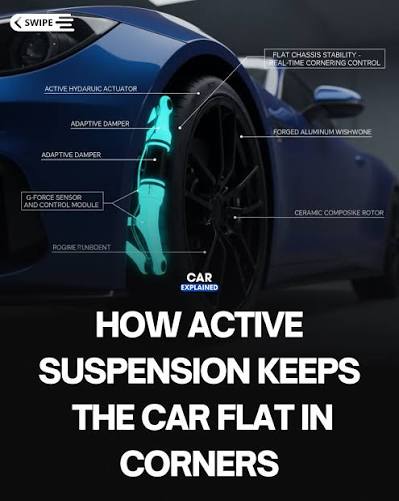
When a vehicle enters a curve, centrifugal forces naturally cause the body to lean toward the outside of the turn. Excessive body roll can reduce handling precision, decrease passenger comfort, and affect tire grip. Active Cornering Enhancement addresses this challenge by actively controlling the vehicle’s suspension system to minimize body movement while maintaining ride quality. Unlike conventional anti-roll bars that provide fixed resistance, ACE automatically adjusts its response based on driving conditions.
This comprehensive guide explains what Active Cornering Enhancement is, how it works, its major components, advantages, limitations, maintenance requirements, common problems, and its role in the future of intelligent automotive suspension systems.
What Is Active Cornering Enhancement?
Active Cornering Enhancement, commonly abbreviated as ACE, is an electronically and hydraulically controlled suspension technology designed to reduce body roll when a vehicle turns. By actively controlling the anti-roll bars or stabilizer bars, the system keeps the vehicle flatter during cornering while preserving ride comfort during normal driving.
Unlike passive suspension systems that rely solely on fixed mechanical components, ACE continuously monitors vehicle dynamics and adjusts suspension forces in real time. This results in improved stability, better tire contact with the road, and a more confident driving experience.
Many luxury SUVs and performance-oriented vehicles use Active Cornering Enhancement to balance comfort with responsive handling.
How Active Cornering Enhancement Works
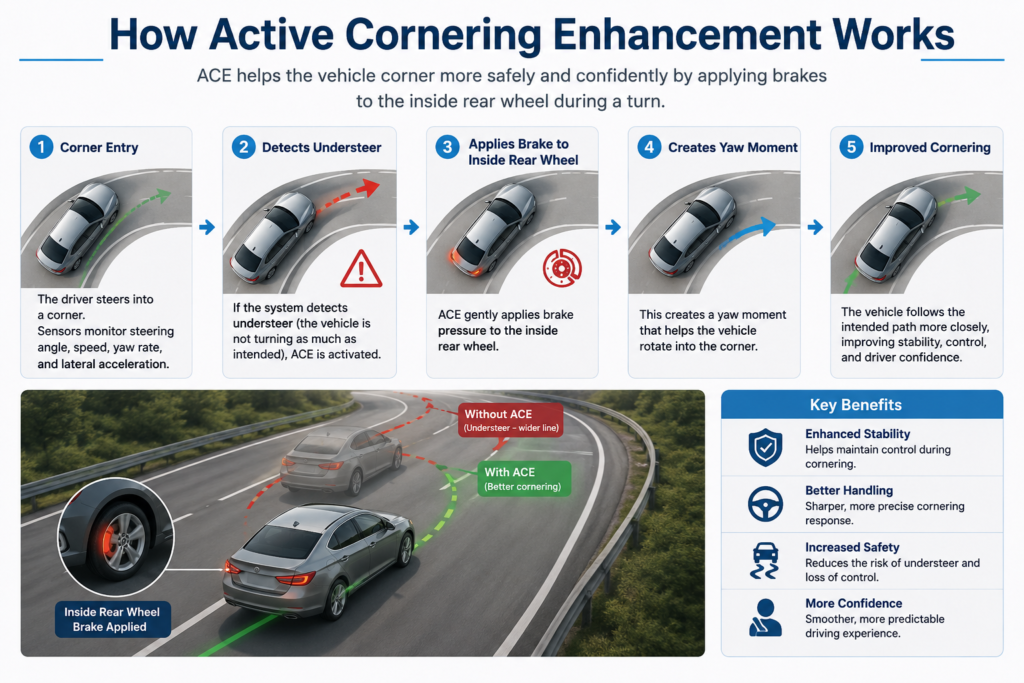
The ACE system continuously collects data from various sensors throughout the vehicle. These sensors measure steering input, vehicle speed, lateral acceleration, suspension movement, and body roll.
Using this information, an electronic control unit calculates the amount of corrective force required. Hydraulic actuators or electronically controlled stabilizer bars then apply force to counteract body roll almost instantly.
The system operates continuously while driving and automatically adapts to changing road conditions without requiring any driver input.
Major Components of an Active Cornering Enhancement System
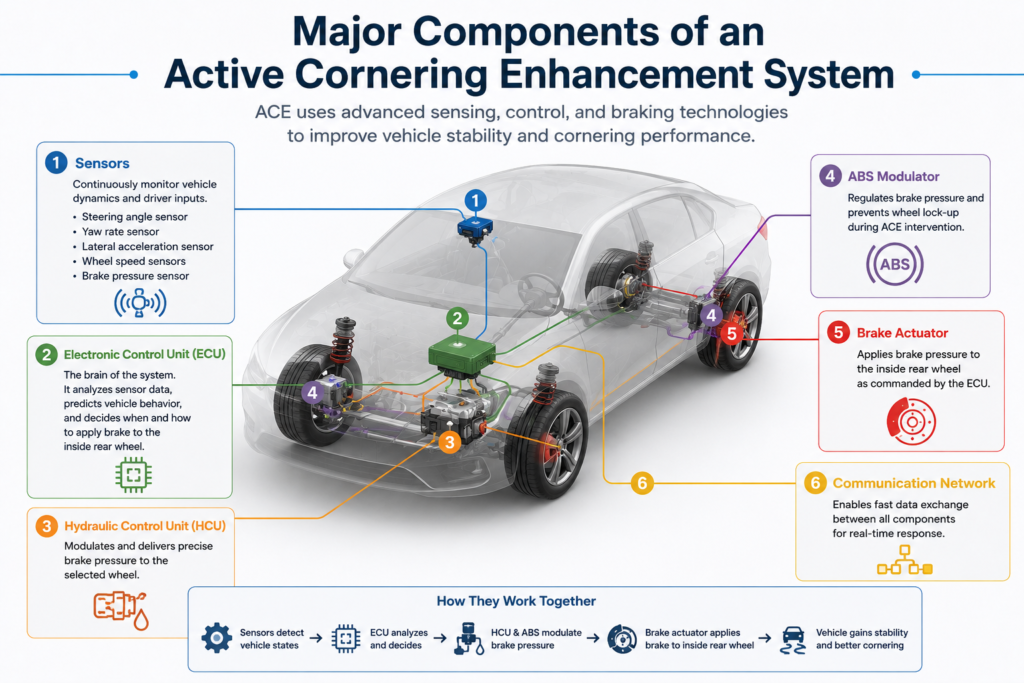
Several key components work together to ensure smooth and effective operation.
Electronic Control Unit (ECU)
The ECU processes data received from multiple sensors and determines the appropriate suspension adjustments.
Hydraulic Pump
Many ACE systems use a hydraulic pump to generate pressure for operating hydraulic actuators.
Hydraulic Actuators
These actuators apply controlled force to the anti-roll bars, reducing body lean during cornering.
Stabilizer Bars
Also known as anti-roll bars, these components connect the suspension on opposite sides of the vehicle to reduce body movement.
Vehicle Sensors
Important sensors include:
- Steering angle sensors.
- Wheel speed sensors.
- Yaw rate sensors.
- Lateral acceleration sensors.
- Suspension position sensors.
These sensors provide the real-time information needed for precise control.
Benefits of Active Cornering Enhancement
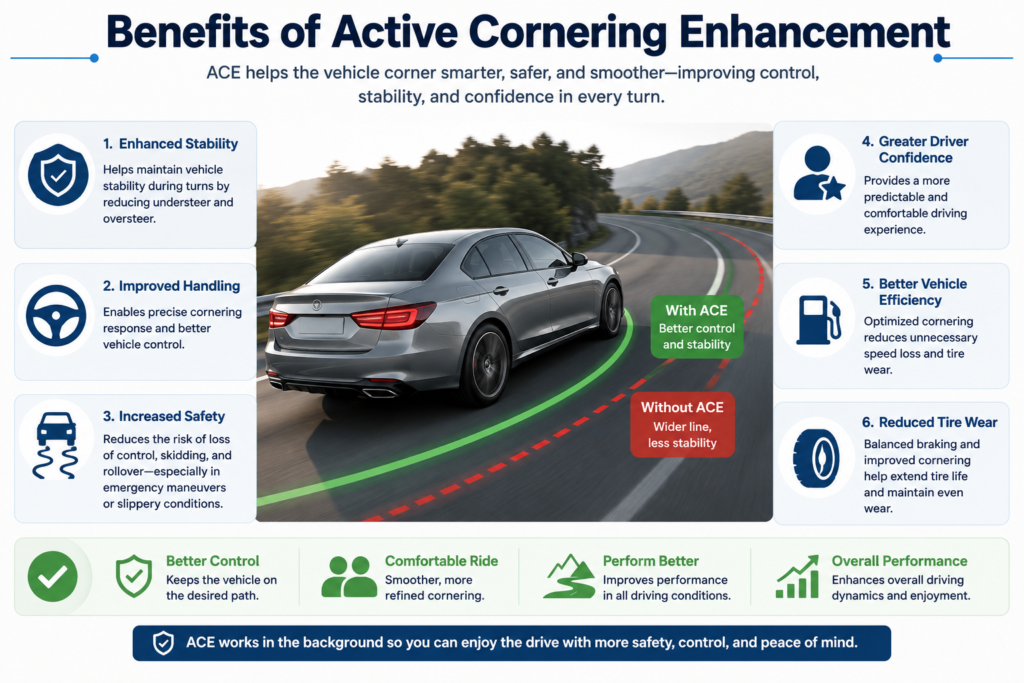
ACE offers numerous advantages compared to conventional suspension systems.
Reduced Body Roll
The most noticeable benefit is significantly reduced body lean during turns, resulting in improved vehicle stability.
Improved Handling
Better weight distribution allows tires to maintain stronger contact with the road surface, improving cornering performance.
Increased Passenger Comfort
Passengers experience less side-to-side movement, making long journeys more comfortable.
Greater Driver Confidence
A flatter, more stable vehicle inspires confidence when navigating winding roads or performing emergency maneuvers.
Enhanced Tire Performance
Maintaining even tire contact helps improve grip and may contribute to more consistent tire wear.
Difference Between Active and Passive Suspension
Traditional suspension systems use fixed mechanical anti-roll bars that provide the same level of resistance under all driving conditions.
Active Cornering Enhancement differs by offering:
- Real-time adjustments.
- Adaptive response.
- Improved ride comfort.
- Better handling balance.
- Reduced body movement.
- Increased driving stability.
These dynamic adjustments allow the suspension to adapt continuously rather than relying on fixed mechanical resistance.
Applications in Modern Vehicles
Active Cornering Enhancement is commonly found in:
- Luxury SUVs.
- Premium sedans.
- High-performance vehicles.
- Off-road capable vehicles.
- Executive transport vehicles.
Manufacturers continue expanding active suspension technologies across additional vehicle segments.
Common Signs of ACE Problems
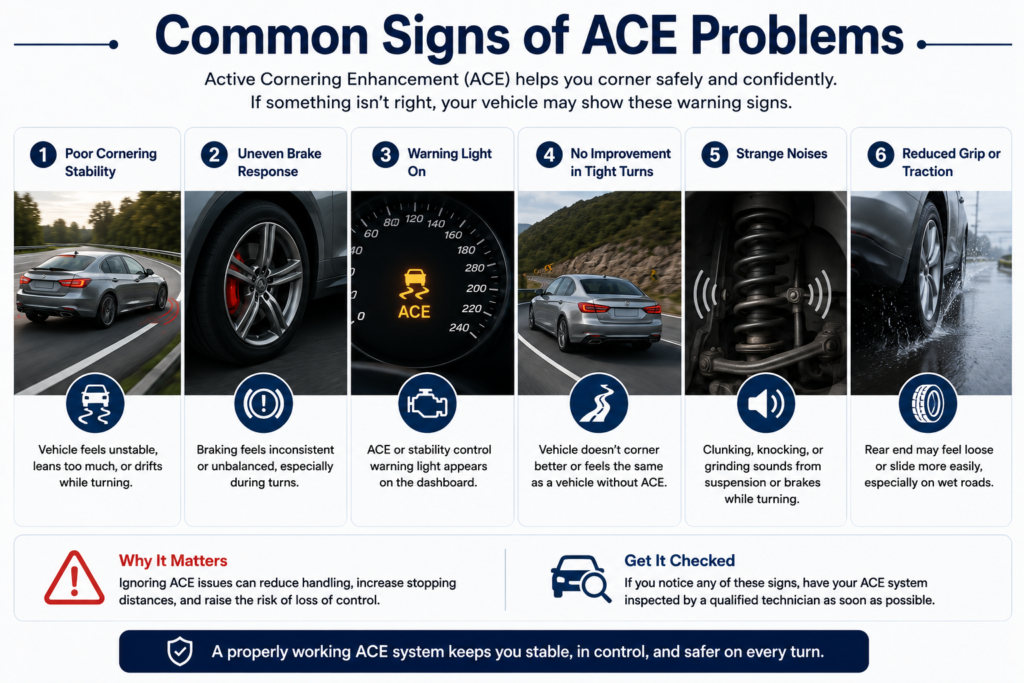
Like any advanced automotive system, Active Cornering Enhancement requires proper maintenance.
Common warning signs include:
- Increased body roll.
- Suspension warning lights.
- Hydraulic fluid leaks.
- Unusual suspension noises.
- Rough handling.
- Reduced steering stability.
Early diagnosis helps prevent more expensive repairs.
Maintenance Tips
Proper maintenance helps ensure reliable operation.
Recommended practices include:
- Inspect hydraulic fluid regularly.
- Check hoses and fittings for leaks.
- Replace worn suspension components.
- Follow manufacturer service schedules.
- Monitor dashboard warning indicators.
- Use approved replacement parts.
Routine inspections improve long-term reliability.
Future of Active Suspension Technology
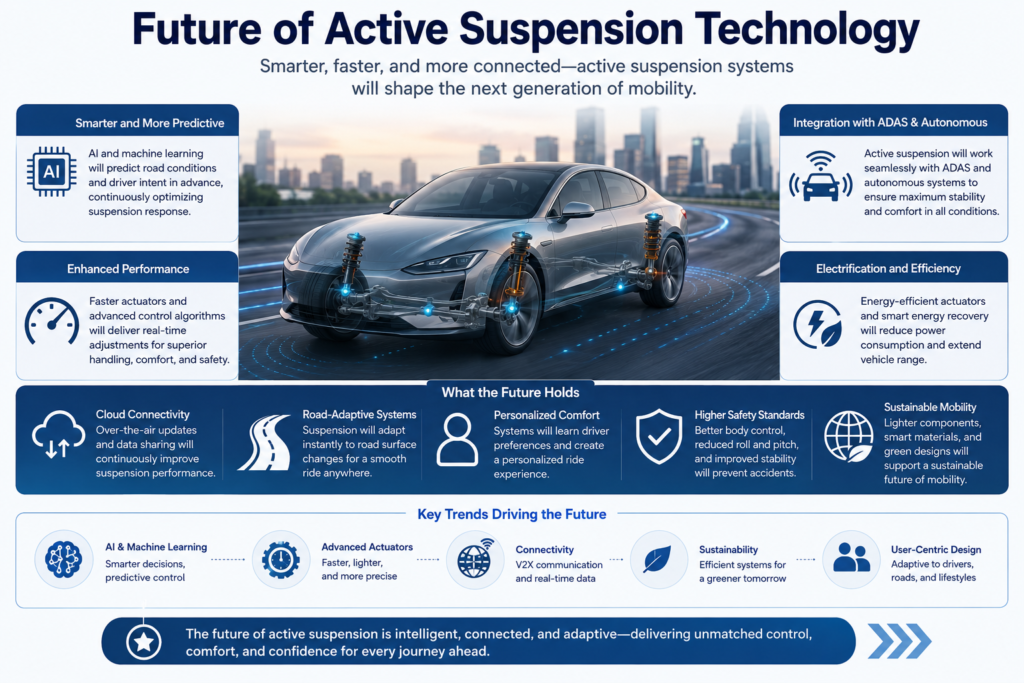
Automotive suspension systems continue advancing rapidly.
Emerging innovations include:
- Fully electronic active suspension.
- Artificial intelligence-assisted suspension control.
- Predictive road scanning systems.
- Adaptive damping technologies.
- Integration with autonomous driving systems.
- Lightweight suspension materials.
- Improved energy efficiency.
These technologies aim to deliver even greater comfort, stability, and safety.
Why Active Cornering Enhancement Matters
As vehicles become more advanced, drivers increasingly expect both comfort and performance. Active Cornering Enhancement helps achieve this balance by minimizing body roll without compromising ride quality. Whether driving through city streets, mountain roads, highways, or uneven terrain, the system enhances stability while improving overall driving confidence.
Its ability to respond instantly to changing road conditions makes it an important innovation in modern automotive engineering.
SEO Importance of the Keyword “Active Cornering Enhancement”
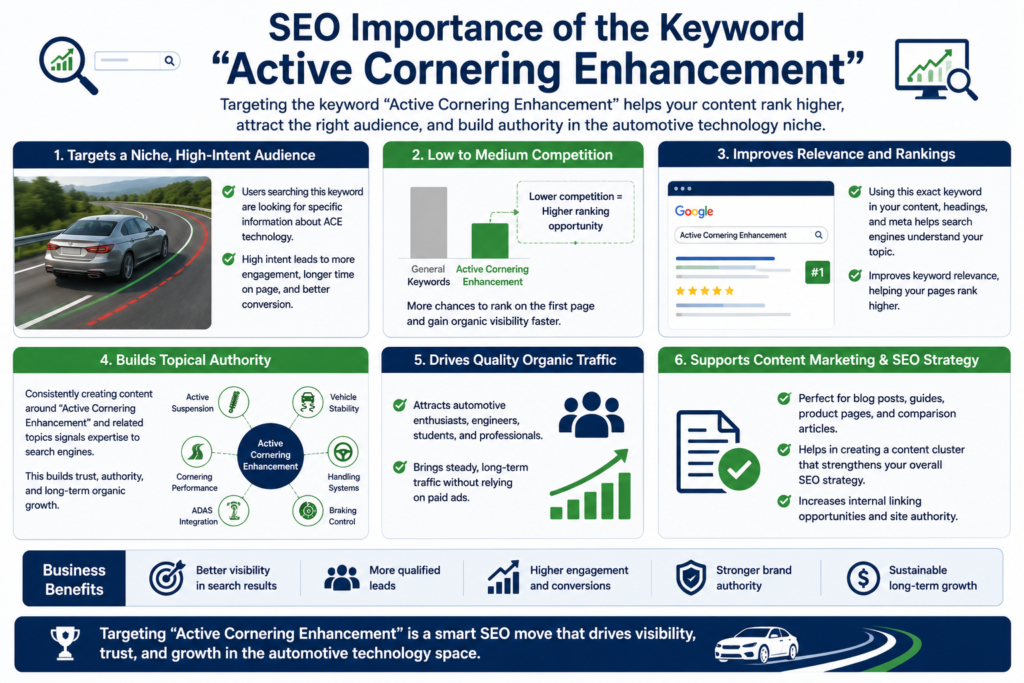
The keyword “Active Cornering Enhancement” is commonly searched by vehicle owners, automotive technicians, engineers, mechanics, and car enthusiasts seeking information about advanced suspension systems. Publishing detailed, well-structured, and informative content helps answer common questions regarding ACE technology, maintenance, troubleshooting, vehicle handling, and suspension performance while improving search engine visibility.
Conclusion
Active Cornering Enhancement represents one of the most significant advancements in modern suspension technology. By actively reducing body roll, improving handling, and enhancing passenger comfort, ACE delivers a safer and more enjoyable driving experience across a wide range of conditions. Unlike conventional suspension systems, it continuously adapts to vehicle movement using intelligent sensors, electronic controls, and hydraulic or electronic actuators.
As automotive technology continues to evolve, Active Cornering Enhancement will likely become even more sophisticated through artificial intelligence, predictive suspension control, and deeper integration with advanced driver assistance systems. For drivers who value stability, comfort, and responsive handling, ACE remains an outstanding example of how engineering innovation continues to improve vehicle performance and road safety.












Leave a Reply