
Introduction
Imagine walking into a large exhibition hall and seeing an elephant moving across a digital landscape, a whale swimming through a deep blue ocean, or a tiger walking through a simulated forest. The animals look lifelike, but there are no real animals inside the exhibit. Instead, the experience is created through technology, digital images, realistic models, or robotic systems. This is the basic idea behind an artificial zoo.
The term “artificial zoo” can describe several different types of wildlife experiences. Some use digital projections to recreate animals, while others rely on robotics, virtual reality, augmented reality, or physical animal models. The exact meaning depends on the design of the attraction and the technology it uses.
Interest in artificial zoos reflects a wider question about how people can learn about wildlife and experience the natural world. Traditional zoos allow visitors to observe living animals, but technology offers another way to explore species and habitats without necessarily keeping those animals in captivity.
An artificial zoo is not simply a collection of fake animals. When designed thoughtfully, it can combine education, entertainment, scientific information, and interactive experiences. At the same time, it has limitations, and it cannot reproduce every aspect of encountering a living creature in its natural environment.
This guide explores what an artificial zoo is, how it works, the technologies behind it, its educational possibilities, and the challenges that come with creating artificial wildlife experiences.
What Is an Artificial Zoo?
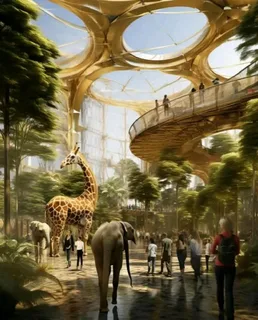
An artificial zoo is a wildlife-themed environment in which animals are represented through artificial or simulated means rather than being displayed exclusively as living specimens. Depending on the installation, visitors may encounter digital animals, moving robotic creatures, three-dimensional projections, realistic sculptures, or computer-generated habitats.
Unlike a traditional zoo, an artificial zoo can recreate environments that would be difficult to build physically. A visitor might explore an imaginary underwater world, see a digitally recreated dinosaur, or observe a simulated migration across a vast landscape.
There is no single format that defines every artificial zoo. One attraction may focus on immersive digital displays, while another may use mechanical animals designed to move and respond to visitors. Some experiences are entirely virtual, and others combine physical scenery with digital elements.
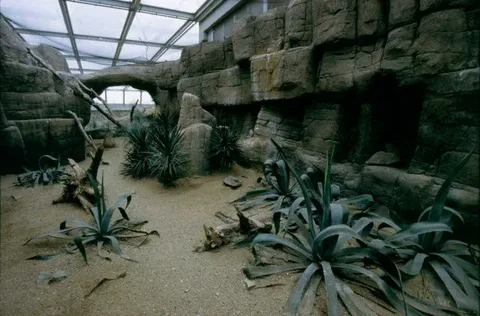
It is also important to distinguish an artificial zoo from a conventional zoo that uses artificial rocks, trees, and decorative structures. Those materials may help create a natural-looking enclosure, but the animals living inside it are still real.
Similarly, an artificial zoo should not automatically be confused with an artificial intelligence system. AI may be used to support interactive experiences, but a wildlife exhibit can also operate with prerecorded animations, programmed movements, or ordinary computer graphics.
The central idea is the representation of wildlife through technology or constructed models.
How Does an Artificial Zoo Work?
The technology behind an artificial zoo depends on the experience being created. A simple exhibition might use lifelike animal sculptures and informational displays. A more advanced attraction may combine computer-generated imagery, projection equipment, spatial audio, motion tracking, and interactive software.
The aim is to make the visitor feel connected to the displayed animal or environment.
Digital Animal Models
Many artificial wildlife experiences begin with digital models. Designers create a three-dimensional representation of an animal, including its body shape, skin or fur, colors, and other physical characteristics.
The model can then be animated to simulate walking, swimming, flying, feeding, or other movements. The quality of the final result depends on the accuracy of the model and the skill used to animate it.
For educational purposes, a digital animal should be based on reliable information about the species. A visually impressive model may attract attention, but its scientific value depends on whether it accurately represents the animal’s anatomy and behavior.
Projection Technology
Projection systems can display large animal images across walls, floors, specially prepared surfaces, or immersive exhibition spaces. When several displays work together, they can create the impression that visitors are standing inside a wildlife habitat.
For example, a room might simulate an African grassland with moving clouds, distant mountains, and animals crossing the landscape. Another space could recreate an underwater environment with fish, turtles, and whales.
The experience can be carefully timed so that animals appear in particular areas while educational information is presented.
However, not every projection-based attraction produces a true three-dimensional hologram. Some use conventional projected images, while others employ specialized optical systems to create different visual effects.
Robotics and Animatronics
Robotic and animatronic animals are physical models equipped with mechanical components. Motors, joints, sensors, and programmed controls allow them to move in ways that resemble living creatures.
A robotic dinosaur might turn its head, open its mouth, or move its tail. An animatronic bird could flap its wings while a speaker reproduces its call.
These exhibits offer a physical presence that a digital image cannot provide in the same way. Visitors can walk around the model and observe its size, shape, and movement from different angles.
The main challenge is making the movement convincing without making the exhibit unnecessarily complicated or expensive to maintain.
Virtual Reality
Virtual reality, commonly known as VR, uses a headset or another immersive display system to place visitors inside a computer-generated environment.
A virtual wildlife experience could take someone through a rainforest, across a desert, or beneath the surface of the ocean. The visitor may be able to look around, move through the environment, and examine animals from different perspectives.
VR is particularly useful when a physical journey would be expensive, dangerous, or impractical. It can also help people explore habitats that are far from their homes.
Nevertheless, a virtual environment remains a simulation. It cannot provide every sensory detail or unpredictable event associated with being in a real ecosystem.
Augmented Reality
Augmented reality, or AR, adds digital elements to a view of the real world. Through a compatible smartphone, tablet, or other device, a visitor might see a virtual butterfly resting on a table or a digital elephant standing in an exhibition area.
This technology can turn an ordinary educational display into an interactive activity. Visitors may be able to examine an animal from several angles, reveal labels, or learn about different body parts by selecting them on the screen.
AR can also be useful in classrooms and museums where there is not enough space for a large physical installation.
Different Types of Artificial Zoos
Although the phrase is broad, artificial wildlife attractions can generally be grouped into several categories.
Digital and Virtual Zoos
A digital zoo presents wildlife through websites, interactive displays, videos, three-dimensional models, or virtual environments. It may allow people to explore animals and habitats without travelling to a physical attraction.
Some digital experiences are simple collections of educational information. Others are designed to resemble a walk through a conventional zoo, with separate exhibits and interactive activities.
These experiences can be especially helpful for schools, families, and people who cannot easily visit a physical wildlife centre.
Holographic Wildlife Exhibitions
Holographic-style attractions use specialized visual systems to create the impression of animals appearing within a physical space. Depending on the technology, visitors may need special glasses or may view the images directly.
The attraction can display animals at impressive scales and place them in carefully designed environments.
An advantage is flexibility. A digital whale, for example, can be shown without transporting or housing a living whale. An extinct species can also be recreated using scientific evidence, provided the exhibit clearly explains which details are known and which are uncertain.
Robotic Animal Exhibits
Robotic zoos use mechanical animals as the main attraction. Some are designed primarily for entertainment, while others are created to demonstrate animal anatomy, movement, or engineering principles.
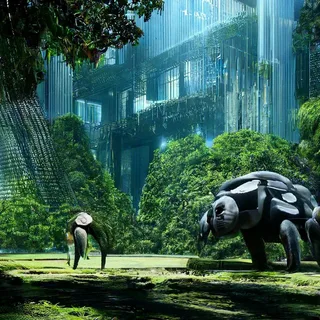
These exhibits may be particularly useful for explaining how different animals move. A mechanical model can repeat a movement for close observation, allowing an educator to discuss the muscles, joints, or structures involved.
However, a robotic animal should not be mistaken for a scientifically complete reproduction of living behavior.
Model-Based Wildlife Parks
Some educational environments rely on realistic animal models, sculptures, or reconstructed habitats. These models can be used to teach children about animal size, appearance, footprints, or ecological relationships.
Although a static model cannot move or respond, it can still communicate useful information. A large model of an elephant, for instance, gives visitors a physical reference for understanding the animal’s scale.
Model-based exhibits can also be less technically demanding than fully immersive digital installations.
Why Are Artificial Zoos Becoming Interesting?
One reason the artificial zoo concept attracts attention is that it offers a different way to experience wildlife. People may want to learn about animals that are difficult to observe in person, while educators may need engaging ways to explain complex environmental topics.
Technology also allows exhibition designers to control how information is presented. A lesson about migration can include maps, moving animals, changing seasons, and narration within the same experience.
Another advantage is that digital and robotic exhibits do not require the same routine animal care as living specimens. They do, however, require maintenance, software updates, equipment repairs, and other forms of technical support.
Artificial zoos can also be adapted for different audiences. A young child might explore animal shapes and sounds, while an older student could examine food chains, habitats, and conservation challenges.
These possibilities make artificial wildlife experiences worth considering as educational tools, although their usefulness depends on the accuracy of their content and the quality of their design.
Benefits of Artificial Zoos
Wildlife Education Without Live Animal Displays
An artificial zoo can introduce visitors to wildlife without requiring every displayed species to be physically present. This makes it possible to explore animals from remote regions or species that are difficult to maintain in captivity.
A digital exhibit might explain the life cycle of a sea turtle, demonstrate how a bird migrates, or show the relationship between predators and prey.
Because the presentation can be repeated, educators can also use the same example for multiple groups of students.
Opportunities to Explore Extinct Animals
One of the most interesting applications of artificial wildlife technology is the reconstruction of extinct species.
Visitors cannot observe a living dinosaur, but a carefully researched digital reconstruction can help explain what scientists believe about its appearance and movement. Similar techniques can be used to represent extinct mammals and other animals.
Scientific honesty is essential here. Fossil evidence does not reveal every detail about an extinct animal. An exhibit should distinguish well-supported findings from artistic interpretations or uncertain reconstructions.
Greater Control Over the Visitor Experience
A digital or robotic exhibit can be designed around a particular learning objective. If an educator wants to explain how a whale breathes, the display can show a relevant animation at the appropriate moment.
A traditional wildlife encounter is less predictable. A living animal may be sleeping, hiding, feeding, or moving away from the viewing area.
This does not make artificial exhibits inherently better. Rather, it gives educators another tool for presenting specific information in a structured way.
Accessibility for Different Audiences
Travel, physical mobility, cost, and distance can make wildlife experiences difficult for some people. Digital exhibits may help reduce certain barriers by bringing information closer to schools, community centres, museums, and homes.
A virtual experience can also allow visitors to explore environments that would otherwise require a long journey.
Accessibility still depends on the design. Some immersive systems require expensive equipment, and others may be uncomfortable for visitors with particular sensory needs. Well-planned exhibits should consider different abilities and provide suitable alternatives where possible.
No Routine Feeding or Veterinary Care for Simulated Animals
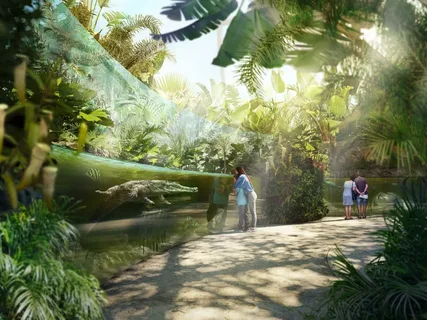
A digital animal does not need food, medical treatment, or a physical enclosure. Robotic animals also avoid the direct animal husbandry requirements associated with living specimens.
This can reduce certain ongoing responsibilities, although the technology itself needs care and maintenance. Mechanical parts can wear out, displays can fail, and software may need to be repaired or replaced.
An artificial exhibit should therefore not be described as completely maintenance-free.
Opportunities for Creative Learning
Artificial wildlife experiences can combine science with storytelling, art, engineering, and interactive problem-solving.
A visitor might examine how a robotic bird’s wings move, then learn about the principles of flight. Another activity could show how changes in rainfall affect a simulated habitat.
These connections can make wildlife education more engaging, especially when the experience encourages questions rather than simply presenting information.
Artificial Zoos and Animal Welfare
Animal welfare is an important part of the discussion surrounding artificial zoos.
Traditional zoos have responsibilities to provide appropriate food, veterinary care, space, enrichment, and suitable living conditions for their animals. Meeting those needs requires expertise, funding, and ongoing attention.
An exhibit based entirely on artificial animals does not involve keeping those animals in captivity. For some visitors, this is an important reason to support digital or robotic alternatives.
However, it would be inaccurate to conclude that every artificial zoo automatically provides a complete solution to animal welfare concerns.
First, artificial exhibits do not perform the same functions as wildlife sanctuaries or conservation programmes that protect living animals. Second, they may offer limited opportunities to observe genuine animal behavior. Third, an artificial attraction may still operate alongside live-animal exhibits, so visitors should understand what a particular venue actually contains.
The most useful approach is to evaluate each attraction on its own merits. Its educational purpose, environmental impact, transparency, and relationship with conservation should all be considered.
Can an Artificial Zoo Replace a Traditional Zoo?
Whether an artificial zoo can replace a traditional zoo depends on what visitors expect to learn or experience.
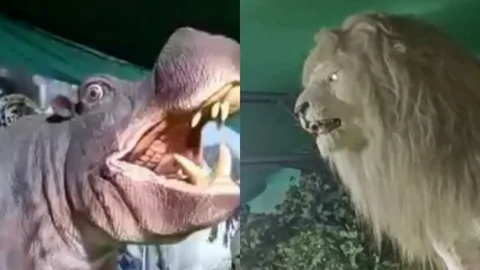
If the goal is to see the size of an extinct animal, explore an underwater environment, or understand a particular biological process, a well-designed simulation may be extremely useful.
If the goal is to observe a living animal’s natural responses, feeding behavior, social interactions, or individual personality, an artificial representation cannot provide the same experience.
Living animals behave in ways that are not always predictable. They respond to other animals, environmental conditions, and changes in their surroundings. A programmed simulation may reproduce selected aspects of these behaviors, but it does not reproduce the full complexity of a living creature.
Traditional zoos also vary considerably in their standards, educational programmes, conservation work, and animal-care practices. They should not all be judged as identical.
Artificial zoos are therefore best understood as a different kind of wildlife experience. They may complement certain educational activities, but they are not automatically a substitute for conservation centres, wildlife sanctuaries, or responsible observation of animals in nature.
Artificial Zoos in Schools and Museums
Educational institutions can use artificial wildlife exhibits to explain topics that are difficult to demonstrate with photographs or written descriptions alone.
For example, a classroom could use a digital rainforest to show how several species depend on the same habitat. A museum might display a robotic dinosaur beside information about fossil discoveries and prehistoric environments.
Teachers can pause a simulation, repeat a section, or ask students to identify what they observe. This allows the activity to become a discussion rather than a passive viewing experience.
Artificial exhibits can also support project-based learning. Students might design a model habitat, compare two animal species, or investigate how a change in temperature affects an ecosystem.
The educational value depends on how the technology is used. An exciting display may capture attention, but learning improves when the experience includes accurate explanations, thoughtful questions, and opportunities to reflect.
Challenges of Creating an Artificial Zoo
Despite its potential, building an artificial zoo presents several practical challenges.
Initial Investment
Advanced displays, motion-tracking systems, robotics, and immersive environments can require significant investment. Costs depend on the size of the attraction, the technology selected, and the complexity of its content.
A small school exhibit may need little more than models and screens. A large immersive attraction may require purpose-built rooms, specialized projection systems, sound equipment, and technical staff.
There is no single cost that applies to every artificial zoo.
Technical Maintenance
Technology requires maintenance. Projectors can lose performance, moving parts can break, sensors may need adjustment, and software can become outdated.
A venue that depends on complex equipment must plan for repairs and updates. If important components fail, visitors may receive an incomplete experience until the problem is fixed.
Reliable maintenance is therefore part of the long-term cost of operating an artificial zoo.
Scientific Accuracy
Creating a realistic-looking animal is not the same as accurately representing its biology.
An animation may show a tiger walking through a forest, but that alone does not explain its territorial behavior, diet, social structure, or role in the ecosystem.
Designers should consult trustworthy scientific sources and make sure that educational claims are supported by evidence. When information is uncertain, the exhibit should acknowledge that uncertainty.
Limited Emotional and Sensory Experience
A digital elephant can look impressive, but visitors cannot experience it as a living animal. They cannot observe its genuine responses to its surroundings or witness the subtle differences between individual animals.
For some people, the artificial experience may be engaging enough. Others may prefer the unpredictability and physical presence associated with observing real wildlife.
Both reactions are understandable because the two experiences serve different purposes.
Environmental Impact of Equipment
Artificial zoos still consume resources. Their displays, computers, lighting, robotics, and climate-control systems may use electricity, and equipment eventually requires replacement.
Electronic waste and the materials used in construction also matter. An artificial zoo should not automatically be described as environmentally harmless simply because it does not house living animals.
Efficient equipment, responsible purchasing, and appropriate recycling can help reduce these impacts.
The Role of Artificial Intelligence
Artificial intelligence may support some artificial zoo experiences, but its role varies by project.
For example, AI-based systems could help interpret visitor questions, provide information about particular species, or adapt educational content to a visitor’s interests. Computer-vision systems may also be used in research and wildlife monitoring, although these applications are not the same as creating an artificial animal attraction.
AI can help make an exhibit more interactive, but it also introduces challenges. An automated system may provide incorrect information, misinterpret a question, or present a simplified explanation as if it were a scientific fact.
For this reason, educational content should be reviewed carefully, and visitors should have access to reliable explanations.
Artificial intelligence is a possible component of an artificial zoo, not a requirement for every example.
What Might Artificial Zoos Look Like in the Future?
Future artificial wildlife experiences may become more interactive as display technology, computer graphics, robotics, and educational software improve.
Visitors may be able to explore a virtual ocean, examine a digital animal from several angles, or compare how a habitat changes under different environmental conditions.
Robotic models may also become more expressive, while augmented-reality applications could allow schools to create wildlife lessons without constructing permanent exhibitions.
Another possibility is the combination of digital experiences with real conservation information. An exhibit about an endangered species could explain its habitat, threats, population trends, and the actions people can take to support protection efforts.
However, technological progress does not guarantee better education. A more realistic animal is not necessarily more scientifically accurate, and an interactive display is not automatically an effective learning tool.
The future value of artificial zoos will depend on whether designers use new capabilities to communicate reliable information, encourage curiosity, and support a responsible understanding of the natural world.
Frequently Asked Questions About Artificial Zoos
What does artificial zoo mean?
An artificial zoo is a wildlife-themed experience that represents animals through digital simulations, projections, robotic models, sculptures, or other artificial methods. The exact meaning depends on the particular attraction.
Is an artificial zoo the same as a virtual zoo?
Not always. A virtual zoo usually refers to a digital experience accessed through a computer, website, headset, or similar device. An artificial zoo can also include physical robotic animals, realistic models, and projection-based installations.
Are artificial zoos real places?
Some attractions use artificial wildlife technology in physical venues, while other experiences exist entirely online or in virtual environments. The term describes a broad concept rather than one particular institution.
Do artificial zoos use artificial intelligence?
Some may use AI for interactive features, educational assistance, or other functions. Others rely on prerecorded content, conventional animation, mechanical controls, or projection systems without AI.
Can artificial zoos display extinct animals?
Yes. Digital models and physical reconstructions can represent extinct animals using available scientific evidence. Because some details remain uncertain, responsible exhibits should distinguish evidence-based findings from artistic interpretation.
Are artificial zoos better for animal welfare?
Artificial exhibits that do not contain living animals avoid the direct welfare issues associated with keeping those animals in captivity. However, they do not replace the work of wildlife sanctuaries, habitat-protection programmes, or conservation organisations.
Are artificial zoos suitable for children?
They can be suitable for children when the experience is age-appropriate, accessible, and supported by accurate educational information. Parents and teachers should check whether the venue uses headsets, loud sounds, flashing effects, or other features that may not suit every child.
What is the biggest limitation of an artificial zoo?
Its biggest limitation is that an artificial representation cannot fully reproduce the behavior and complexity of a living animal in its natural environment. Simulations can teach valuable lessons, but they should not be confused with direct observation of wildlife.
Conclusion
An artificial zoo offers another way to explore the animal kingdom by combining technology, design, and education. Through digital models, projections, robotics, virtual reality, and augmented reality, these experiences can introduce visitors to animals and habitats that might otherwise be difficult to observe.
Their potential benefits include accessible learning, interactive presentations, and opportunities to represent extinct species without relying on living specimens. At the same time, artificial zoos face challenges involving cost, maintenance, scientific accuracy, accessibility, and environmental impact.
The most important distinction is between creating an impressive representation and providing a meaningful understanding of wildlife. A realistic image may capture attention, but useful education requires accurate information and a clear explanation of what the simulation can and cannot show.
Artificial zoos are an interesting development in wildlife education, particularly when they complement rather than misrepresent real conservation efforts. Their long-term value will depend on thoughtful design, responsible use of technology, and a genuine commitment to helping people understand and appreciate the natural world.









Leave a Reply