
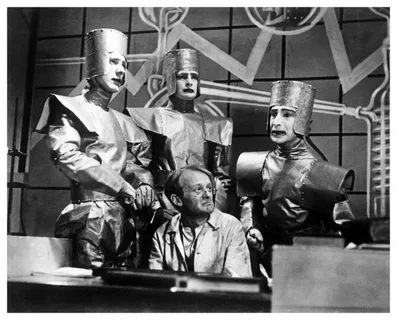
A strange phrase that keeps popping up
Type ponas robotas into a search box and you will get a slightly confusing mix of results. One page talks about a famous television thriller. The next talks about clever machines that can greet you, help you and learn from the way you speak. They look like two completely different subjects, and in a way they are. The link between them is language, and once you know it, the whole thing makes sense.

Ponas robotas is not the name of a gadget you can order today, and it is not a company either. It started as a simple translation, grew famous through a TV show, and has now been picked up by tech writers as a neat way to describe a new kind of robot — one that feels less like factory equipment and more like a polite helper. This article sorts out all three parts, so you know exactly which ponas robotas you have found and what people mean when they use it.
What does ponas robotas actually mean?
The phrase comes from Lithuanian, and it translates directly as “Mr. Robot” in English. That is the whole secret, really. There is no hidden code and no complicated story behind the words themselves.
| Lithuanian word | English meaning | What it tells you |
| Ponas | Mr., Sir or Gentleman | A respectful title for a man |
| Robotas | Robot | A machine built to do tasks |
| Ponas robotas | Mr. Robot | A robot given a polite, human title |
That little word ponas matters more than it first seems. It is a respectful honorific, the sort of title you would use for a gentleman, not for a piece of metal on an assembly line. So even as a plain translation, ponas robotas sounds warmer than just saying “robot.” It gives the machine a name, a bit of manners, and almost a personality. Keep that in mind, because it explains a lot about how the phrase is being used today.
Lithuanian speakers, by the way, will find nothing exotic here at all. For them it is an ordinary, everyday phrase. It only looks mysterious to the rest of us because we usually meet it out of context, in a search result or a headline, with no translation attached.
Where the word “robot” came from in the first place
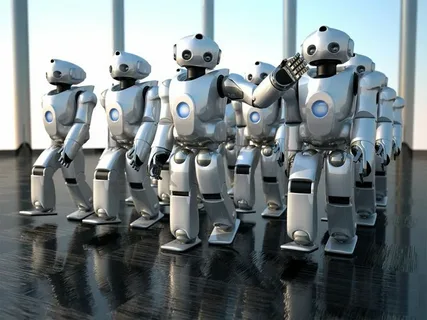
The second half of the phrase has a surprisingly old history. The word “robot” was introduced by the Czech dramatist Karel Čapek in his 1920 play R.U.R., which stands for Rossum’s Universal Robots. Before that play, people had automata and mechanical men in stories, but they did not have this one short word that everybody could use.
Čapek’s play was not a cheerful look at the future. His robots were artificial workers, made to do work for people, and the story asked what happens when the things we build to serve us start to change the world around us. That uneasy feeling never really left the word. Even now, more than a hundred years later, stories about robots still swing between two ideas: the helpful machine and the machine that makes us nervous.
Ponas robotas sits right in the middle of that old tension. Put a polite “Mr.” in front of the robot and it suddenly sounds friendly, almost trustworthy. Leave it off and you are back to cold machinery. A lot of the writing around this phrase, whether it is about television or technology, is really playing with that same contrast.
Ponas robotas and the Mr. Robot television series
For most people, this is where they first met the phrase. Ponas robotas is the localized Lithuanian title of the American television series Mr. Robot. When the show was presented to Lithuanian audiences, the English title was simply translated, the way titles often are, and ponas robotas is the name Lithuanian viewers know it by.
The series was created by Sam Esmail and ran from 2015 to 2019. It stars Rami Malek, in an Emmy-winning performance, as Elliot Alderson — a talented cybersecurity engineer who works in digital security by day and lives a very different life as a hacktivist by night. Elliot is brilliant with computers and deeply uncomfortable with people, and that contradiction is the engine of the whole show.
| Detail | Information |
| Original title | Mr. Robot |
| Lithuanian title | Ponas robotas |
| Creator | Sam Esmail |
| Lead actor | Rami Malek as Elliot Alderson |
| Years | 2015 to 2019 |
Without spoiling anything important, the story pulls Elliot into a secretive world of hackers, huge companies and people who believe the system itself is broken. It is a thriller, but a thoughtful one. Money, debt, power, privacy and loneliness all run through it, and the hacking is not treated as magic. Elliot plans, waits, makes mistakes and pays for them, which is a big part of why people who actually work in cybersecurity still speak well of the show.
There is another reason the Lithuanian title fits so well. In the series, “Mr. Robot” is far more than a label on a poster, and the polite, formal sound of ponas captures that perfectly. It feels respectful and a little unsettling at the same time, which is exactly the mood of the show. If you have only ever known the series in English, seeing it called ponas robotas is not a different programme at all. It is the same story, the same Elliot, just wearing Lithuanian clothes.
Why people still search for it years after the show ended
Good shows do not really disappear any more. They sit on streaming services, get recommended to new viewers, and turn up again whenever hacking, privacy or big technology companies are back in the news. Every fresh wave of viewers produces fresh searches, and some of those viewers arrive through the Lithuanian title, through a friend’s recommendation, or through a listing that used ponas robotas instead of the English name.
The show also left people with questions that age well. How much of our lives runs through systems we do not control? How safe is the information we hand over every day? What does constant connection do to a person’s mind? You do not need to work in technology to feel those questions. Most of us carry them around in our pockets. That is why a series that ended in 2019 can still start arguments, recommendation threads and late-night rewatches today.
The second life of ponas robotas: smart robots and AI assistants
Here is where the phrase takes its interesting turn. In 2026, tech blogs have started using ponas robotas as shorthand for AI-powered robotic assistants — machines that interact with people politely and helpfully, answer questions, understand their surroundings and get on with useful tasks without being told every tiny step.
Let us be clear about this, because a lot of pages blur it. Ponas robotas is not one single product or brand, and no company owns the name. You cannot buy an official “Ponas Robotas” in the way you buy a phone with a maker’s badge on it. Writers use the phrase as an idea, a label for a whole style of machine: the robot as a courteous assistant rather than a caged factory arm. If a page tries to sell you a specific product under this name, treat that claim with real caution and check who is actually behind it.
Used honestly, though, the label does describe something real. Robots genuinely have changed. The classic industrial robot repeated the same movement, in the same place, at the same speed, and it did not care what was happening around it. A modern assistant robot is built almost the opposite way. It uses sensors and cameras to notice the world, software to decide what to do next, and often a voice or a screen so that an ordinary person, not just an engineer, can deal with it comfortably.
Traditional robots and ponas robotas-style assistants, side by side
The easiest way to feel the difference is to put the two kinds of machine next to each other. They are both robots, but they were designed for very different lives.
| Feature | Traditional industrial robot | Ponas robotas-style AI assistant |
| Main job | Repeat one fixed task | Help people with varied tasks |
| Setting | Factory floor, often caged off | Homes, hospitals, shops and public places |
| Instructions | Fully programmed in advance | Uses AI, sensors and cameras to adapt |
| Contact with people | Kept separate for safety | Built to work near people |
| Communication | Controlled by trained operators | Voice, screen or simple controls |
| When something changes | Stops or needs reprogramming | Adjusts its behaviour where it can |
Neither type is simply “better.” A factory still needs machines that can lift, weld and repeat heavy work with perfect consistency, and a chatty assistant would be no use there. The change is that robotics is no longer only about that world. Once robots leave the factory and enter a ward, a warehouse aisle or a family kitchen, they need awareness, patience and decent manners. That is the gap the ponas robotas idea is trying to name.
Where these helpful robots are actually showing up
Forget the science-fiction version for a moment and look at the ordinary one. In homes, robot helpers already handle dull, repeatable chores and are slowly taking on more — reminding people about routines, carrying small items and keeping an eye on things when nobody is in the room. For an older person living alone, even simple, reliable help of that kind can make a house feel more manageable.
In hospitals, robots support staff rather than replace them. They can move supplies, deliver items between departments and take over some of the endless carrying and fetching that wears people down, leaving nurses and doctors more time for patients. In warehouses, machines that can find, lift and move goods help teams keep up with orders, especially for heavy or repetitive work that causes injuries over time.
You will also find this style of robot on farms, in schools, in retail and in other service businesses. On a farm, a smart machine can work long, steady hours on tasks that are hard to staff. In a classroom, a small interactive robot can make a technology lesson feel like play instead of theory. In a shop or a hotel, a service robot can guide a visitor, answer a basic question or deliver something to the right place without anyone having to stop what they are doing.
The numbers behind the robot boom

This is not just writers getting excited. Figures reported by the International Federation of Robotics suggest that about 542,000 industrial robots were installed globally in 2024, more than double the number from ten years earlier. Almost 200,000 professional service robots were reported sold in 2024, up 9%, and close to 16,700 of those were medical robots. Those service and medical figures matter here, because they show growth exactly where ponas robotas-style machines live — alongside people, not behind factory fences.
Big technology companies are moving in the same direction. Reuters has reported that Meta created a division focused on AI-powered humanoid robots for physical tasks. When a company of that size puts money and people behind humanoid machines for everyday jobs, it tells you the idea has left the laboratory stage. It does not mean a robot butler is about to arrive at your door, but it does mean the polite, helpful robot is now a serious business goal, not just a story.
How to tell which ponas robotas you have found
A quick context check will save you confusion. If the page around the phrase mentions Elliot Alderson, Sam Esmail, hacking or episodes and seasons, you are looking at the television series under its Lithuanian title. If it talks about sensors, artificial intelligence, hospitals, warehouses or home help, and never mentions a single episode, it is using ponas robotas in the newer technology sense.
One more warning is worth repeating. Because the phrase sounds like a product name, it attracts product-style claims. Remember the simple test: ponas robotas is a phrase, not a brand. No company owns it, there is no official model to compare prices on, and any seller using the name owes you a clear explanation of what their actual product is, who makes it and what it can really do. Ask those questions before you believe a word of the sales talk.
Final thoughts
Ponas robotas is a small phrase with an unusually busy life. In Lithuanian it just means Mr. Robot. On television it became the local name of a sharp, unsettling thriller about hacking and power. And now, in technology writing, it has become a friendly label for robots that are meant to help people politely, in the places where people actually live and work. The machines are not science fiction any more, even if the perfect robot gentleman is still some way off. When you meet the phrase again, you will know which of its three lives you are looking at — and that, in the end, is all most searchers wanted to know.
Frequently Asked Questions
1. What does ponas robotas mean in English?
It means “Mr. Robot.” Ponas is a respectful Lithuanian title meaning Mr., Sir or Gentleman, and robotas is the Lithuanian word for robot. Put together, the phrase gives the robot a polite, human-sounding name.
2. Is ponas robotas the same as Mr. Robot?
Yes, in its best-known use it is. Ponas robotas is the localized Lithuanian title of the American television series Mr. Robot. It is the same show, with the same story and characters, presented under a translated title for Lithuanian audiences.
3. Who created Mr. Robot and who stars in it?
The series was created by Sam Esmail and ran from 2015 to 2019. It stars Rami Malek, in an Emmy-winning performance, as Elliot Alderson, a cybersecurity engineer who also lives a secret life as a hacktivist.
4. Where did the word “robot” originally come from?
The word was introduced by Czech dramatist Karel Čapek in his 1920 play R.U.R., short for Rossum’s Universal Robots. The play presented artificial workers made to serve people, and its title gave the world the word we still use today.
5. Is ponas robotas a real robot I can buy?
No. Ponas robotas is not one single product or brand, and no company owns the name. Tech blogs use it as a general label for AI-powered robotic assistants. If someone tries to sell you a product under this name, ask who actually makes it.
6. Why do tech blogs use ponas robotas for AI robots?
Because the phrase captures the feeling they are describing. A ponas is a polite gentleman, so ponas robotas suggests a robot that helps people courteously and naturally, rather than a cold factory machine repeating the same movement all day.
7. How is a ponas robotas-style assistant different from a factory robot?
A factory robot is programmed to repeat one fixed task, usually away from people. An AI assistant robot uses sensors, cameras and software to understand its surroundings, adapt to change and communicate with ordinary people through voice or a screen.
8. Where are these kinds of robots used?
They are used in homes, hospitals, warehouses, farms, schools, retail spaces and other service businesses. Typical jobs include carrying and delivering items, guiding visitors, supporting hospital staff, helping with farm work and assisting with learning in classrooms.
9. Are robots really growing this fast?
Reported figures from the International Federation of Robotics suggest about 542,000 industrial robots were installed globally in 2024, and almost 200,000 professional service robots were sold that year, up 9%. Close to 16,700 of the service robots were medical robots.
10. Why does ponas robotas give such mixed search results?
Because the phrase has two lives. One belongs to television, as the Lithuanian title of Mr. Robot, and the other belongs to technology writing about smart AI assistants. Check the context: episodes and Elliot Alderson mean the show, sensors and hospitals mean the robots.












Leave a Reply